Joint effects of severe obesity and inflammation on mortality in critically ill non−ST−segment elevation myocardial infarction patients: a cohort study with external validation - Report - MDSpire
Advertisement
Joint effects of severe obesity and inflammation on mortality in critically ill non−ST−segment elevation myocardial infarction patients: a cohort study with external validation
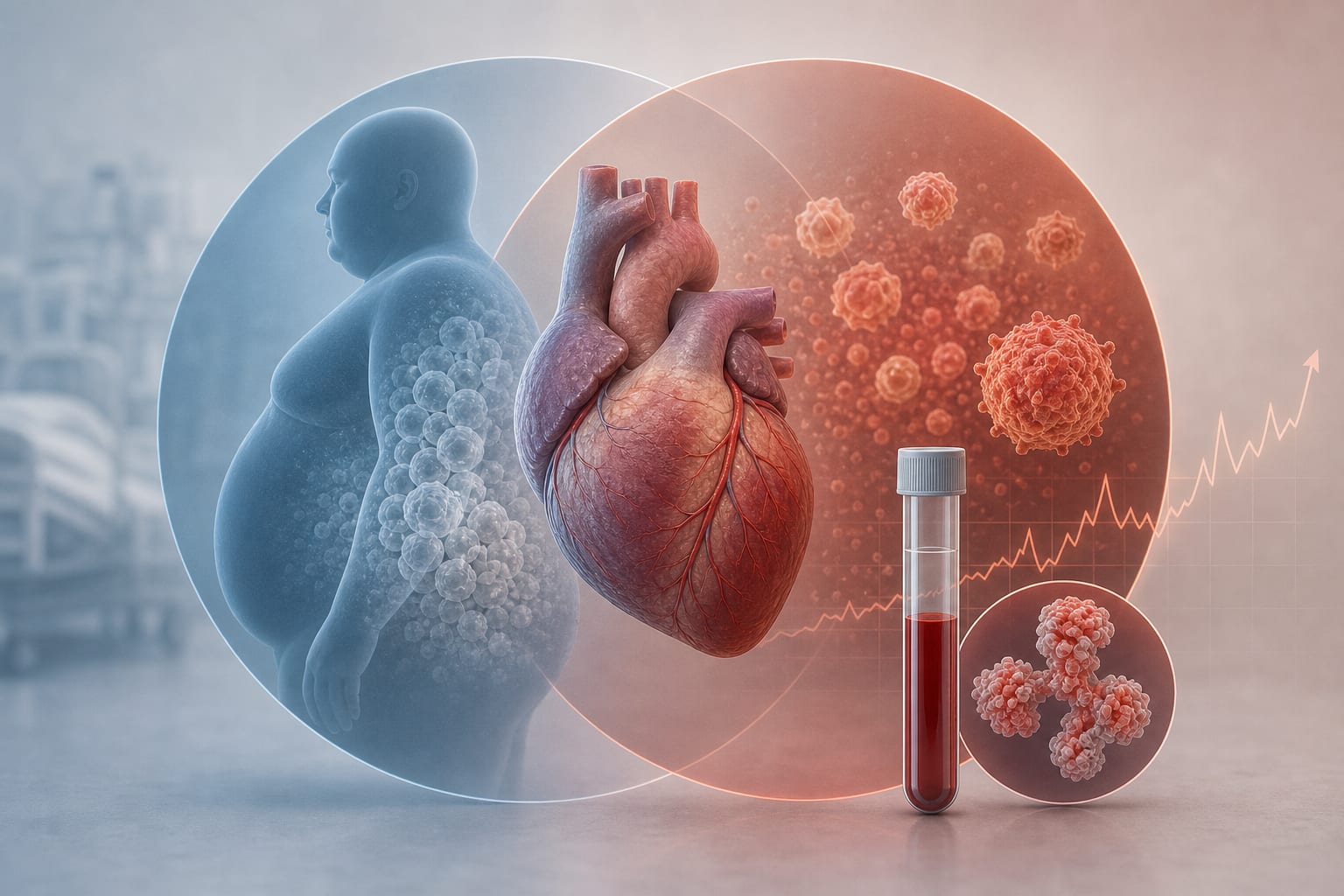
Combined Impact of Severe Obesity and Inflammation on Mortality Among Critically Ill Patients
Overview
This study investigates the relationship between body mass index (BMI) and mortality in critically ill NSTEMI patients, highlighting the role of C-reactive protein (CRP) in risk stratification. Severe obesity is linked to increased in-hospital and 10-year all-cause mortality, particularly when combined with elevated CRP levels.
Background
The rising prevalence of obesity is a significant global health concern, contributing to increased mortality rates from cardiovascular diseases. In critically ill patients, particularly those with NSTEMI, understanding the impact of obesity and inflammation on outcomes is essential for effective risk stratification and management.
Data Highlights
Group
In-Hospital Mortality Rate
10-Year Mortality Risk
Severe Obesity (BMI ≥ 35 kg/m²)
8.36%
HR 1.68 (95% CI: 1.31-2.15; p < 0.001)
Overweight
1.55%
Lower risk compared to normal weight
Key Findings
Severe obesity is associated with increased in-hospital mortality (HR 1.69; p = 0.022).
Severe obesity is linked to higher 10-year all-cause mortality (HR 1.68; p < 0.001).
Overweight and obesity I categories show lower mortality risk compared to normal weight.
The combination of severe obesity and elevated CRP identifies a high-risk clinical profile.
Adding CRP to the risk model improves prediction metrics (AUC increase from 0.764 to 0.768; p = 0.021).
Clinical Implications
Consideration of BMI and CRP levels may be important when assessing mortality risk in critically ill NSTEMI patients.
Conclusion
The findings indicate that severe obesity and inflammation significantly impact mortality outcomes in critically ill NSTEMI patients.