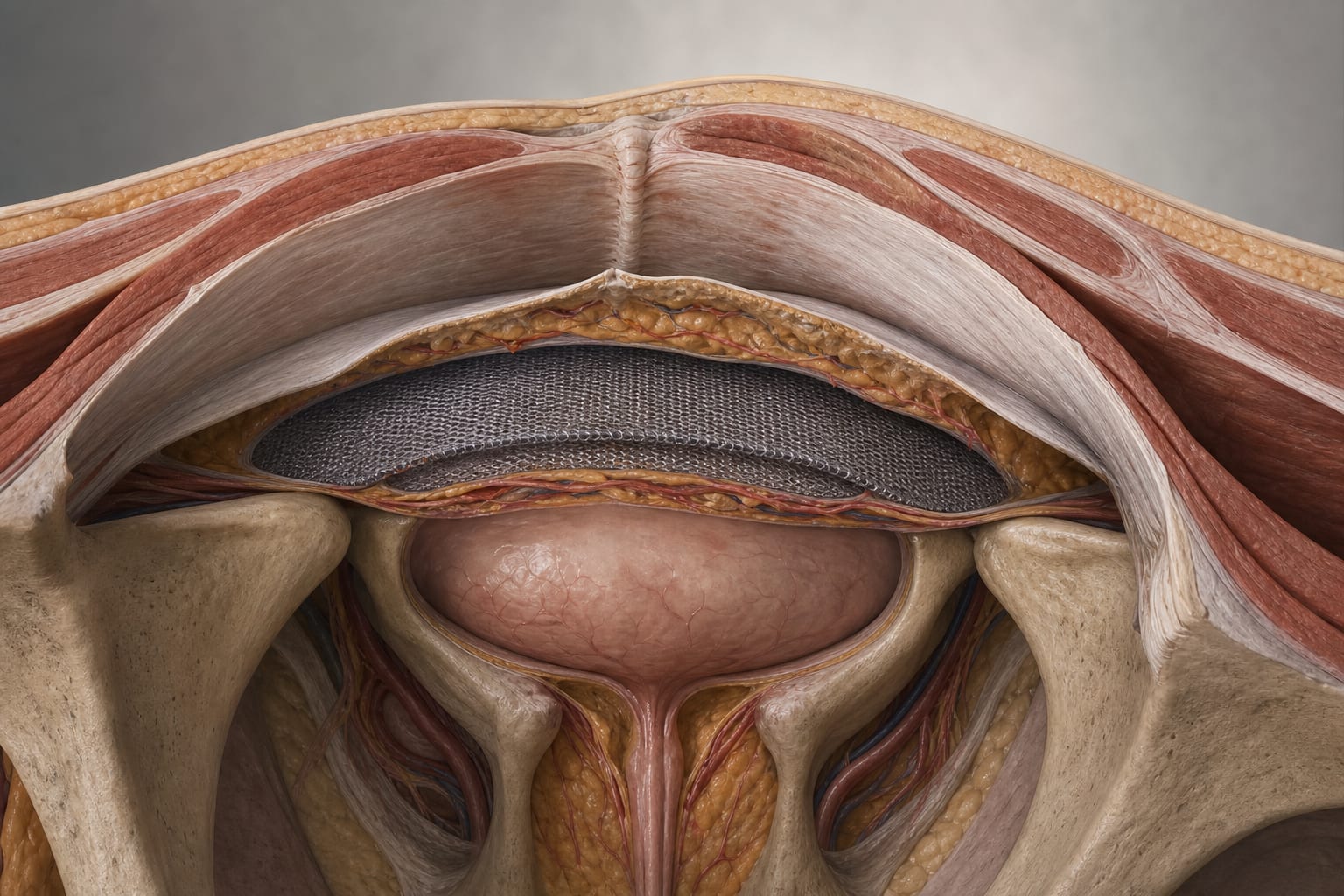
Urinary implications of retropubic dissection during abdominal wall reconstruction: Early results from a clinical quality assurance initiative - Report - MDSpire
Clinical Report: Impact of Retropubic Dissection on Urinary Function
Background
Urinary incontinence is a common condition that can worsen after abdominal and pelvic surgeries. The retropubic space is often accessed during ventral hernia repairs, which may increase the risk of UI.
Data Highlights
No numerical data or trial data were provided in the source material.
Key Findings
UI is prevalent in patients undergoing abdominal wall reconstruction, particularly in older females.
The study utilized the UDI-6 survey to assess UI severity and prevalence pre- and postoperatively.
Retropubic dissection during TAR may be associated with unrecognized urinary consequences.
There is a lack of existing literature on UI outcomes following TAR.
Patients with pre-existing urinary issues may experience exacerbation post-surgery.
Clinical Implications
The findings suggest that healthcare providers should consider the risk of urinary incontinence when counseling patients about abdominal wall reconstruction procedures. Incorporating routine assessments of urinary function may improve patient care and surgical decision-making.
Conclusion
This quality assurance initiative aims to enhance understanding of urinary outcomes following TAR, addressing a critical gap in the literature. Continued monitoring and assessment of UI in this patient population are essential.
by William C. Bennett, Emerson Lora, Mahamed O. Mohamed, Alvaro C. Carvalho, Noah X. Tocci, Erika M. Schmidt, Joseph Edwards, Ashley M. Mila-Hoff, Kimberly S. Miles, Sandip Vasavada, Clayton C. Petro, Ajita S. Prabhu
A VHA study across 11 vendors finds AI-generated primary care notes score lower than clinician-written notes, with the largest deficits in thoroughness, organization, and usefulness