HK2 knockdown is associated with context-dependent inflammatory and angiogenesis-related transcriptional programmes in glioblastoma cells - Report - MDSpire
Advertisement
HK2 knockdown is associated with context-dependent inflammatory and angiogenesis-related transcriptional programmes in glioblastoma cells
Reduction of HK2 Expression Influences Inflammatory and Angiogenesis-Related Gene Expression Patterns in Glioblastoma Cells Depending on Context
Overview
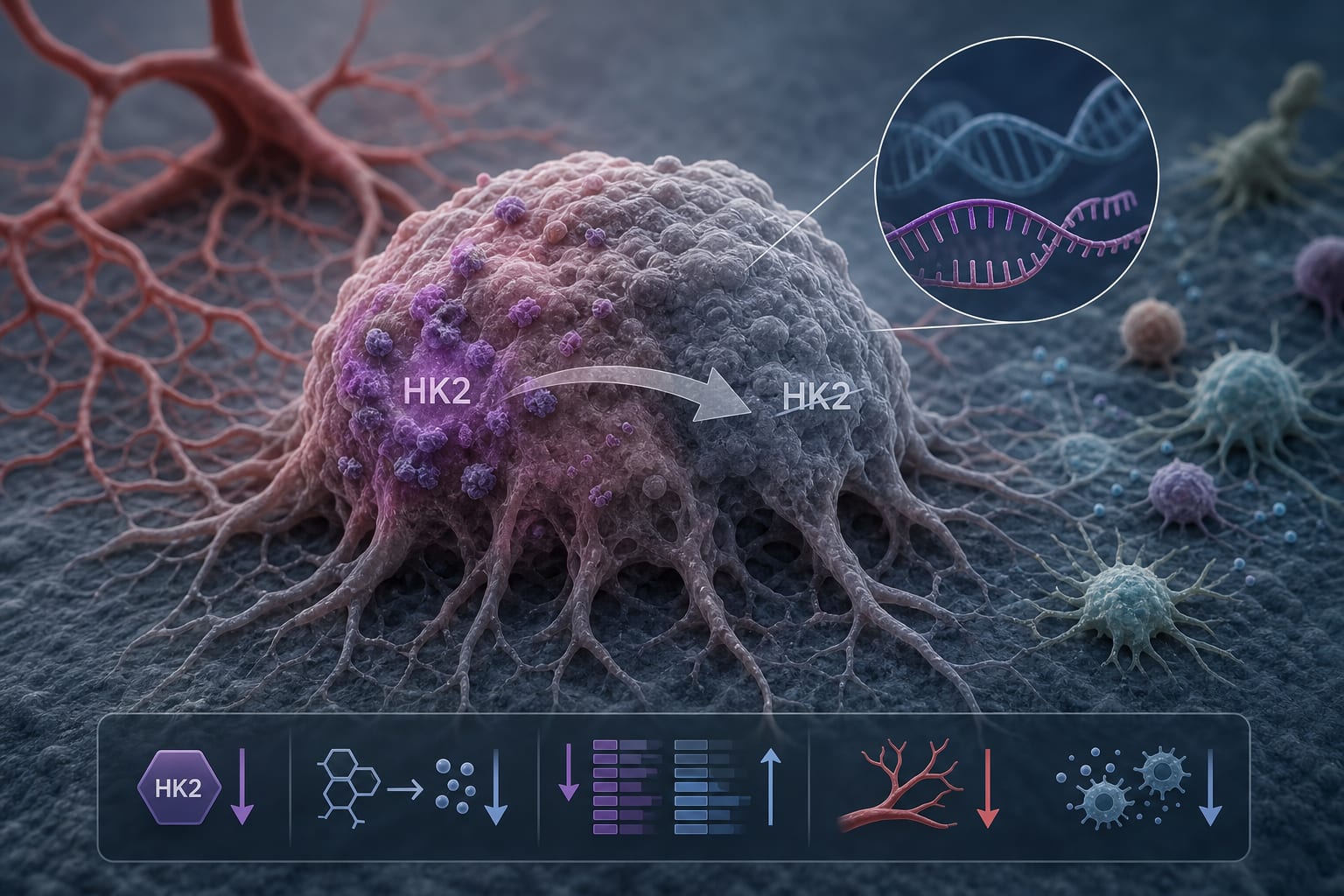
This study investigates the effects of hexokinase 2 (HK2) knockdown on glycolytic activity and gene expression in glioblastoma cells. Findings indicate that HK2KD leads to reduced glycolytic activity and significant transcriptional changes related to inflammation and angiogenesis.
Background
Glioblastoma is the most common and aggressive brain tumor, with poor prognosis despite current treatment options. Targeting metabolic processes unique to glioblastoma, such as glycolysis, is being explored as a therapeutic strategy.
Data Highlights
No numerical data or trial data provided in the source material.
Key Findings
HK2 knockdown (HK2KD) resulted in reduced glycolytic activity in glioblastoma models.
Extensive transcriptional remodelling was observed following HK2KD.
HK2KD influenced inflammatory, immune-associated, and angiogenesis-linked gene expression patterns.
Responses to HK2KD varied significantly between different glioblastoma models.
Clinical Implications
The findings indicate that targeting HK2 may influence inflammatory and angiogenic pathways in glioblastoma.
Conclusion
HK2KD is associated with significant changes in gene expression that may influence glioblastoma biology.
by Christopher Edwards, Taylor Richards, Hafid Omar Al-Hassi, Surya Prakash Shivakumar, Benjamin Small, Kate Butcher, Tracy Warr, Mark Morris, Timothy Dawson, Michael D. Jenkinson, Katherine Karakoula