Multitask Artificial Intelligence–Based Electrocardiogram Tool for Preoperative Cardiac Testing in Noncardiac Surgery: Retrospective Cohort Study of Health Care Utilization and Costs - Report - MDSpire
Advertisement
Multitask Artificial Intelligence–Based Electrocardiogram Tool for Preoperative Cardiac Testing in Noncardiac Surgery: Retrospective Cohort Study of Health Care Utilization and Costs
AI-Enhanced Electrocardiogram Tool for Preoperative Cardiac Assessment
Overview
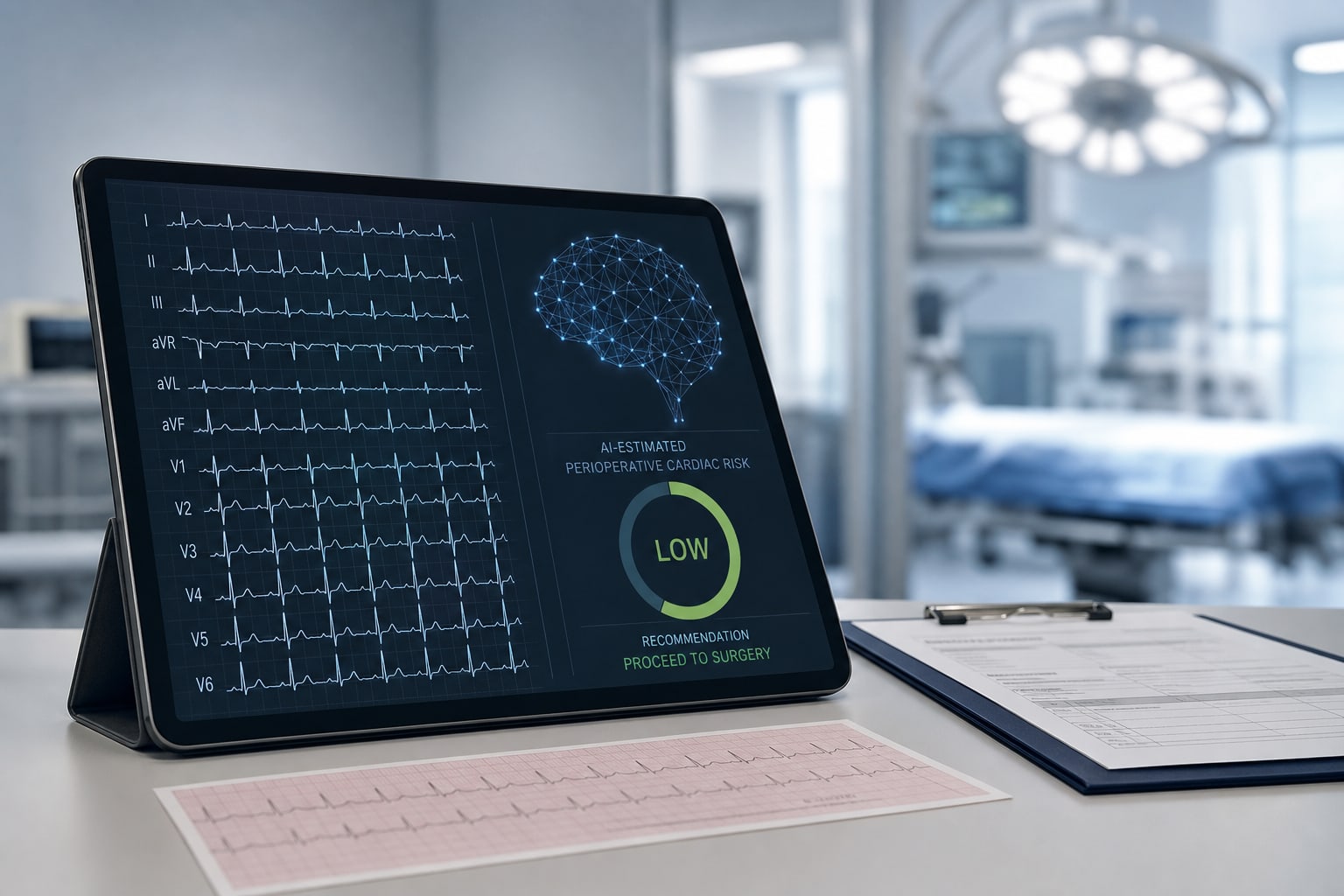
This study evaluates the use of an AI-enhanced electrocardiogram (ECG) tool for preoperative cardiac assessment in noncardiac surgeries. The findings indicate that AI-ECG can reduce unnecessary preoperative cardiovascular testing without increasing postoperative adverse outcomes.
Background
Preoperative cardiovascular testing is a significant healthcare burden, costing approximately $18 billion annually in the U.S. Accurate risk stratification is crucial due to the high morbidity and mortality associated with postoperative cardiovascular complications. Current guidelines recommend ECG use only in selected patients, yet its overuse persists in clinical practice.
Data Highlights
This study analyzed 46,135 ECG-surgery pairs from 41,218 patients to evaluate the effectiveness of AI-ECG in preoperative risk stratification.
Key Findings
AI-ECG was integrated into preoperative risk assessment workflows.
The study aimed to identify low-risk patients who may not require additional testing.
AI-ECG demonstrated potential in reducing low-yield preoperative cardiovascular testing.
No increase in postoperative adverse outcomes was observed with the use of AI-ECG.
The study was conducted at Seoul National University Bundang Hospital between 2020 and 2021.
Clinical Implications
The study provides insights into the potential role of AI-ECG in identifying low-risk patients for postoperative complications.
Conclusion
The study indicates that AI-enhanced ECG tools may improve preoperative assessments.
by Hong-Mi Choi, Yerin Kim, Joonghee Kim, Jiesuck Park, In-Chang Hwang, Yun Young Choi, Ji Hyun Lee, Yeonyee E Yoon, Il-Young Oh, Goo-Yeong Cho, In-Ae Song, Youngjin Cho
For many people, cardiovascular disease develops silently. It can remain undetected for years, overshadowed by an active lifestyle and an apparent lack of symptoms.