Beyond fluorescence intensity: a Minimum acquisition and reporting standard and emerging technologies for colorectal indocyanine green fluorescence angiography studies - Report - MDSpire
Conexiant’s news site is now MDSpire News. Learn more
Advertisement
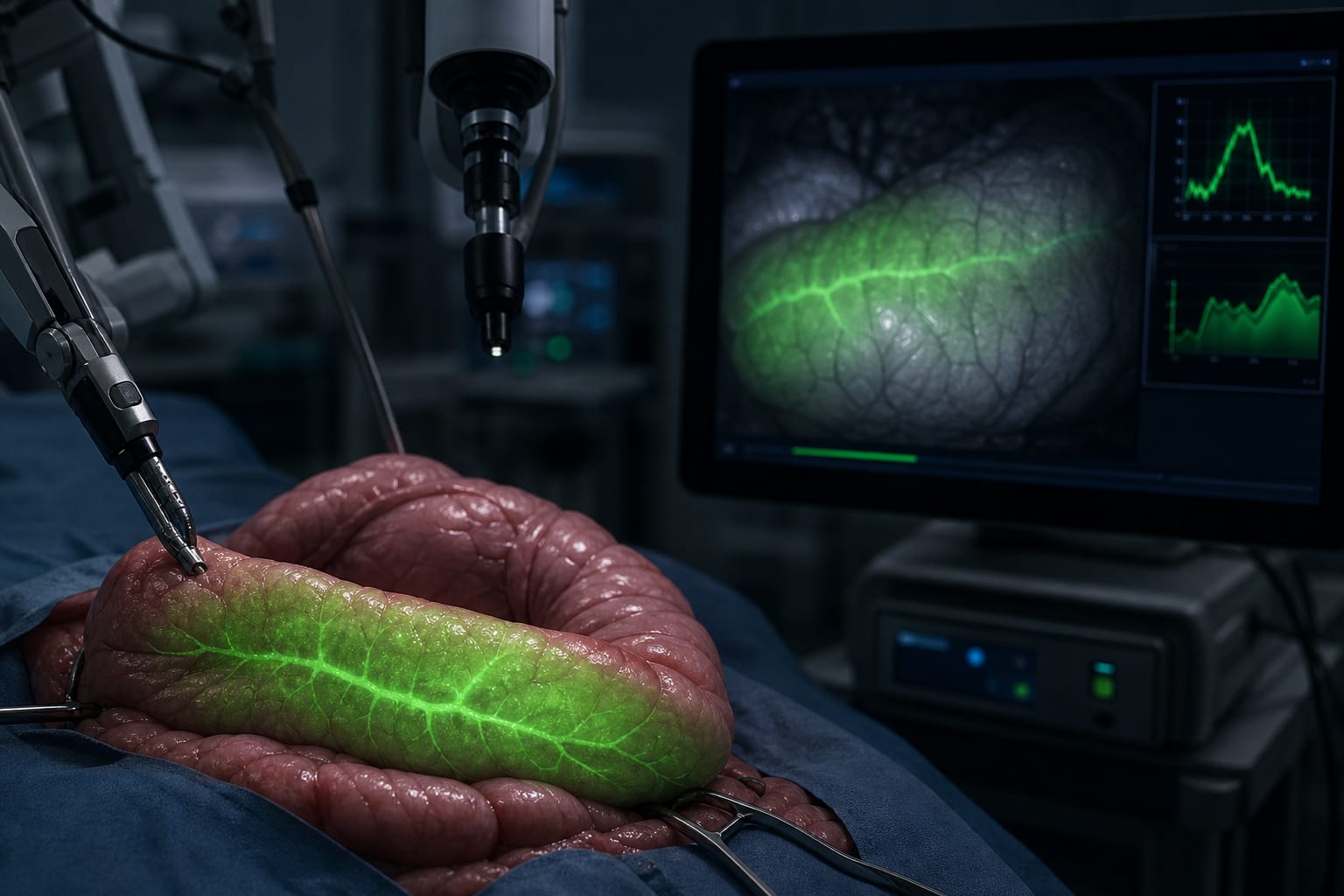
Establishing a Standard for Acquisition and Reporting: Advancements in Colorectal Indocyanine Green Fluorescence Angiography Techniques Beyond Fluorescence Intensity
Clinical Report: Advancements in Colorectal Indocyanine Green Fluorescence Angiography
Background
Anastomotic leak (AL) is a significant complication in colorectal surgery, leading to increased morbidity and healthcare costs. ICG-FA has emerged as a tool for intraoperative assessment of bowel perfusion. Recent trials have shown mixed results, highlighting the variability in methodologies used in ICG-FA.
Data Highlights
No numerical data provided in the source material, but qualitative findings indicate variability in ICG-FA effectiveness.
Key Findings
ICG-FA is increasingly used to assess bowel perfusion during colorectal anastomosis.
Mixed findings from recent multicenter randomized trials indicate variability in the effectiveness of ICG-FA.
Visual interpretation of ICG-FA shows substantial interobserver variability, making single fluorescence-intensity snapshots unreliable.
Time-intensity kinetics and spatial heterogeneity measures are more reproducible and physiologically meaningful than traditional methods.
A proposed minimum acquisition and reporting standard aims to enhance the consistency of ICG-FA studies.
Current evidence on the effectiveness of ICG-FA is preliminary and requires multicenter validation.
Clinical Implications
Standardizing ICG-FA acquisition and reporting could enhance the reliability of its use in clinical settings.
Conclusion
The focus should shift from whether to use ICG-FA to how to standardize its acquisition and interpretation.