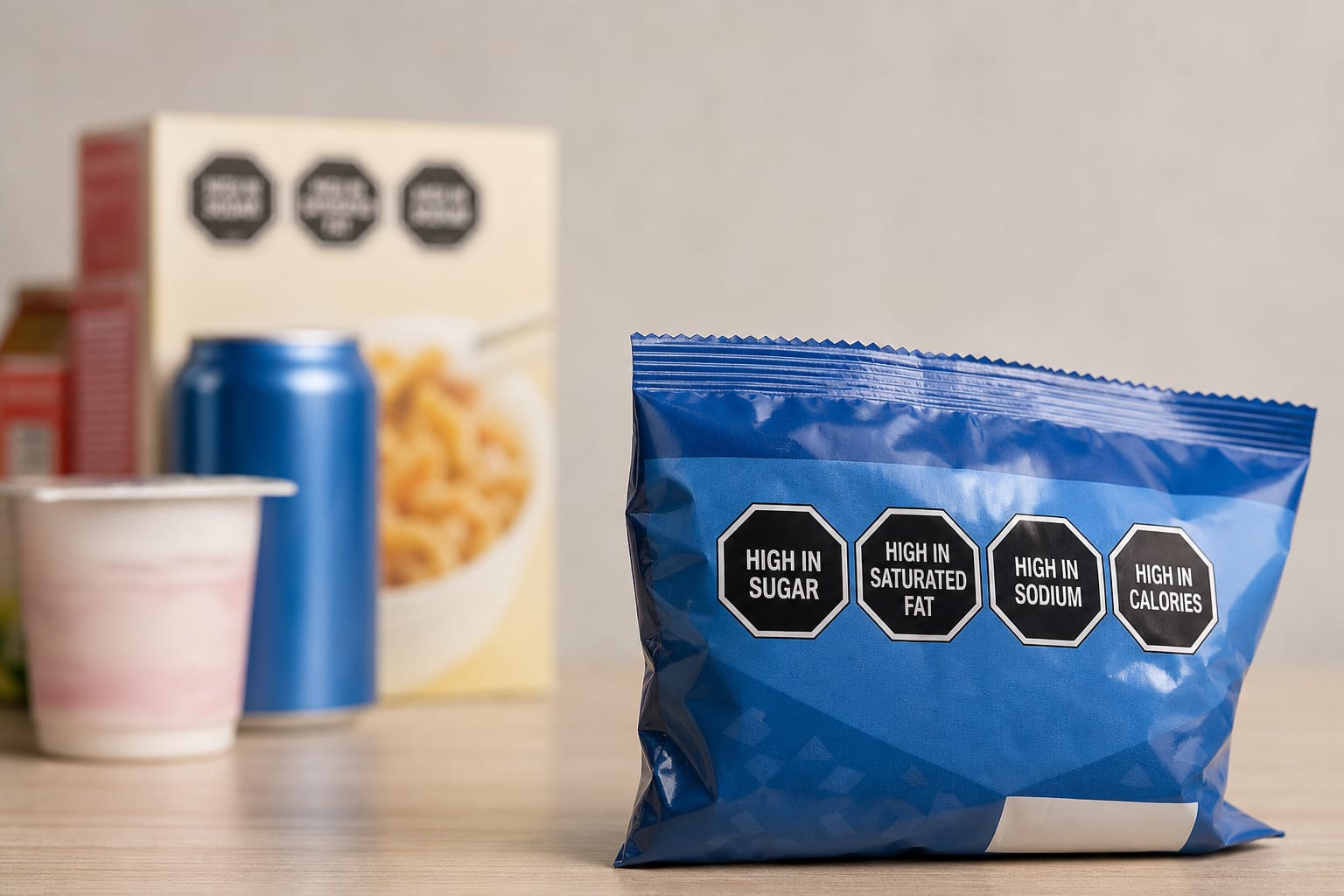
Chile offers new data on food warning label efficacy
-
By
-
O. Rose Broderick
-
June 12, 2026
-
0 min
Clinical Report: New Insights from Chile on the Effectiveness of Food Warning Labels
Overview
A recent analysis from Chile indicates that the implementation of black octagonal food warning labels has led to a reduction in obesity risk among young children. Specifically, girls aged 4 to 6 experienced a 2.9% lower risk, while boys had a 2.4% lower risk of being classified as overweight or obese within 18 months of label introduction.
Background
Obesity is a significant public health challenge, with rising rates globally. Effective interventions are crucial to combat this epidemic, particularly among children who are at risk of long-term health issues. Chile's food labeling regulations represent a pioneering effort to reshape dietary habits and reduce obesity prevalence in a population where over 50% of children are classified as overweight.
Data Highlights
| Group | Reduction in Obesity Risk |
|---|---|
| Girls (ages 4-6) | 2.9% |
| Boys (ages 4-6) | 2.4% |
Key Findings
- Chile's food warning labels were introduced in 2016 as part of a comprehensive strategy to combat childhood obesity.
- After 18 months, the risk of obesity decreased by 2.9% in girls and 2.4% in boys aged 4 to 6.
- Approximately 25% of Chilean children are classified as obese, with over 50% overweight.
- The study analyzed data from over 300,000 children, funded by Bloomberg Philanthropies.
- Stricter labeling requirements enacted in 2018 and 2019 are expected to yield even more significant results.
Clinical Implications
Healthcare professionals should consider the impact of food labeling on dietary choices and obesity prevention strategies. The Chilean model may serve as a reference for similar interventions in other countries aiming to reduce childhood obesity rates.
Conclusion
The findings from Chile underscore the potential effectiveness of food warning labels in reducing obesity risk among children. Continued monitoring and evaluation of such policies are essential for understanding their long-term impact on public health.
Related Resources & Content
- BMC Medicine, 2025 -- Changes in the critical nutrient content of packaged foods and beverages after the full implementation of the Chilean Food Labelling and Advertising Law: a repeated cross-sectional study
- BMJ Global Health, 2025 -- Evolution of food and beverage prices after the front-of-package labelling regulations in Chile
- Obesity and Endocrinology — Reevaluating Obesity with a Systems Approach: Recognizing and Tackling Structural Influences
- European Journal of Preventive Cardiology — Estimating the health impact of menu calorie labelling policy and sugar-sweetened beverage taxation in two European countries: a microsimulation study
- Drug Safety — Public Perception, Choices, and Reactions to Varied Drug Safety Messaging in the U.S.: Findings from a Randomized Controlled Study
- Food Safety and Risk (Springer) — Assessing the Accuracy of Food Labels: A Comparative Study of Two Nations with Varying Food Regulation Standards
- Chile’s front-of-package warning labels
- Changes in the critical nutrient content of packaged foods and beverages after the full implementation of the Chilean Food Labelling and Advertising Law: a repeated cross-sectional study | BMC Medicine | Full Text
- Randomised controlled trial on the effect of Chilean nutritional warning labels versus nutri-score in food purchasing intentions - ScienceDirect
This content is an AI-generated, fully rewritten summary based on a published scholarly article. It does not reproduce the original text and is not a substitute for the original publication. Readers are encouraged to consult the source for full context, data, and methodology.