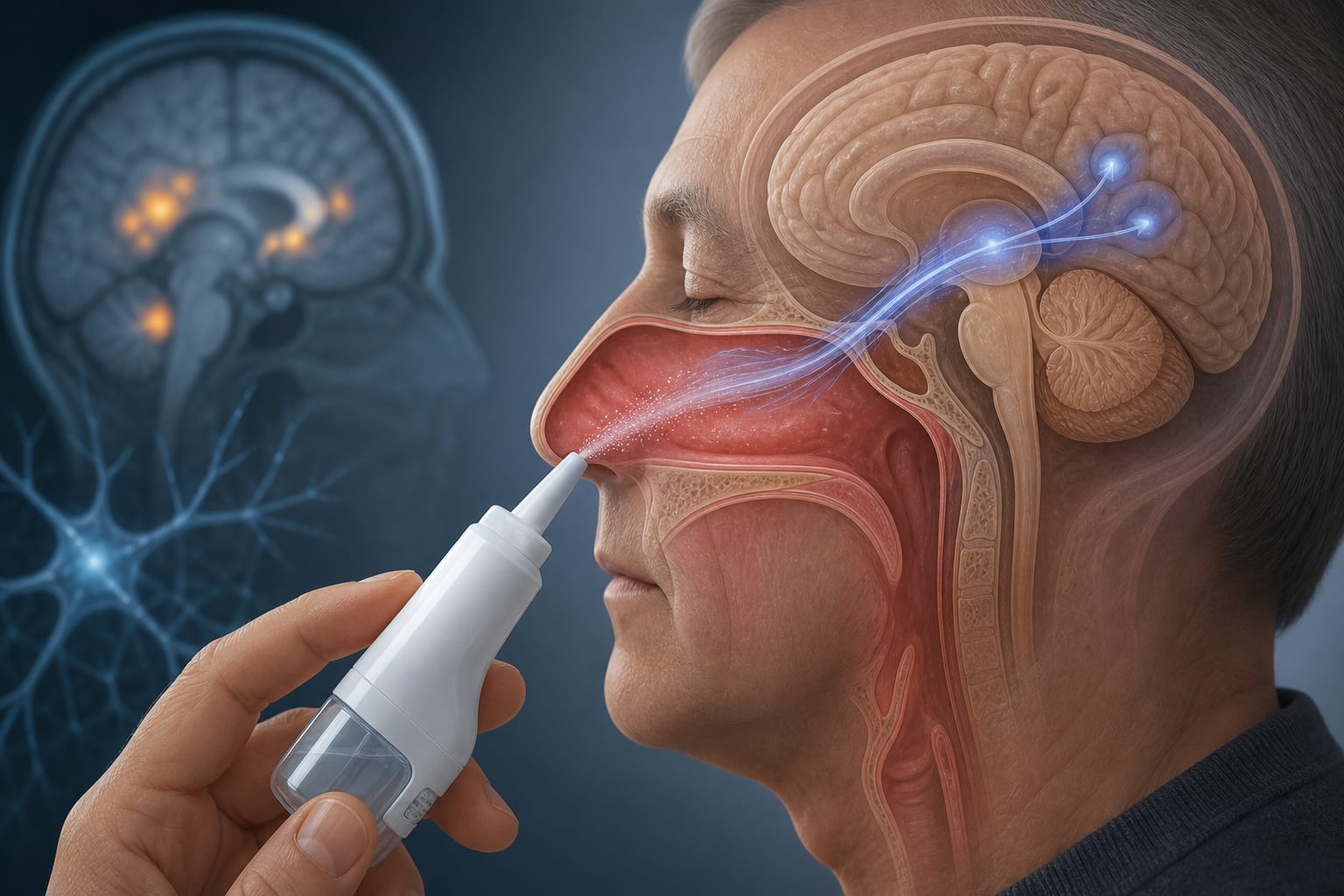
Clinical Report: Evaluating the Safety and Tolerability of Intranasal Insulin in Patients with Parkinson's Disease
Overview
This phase II trial assessed the safety and tolerability of intranasal insulin (INI) in patients with Parkinson's disease (PD). The study found that INI had an acceptable safety profile, with mild adverse events reported.
Background
Parkinson's disease is a prevalent neurodegenerative disorder characterized by both motor and non-motor symptoms, including cognitive impairment. There is growing interest in repurposing diabetes medications, such as intranasal insulin, to address metabolic dysfunctions associated with PD.
Data Highlights
Outcome
Results
Body Weight Change
No significant change
Serum Insulin Levels
No significant change
Hypoglycemic Events
No events documented (<70 mg/dL)
Adverse Events
Most were mild (nasal irritation, epistaxis)
Cognitive Measures (40 IU group)
Improved verbal fluency and recall (not significantly greater than placebo)
Key Findings
INI was administered at doses of 20, 40, or 80 IU over 21 days.
No significant changes in body weight or serum insulin levels were observed.
No hypoglycemic events were recorded during the study.
Mild adverse events included nasal irritation and epistaxis.
Improvements in cognitive measures were noted in the 40 IU group, but not significantly different from placebo.
Clinical Implications
The findings indicate that intranasal insulin has an acceptable safety profile in patients with Parkinson's disease.
Conclusion
Intranasal insulin demonstrates safety in Parkinson's disease patients.