Conexiant’s news site is now MDSpire News. Learn more
Advertisement
The Role of the PLA2G2F/Lysoplasmalogen Pathway in Connecting Epidermal Lipid Metabolism to Type 2 Inflammatory Responses and Pruritus in Atopic Dermatitis
Clinical Report: The Role of the PLA2G2F/Lysoplasmalogen Pathway in Atopic Dermatitis
Overview
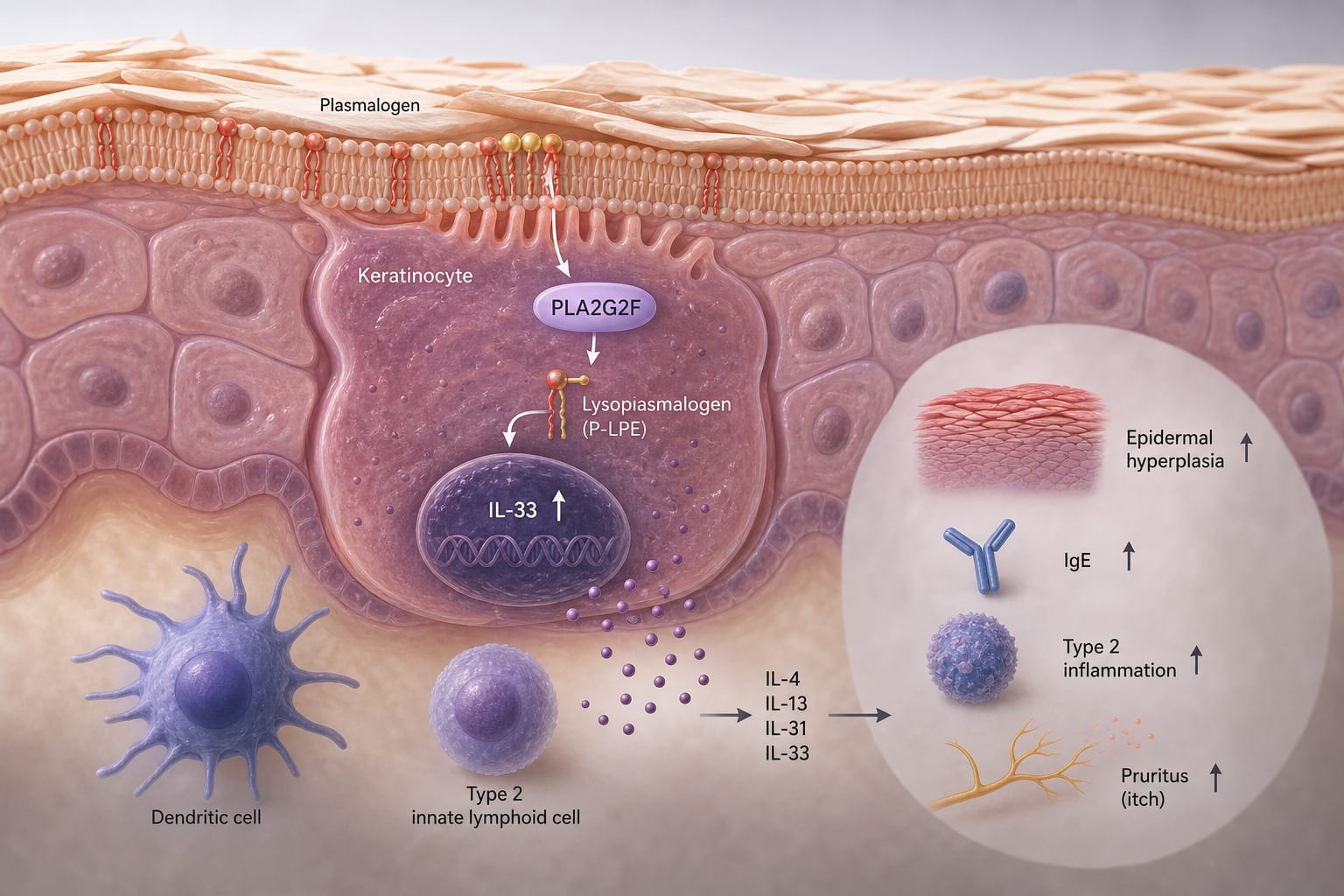
This study identifies the PLA2G2F/P-LPE axis as a significant factor in atopic dermatitis, linking lipid metabolism to type 2 inflammatory responses and pruritus. Genetic deletion of Pla2g2f in mice reduced key markers of inflammation and itch.
Background
Atopic dermatitis is a common chronic inflammatory skin condition characterized by type 2 immune responses and severe itching. The interplay between lipid metabolism and immune signaling is crucial for understanding the disease's pathogenesis. Current treatments are limited, highlighting the need for novel therapeutic targets.
Data Highlights
No numerical data or trial data presented in the article.
Key Findings
PLA2G2F is induced by type 2 cytokines and produces lysoplasmalogen (P-LPE) in keratinocytes.
Genetic deletion of Pla2g2f in mice reduced IL-33 expression, epidermal hyperplasia, and serum IgE levels.
Topical PLA2 inhibitors or breakdown of P-LPE reduced itch responses in wild-type mice.
Exogenous P-LPE administration partially rescued scratching behavior in Pla2g2f-deficient mice.
P-LPE concentrations were significantly higher in the stratum corneum of patients with atopic dermatitis and correlated with disease severity.
Clinical Implications
The findings indicate that the PLA2G2F/P-LPE pathway is involved in atopic dermatitis.
Conclusion
The study establishes a link between epidermal lipid metabolism and type 2 inflammation in atopic dermatitis.