Survival and hematologic toxicity after whole-brain radiotherapy, photon craniospinal irradiation, and proton craniospinal irradiation for solid-tumor leptomeningeal disease: a systematic review - Report - MDSpire
Conexiant’s news site is now MDSpire News. Learn more
Advertisement
Outcomes and hematologic side effects following whole-brain radiotherapy, photon craniospinal irradiation, and proton craniospinal irradiation in patients with solid-tumor leptomeningeal disease: a systematic analysis
Outcomes and hematologic side effects following whole-brain radiotherapy
Overview
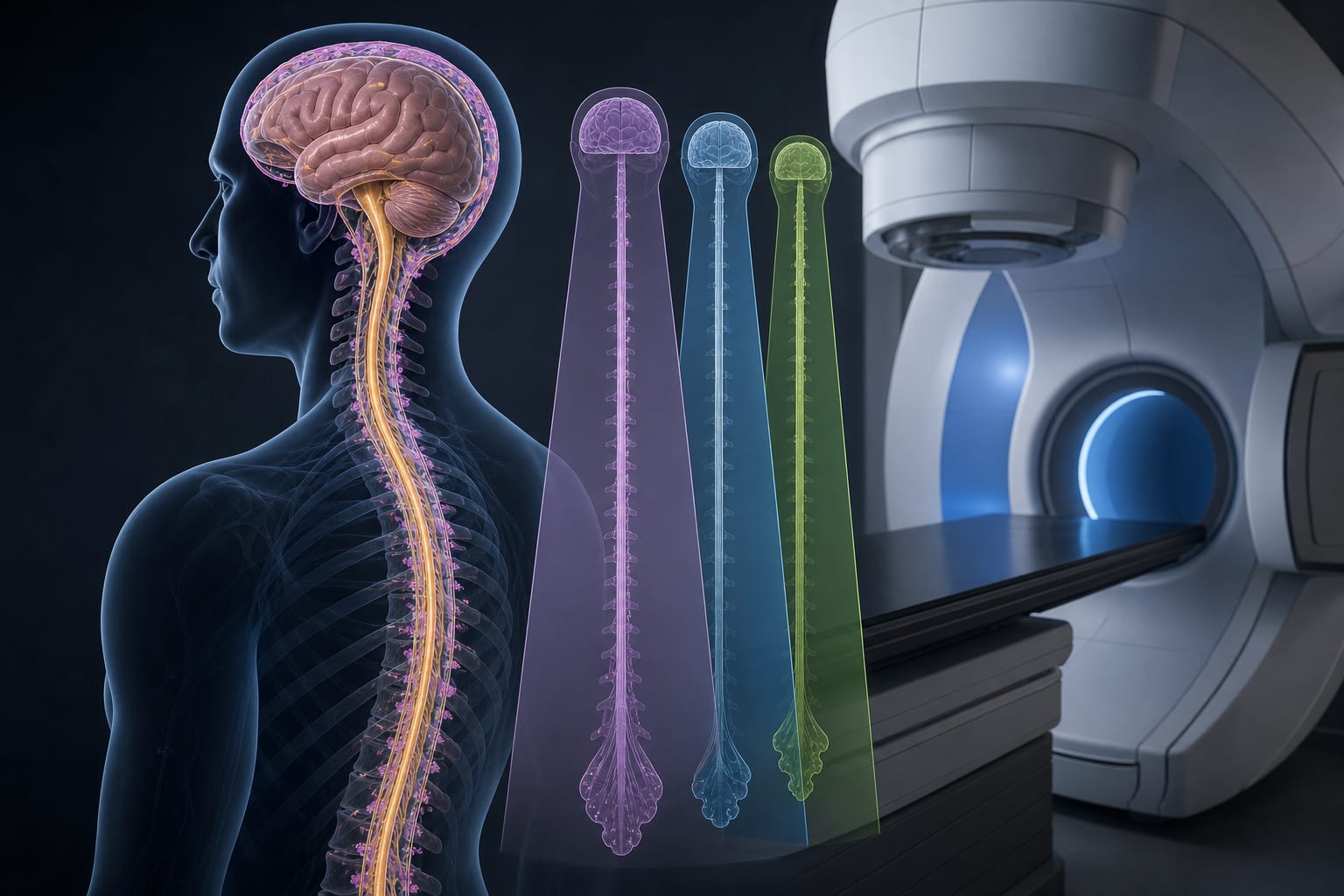
This systematic analysis evaluates the outcomes and hematologic side effects associated with whole-brain radiotherapy (WBRT), photon craniospinal irradiation (CSI), and proton craniospinal irradiation in patients with solid-tumor leptomeningeal disease.
Background
Leptomeningeal disease (LMD) is a significant complication of advanced solid tumors, impacting survival and quality of life. Traditional management strategies, including various forms of radiotherapy, have evolved.
Data Highlights
No specific numerical data or trial data provided in the source material.
Key Findings
Leptomeningeal disease is increasingly recognized in advanced solid tumors, with heterogeneous outcomes influenced by various factors.
Radiotherapy serves a significant palliative function in managing symptoms associated with LMD.
Proton craniospinal irradiation may limit radiation exposure to normal tissues compared to photon CSI.
Recent studies suggest improved CNS progression-free survival with proton CSI compared to photon involved-field radiotherapy.
Clinical management of LMD requires a multidisciplinary approach.
Clinical Implications
Ongoing research is essential to establish optimal treatment protocols.
Conclusion
This systematic review presents findings on treating leptomeningeal disease.
he U.S. Food and Drug Administration (FDA) has approved daraxonrasib, an oral multi-selective RAS(ON) inhibitor, for adults with metastatic pancreatic adenocarcinoma who have received at least one prior systemic therapy or are not candidates for multiagent systemic therapy.