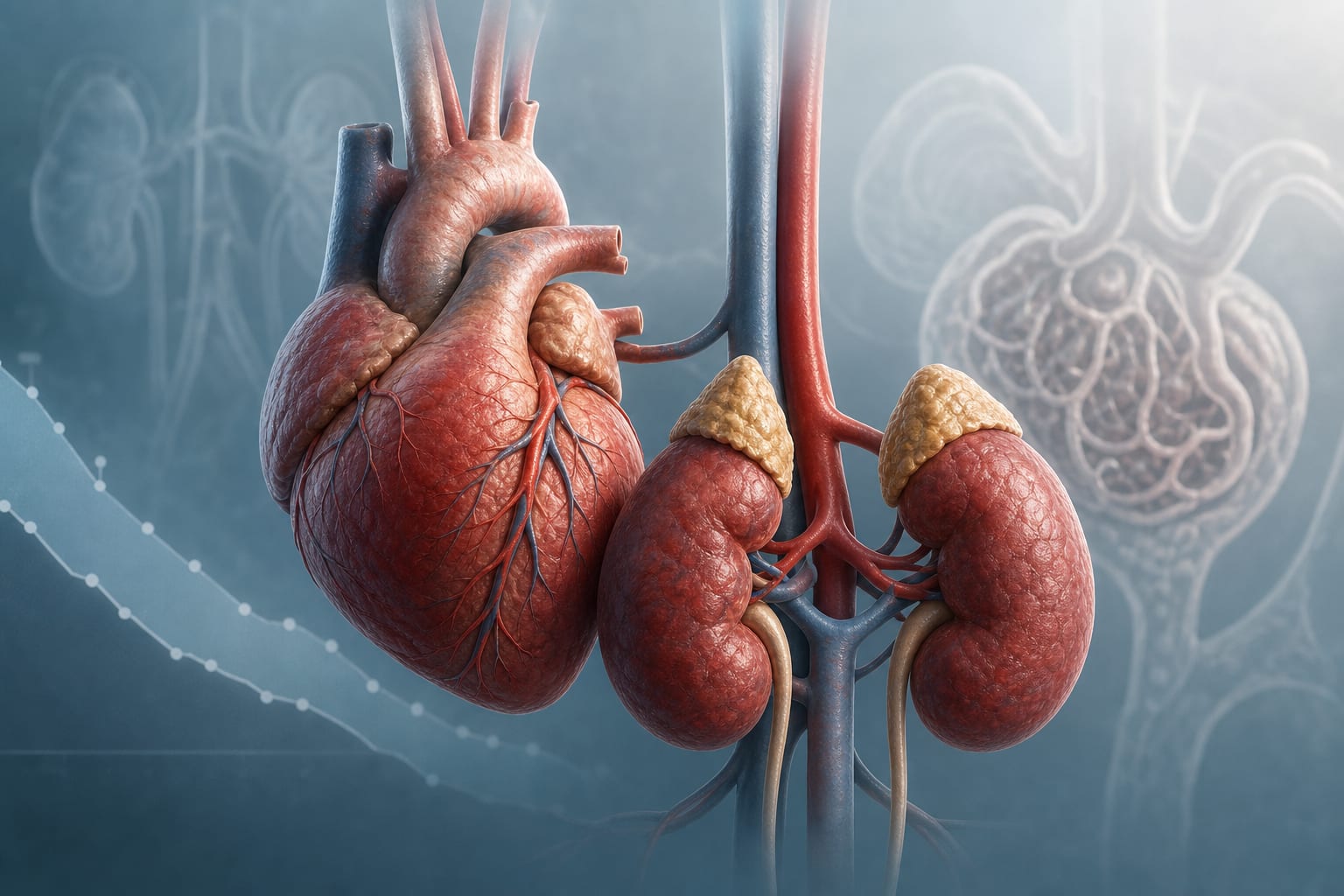
Clinical Report: Residual Risk in Cardiac and Renal Disorders
Overview
Revise to emphasize the preliminary nature of clinical trial data and specify trial types.
Background
The renin-angiotensin-aldosterone system (RAAS) is crucial in regulating cardiovascular and kidney health. Despite existing therapies targeting RAAS, significant residual risk for adverse outcomes persists in patients with cardiorenal disease. Understanding and addressing this residual risk is essential for improving patient outcomes.
Data Highlights
No specific numerical data provided in the article.
Key Findings
Aldosterone dysregulation contributes to cardiovascular and kidney damage.
ASi agents may provide a new therapeutic option to mitigate residual risk in cardiorenal disease.
Clinical trials are ongoing to assess the efficacy of ASi in improving cardiorenal outcomes.
Finerenone has shown benefits in reducing CKD progression and cardiovascular events despite RAAS blockade.
Combination therapy with SGLT2 inhibitors and ASi may enhance treatment efficacy.
Clinical Implications
Healthcare professionals should consider the potential role of ASi in managing patients with cardiorenal disease, particularly those at high risk for adverse outcomes. Ongoing clinical trials will provide further insights into the effectiveness of these agents in clinical practice.
Conclusion
ASi represent a promising addition to the therapeutic landscape for cardiorenal disease, with the potential to address residual risk effectively. Continued research will clarify their role in improving patient outcomes.