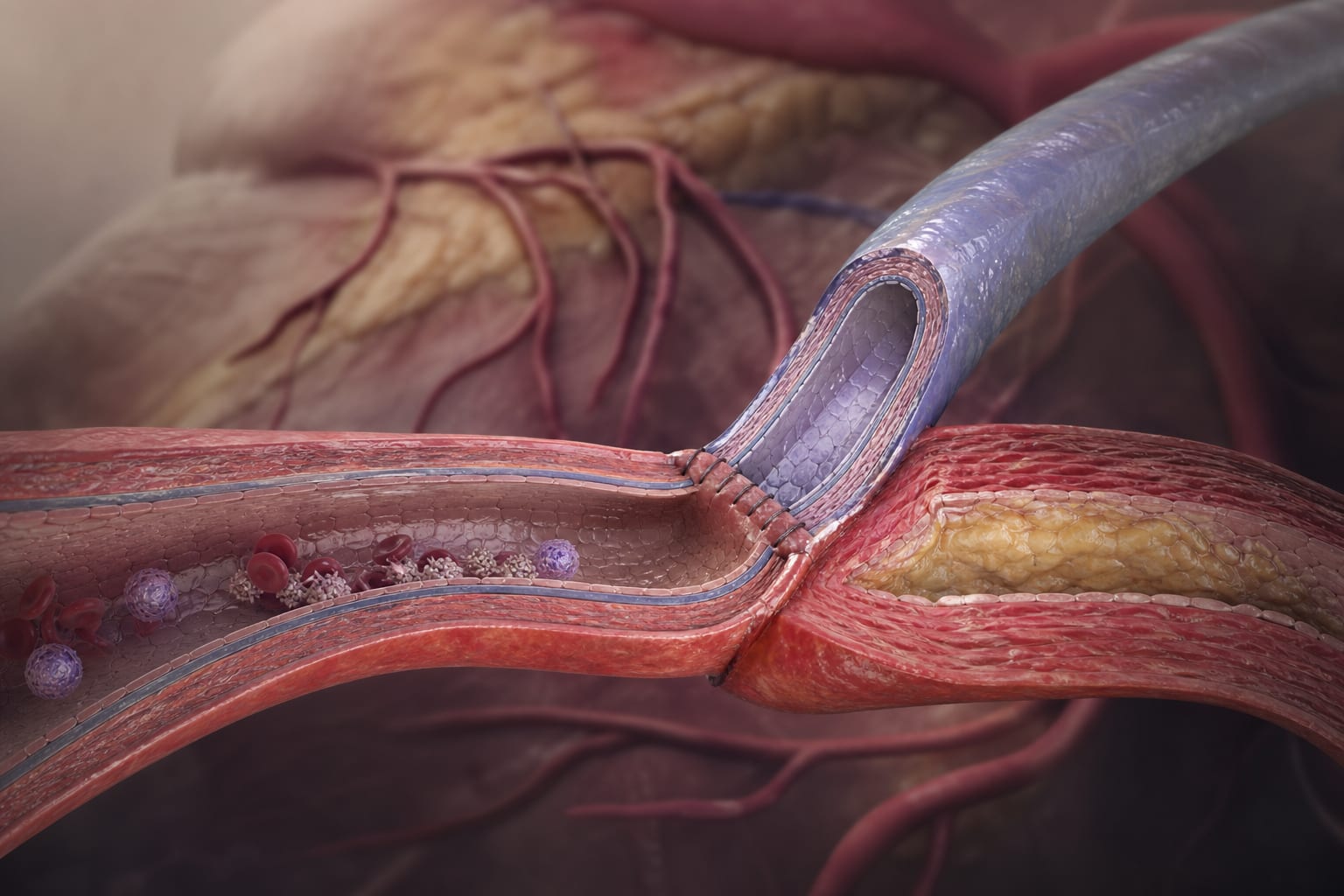
Factors Influencing Graft Patency Following Coronary Artery Bypass Grafting
Overview
This review examines the multifactorial influences on graft patency after CABG, emphasizing the role of endothelial function and conduit selection.
Background
Graft patency is crucial for the long-term success of coronary artery bypass grafting (CABG), which is a key treatment for multivessel coronary artery disease. This review focuses on the interplay of anatomical, technical, biological, and patient-level factors affecting graft durability.
Data Highlights
No numerical data or trial data provided in the source material.
Key Findings
Graft patency is influenced by conduit selection, with arterial grafts generally providing better long-term outcomes than venous grafts.
The left internal thoracic artery (LITA) has a 10-year patency rate exceeding 90% in many studies.
Endothelial nitric oxide (eNO) plays a significant role in vascular health, affecting thrombosis, inflammation, and smooth muscle cell proliferation.
Technical factors during graft harvesting can lead to endothelial damage, impacting graft performance.
Oxidative stress and endothelial dysfunction are critical in the development of graft-related complications.
Clinical Implications
Surgeons should prioritize the selection of arterial conduits, particularly the LITA, to enhance graft patency. Understanding the biological mechanisms, such as eNO availability, can inform strategies to mitigate graft failure.
Conclusion
The review underscores the complexity of factors influencing graft patency in CABG, highlighting the need for a comprehensive approach to improve surgical outcomes.
Same‐admission cholecystectomy was associated with fewer recurrent episodes of gallstone‐related acute pancreatitis and fewer biliary complications than endoscopic retrograde cholangiopancreatography alone or no intervention in a nationwide Swedish cohort.