Neurophysiological Associations of Sensory and Emotional Pain Aspects in CWP
Overview
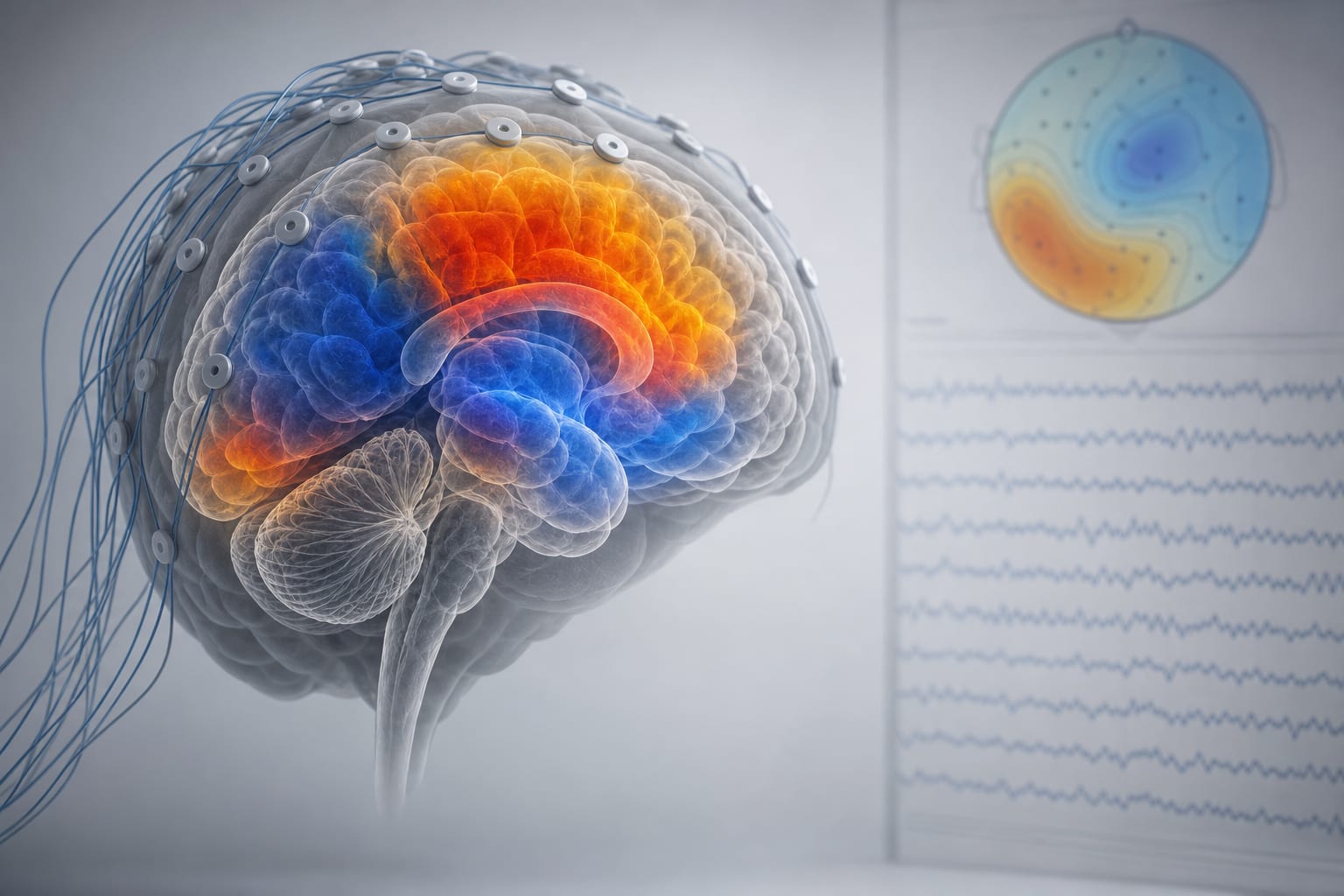
This exploratory study identifies neurophysiological correlations related to sensory and affective dimensions of chronic widespread pain (CWP) using resting-state EEG data. Key findings include a negative correlation between current pain intensity and current source density in the γ bands, and a positive correlation between the affective pain component and functional connectivity in the δ band.
Background
Chronic widespread pain (CWP) is a debilitating condition affecting a significant portion of the population, with prevalence rates ranging from 1.4% to 24.0%. Understanding the neurophysiological underpinnings of CWP is crucial for developing objective biomarkers. Current research highlights the complexity of pain as a multidimensional experience.
Data Highlights
No significant differences in current source density or functional connectivity were found between CWP patients and healthy controls. However, within the CWP group, current pain intensity was negatively correlated with CSD values in the γ bands (r = −0.743), and the affective pain component was positively correlated with δ band FC between the ACC and right anterior insula (r = 0.647).
Key Findings
Current pain intensity negatively correlated with CSD in γ bands of the precuneus/PCC (r = −0.743).
Affective pain component positively correlated with δ band FC between ACC and right anterior insula (r = 0.647).
No significant CSD or FC differences between CWP patients and healthy controls.
Clinical Implications
Clinicians may consider the sensory and affective dimensions of pain when assessing and managing patients with CWP.
Conclusion
This study highlights the potential of EEG to uncover neurophysiological correlations in chronic widespread pain.