Clinical Report: Prognostic and Clinical Variations in Mild to Moderate AECOPD
Overview
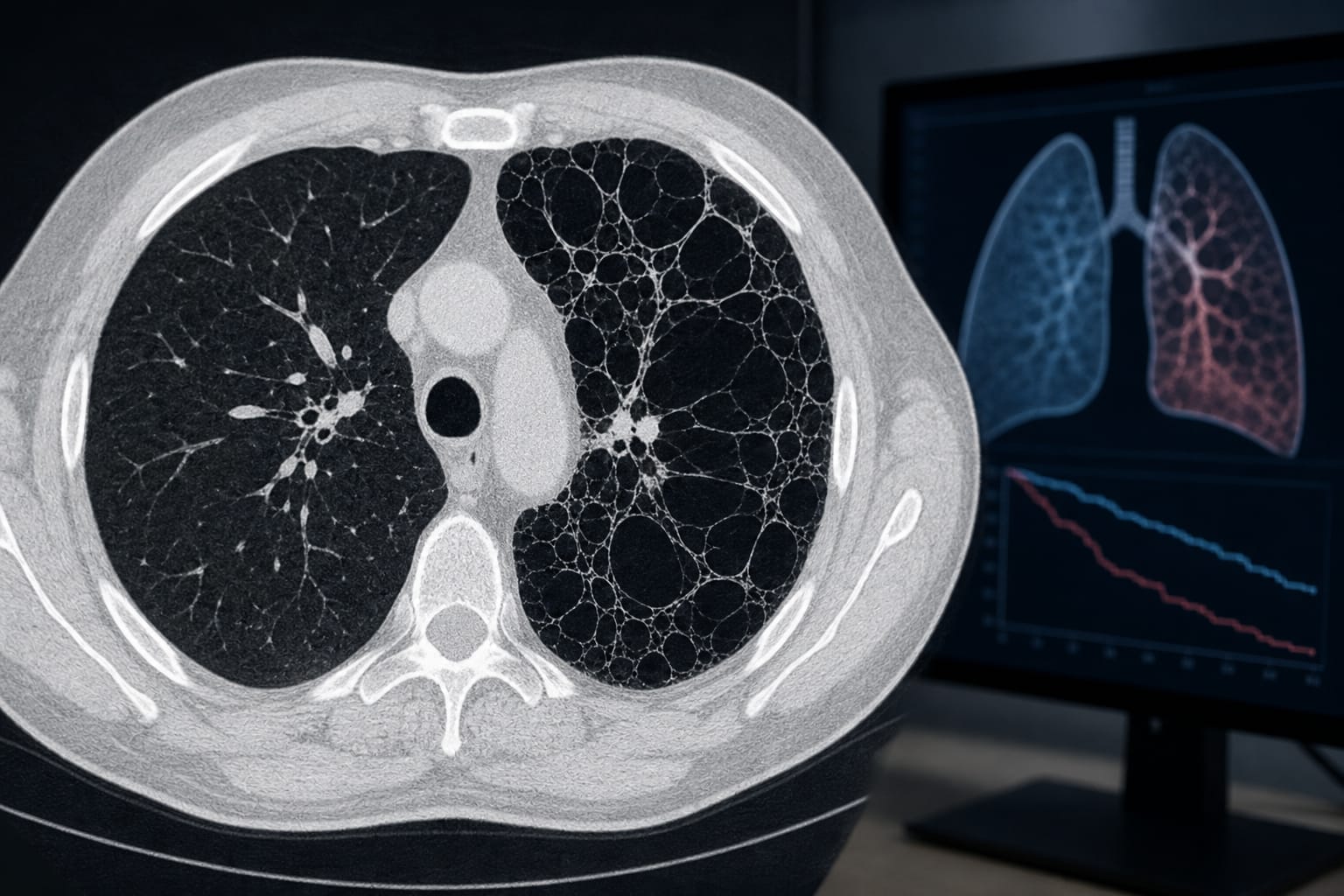
This study investigates the prognostic significance of emphysema in patients with mild-to-moderate acute exacerbation of chronic obstructive pulmonary disease (AECOPD). It finds that while emphysema is associated with higher acute morbidity, it correlates with lower long-term mortality compared to non-emphysema patients.
Background
Chronic obstructive pulmonary disease (COPD) is a major global health issue, characterized by persistent respiratory symptoms and airflow limitation. The presence of emphysema, a key pathological feature of COPD, influences disease severity and clinical outcomes. Understanding the implications of emphysema in AECOPD is crucial for optimizing patient management and improving prognostic assessments.
Data Highlights
Group
3-Year Mortality
Respiratory Failure
Non-Invasive Ventilation
Hospital Stay (days)
Hypertension
Heart Failure
Emphysema
24.8%
12.1%
24.1%
11
32.7%
13.6%
Non-Emphysema
30.2%
3.4%
19.1%
10
41.5%
18.7%
Key Findings
79.8% of patients with mild-to-moderate AECOPD had emphysema.
The emphysema group had higher rates of respiratory failure (12.1% vs. 3.4%, p < 0.001).
Emphysema patients showed lower 3-year all-cause mortality (24.8% vs. 30.2%, log-rank p = 0.048).
Non-emphysema patients had a higher burden of cardiovascular comorbidities, including hypertension (41.5% vs. 32.7%, p < 0.001) and heart failure (18.7% vs. 13.6%, p = 0.001).
Emphysema patients required more non-invasive ventilation (24.1% vs. 19.1%, p = 0.005).
Hospital stays were longer for emphysema patients (11 days vs. 10 days, p < 0.001).
Clinical Implications
The findings indicate that patients with emphysema may have different clinical characteristics compared to those without emphysema, particularly in the context of acute exacerbations and comorbidities.
Conclusion
The study highlights the relationship between emphysema and clinical outcomes in AECOPD, indicating that emphysema may predict higher acute morbidity but lower long-term mortality.