Development and validation of a predictive model for diabetic kidney disease risk in patients with T2DM: a hospital data platform study - Report - MDSpire
Conexiant’s news site is now MDSpire News. Learn more
Advertisement
Creation and assessment of a predictive model for the risk of diabetic kidney disease in individuals with type 2 diabetes mellitus: a study utilizing hospital data platforms
Clinical Report: Predictive Model for Diabetic Kidney Disease in T2DM
Overview
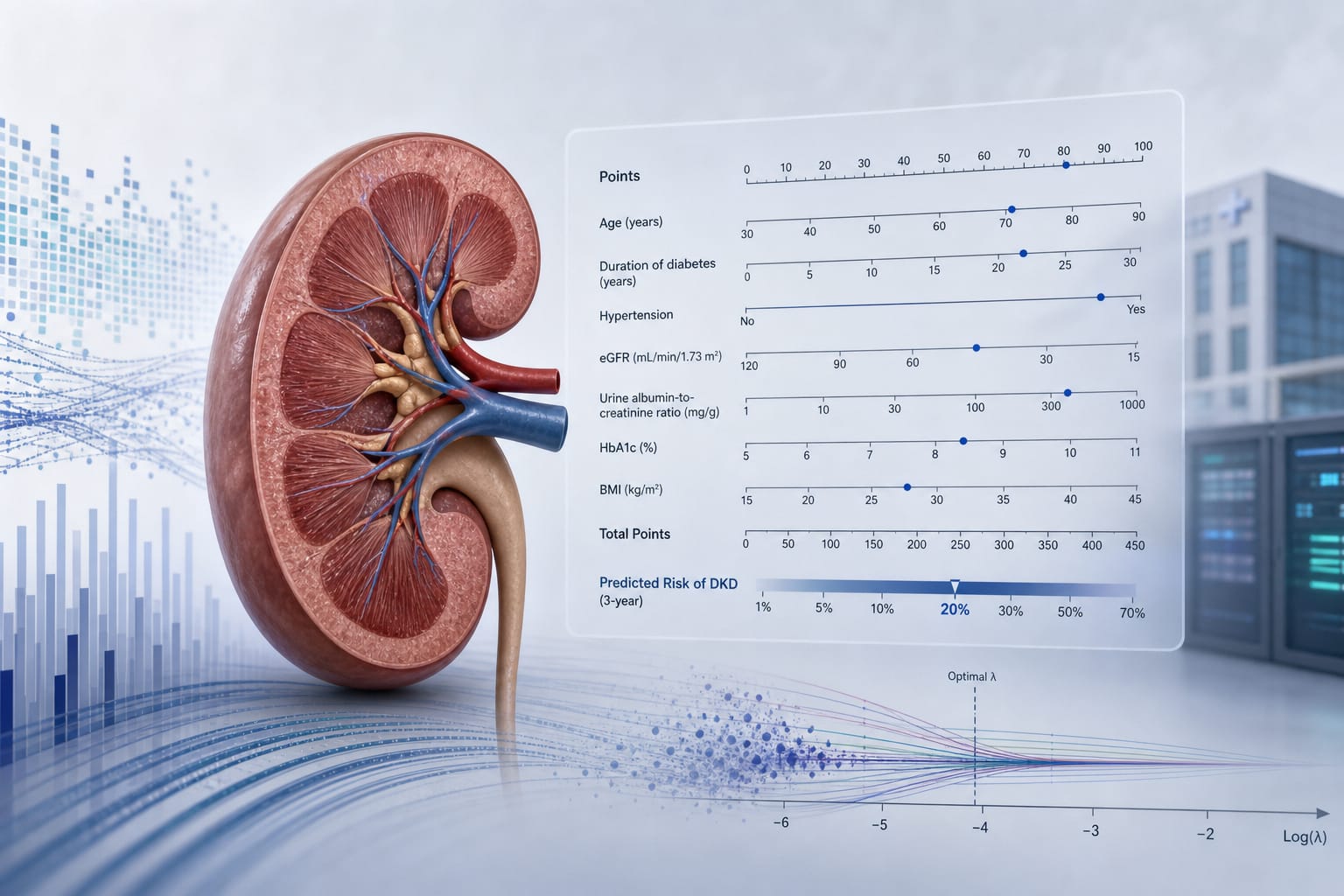
This study developed a nomogram to predict diabetic kidney disease (DKD) risk in patients with type 2 diabetes mellitus (T2DM) using clinical data.
Background
Diabetic kidney disease (DKD) is a significant complication of type 2 diabetes mellitus (T2DM) and a leading cause of end-stage renal disease (ESRD). Early identification of patients at high risk for DKD is crucial for timely intervention, as approximately 20%-40% of T2DM patients may develop this condition. Current screening methods have limitations.
Data Highlights
Data Point
Value
Patients with DKD
5,019 (21.68%)
Patients without DKD
18,133 (78.32%)
AUC (Training Set)
0.773 (95% CI: 0.764-0.782)
AUC (Temporal Validation Set)
0.758 (95% CI: 0.743-0.774)
Key Findings
LASSO regression identified nine predictors for DKD: hypertension, diabetes duration, HbA1c, eGFR, urine protein, serum creatinine, uric acid, total cholesterol, and homocysteine.
The nomogram showed moderate discrimination with an AUC of 0.773 in the training set.
In temporal validation, the AUC remained at 0.758.
Calibration curves indicated good agreement between predicted and observed probabilities.
Clinical Implications
The developed nomogram can serve as a decision-support tool for clinicians to identify patients with T2DM at high risk for DKD.
Conclusion
This study presents a predictive model for DKD risk in T2DM patients. Further multicenter external validation is necessary before widespread implementation.
National survey findings suggest many US adults report making health decisions based on social media despite widespread concerns about the accuracy of health information shared to the platforms.
In two population-based cohorts, metabolically unhealthy status generally showed higher dementia risk estimates, while metabolically healthy obesity was not associated with increased risk in primary analyses.