Menopause Apps Offer Empowerment, but Pose Risks
-
By
-
Wendy Glauser
-
July 13, 2026
Menopause Applications Provide Support but May Incur Risks
Overview
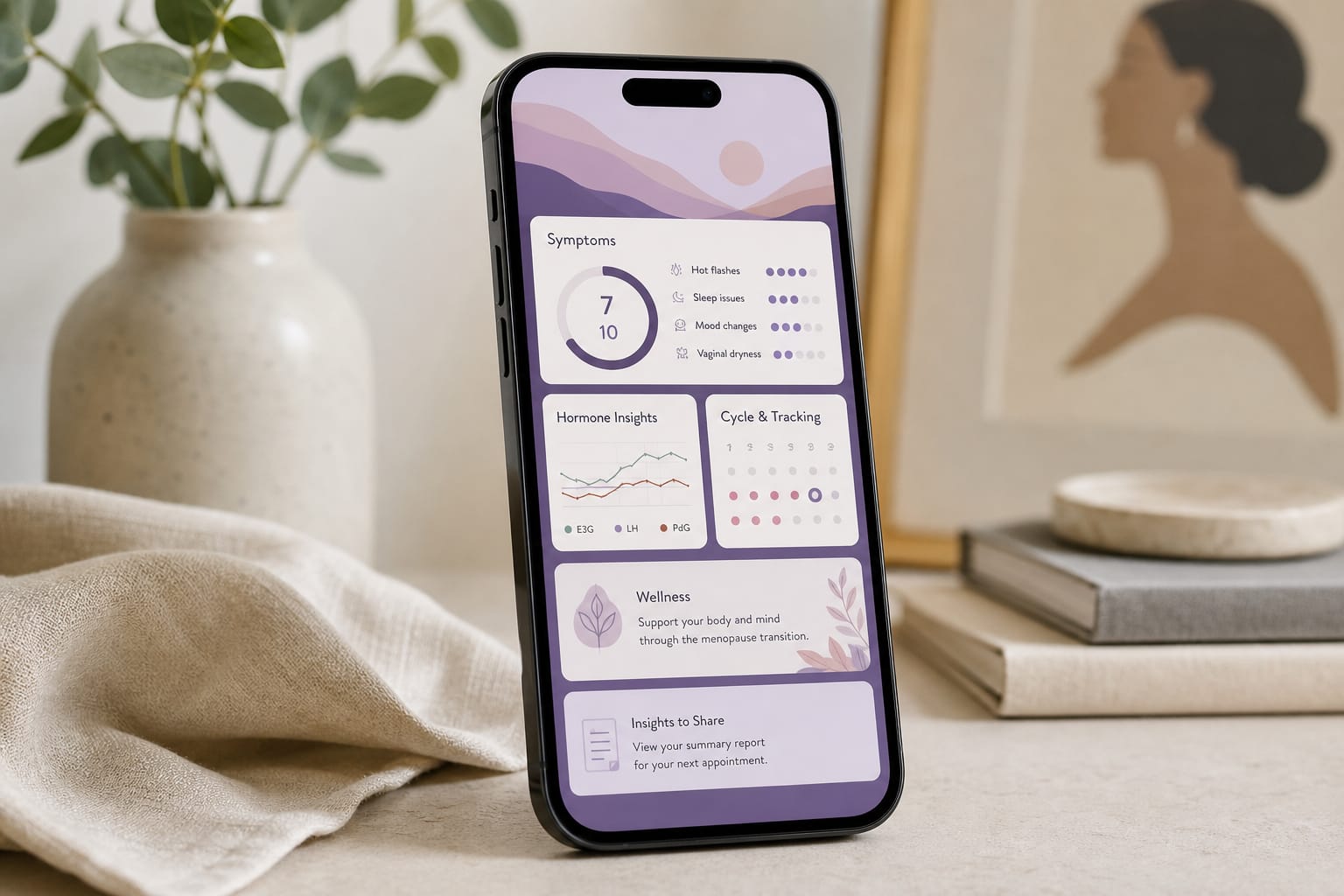
Menopause apps can assist women in recognizing symptoms and advocating for care. Clinicians emphasize the need for caution regarding the reliability of information provided by these apps.
Background
The rise of menopause tracking apps reflects a growing interest in supporting women during the menopause transition. These apps aim to help users identify hormone-related symptoms and empower them to engage with healthcare providers.
Data Highlights
No numerical data provided in the article.
Key Findings
- Menopause apps can help women track symptoms and advocate for their health.
- 27% of menopause apps reviewed in a systematic study involved medical professionals.
- 72% of reviews for menopause apps were positive, highlighting themes of empowerment.
- Some apps may mislead users regarding hormone testing and treatment options.
- Medical organizations recommend against routine hormone testing for menopause management.
Clinical Implications
Clinicians should be aware of the potential benefits and risks associated with menopause apps.
Conclusion
Menopause apps present both opportunities for support and risks of misinformation.
Related Resources & Content
- DIGITAL HEALTH, SAGE Journals, 2026 -- A self-care smartphone application for midlife women with menopausal symptoms: A proof-of-concept study
- Associated Press Health, 2026 -- A look at nonhormonal options for menopause symptoms
- Nature Reviews Endocrinology, 2026 -- Menopause in the spotlight: important research and clinical advances
- The ASCO Post, 2022 -- Use of Menopausal Hormone Therapy and Breast Cancer Mortality KEY POINTS
- NICE, 2026 -- Recommendations | Menopause: identification and management
- PubMed, 2026 -- Safety of Fezolinetant for Treatment of Moderate to Severe Vasomotor Symptoms Due to Menopause: Pooled Analysis of Three Randomized Phase 3 Studies
- JMIR mHealth and uHealth, 2025 -- Evaluating a Mobile Digital Therapeutic for Vasomotor and Behavioral Health Symptoms Among Women in Midlife: Randomized Controlled Trial
- Recommendations | Menopause: identification and management | Guidance | NICE
- Safety of Fezolinetant for Treatment of Moderate to Severe Vasomotor Symptoms Due to Menopause: Pooled Analysis of Three Randomized Phase 3 Studies - PubMed
- JMIR mHealth and uHealth - Evaluating a Mobile Digital Therapeutic for Vasomotor and Behavioral Health Symptoms Among Women in Midlife: Randomized Controlled Trial
This content is an AI-generated, fully rewritten summary based on a published scholarly article. It does not reproduce the original text and is not a substitute for the original publication. Readers are encouraged to consult the source for full context, data, and methodology.