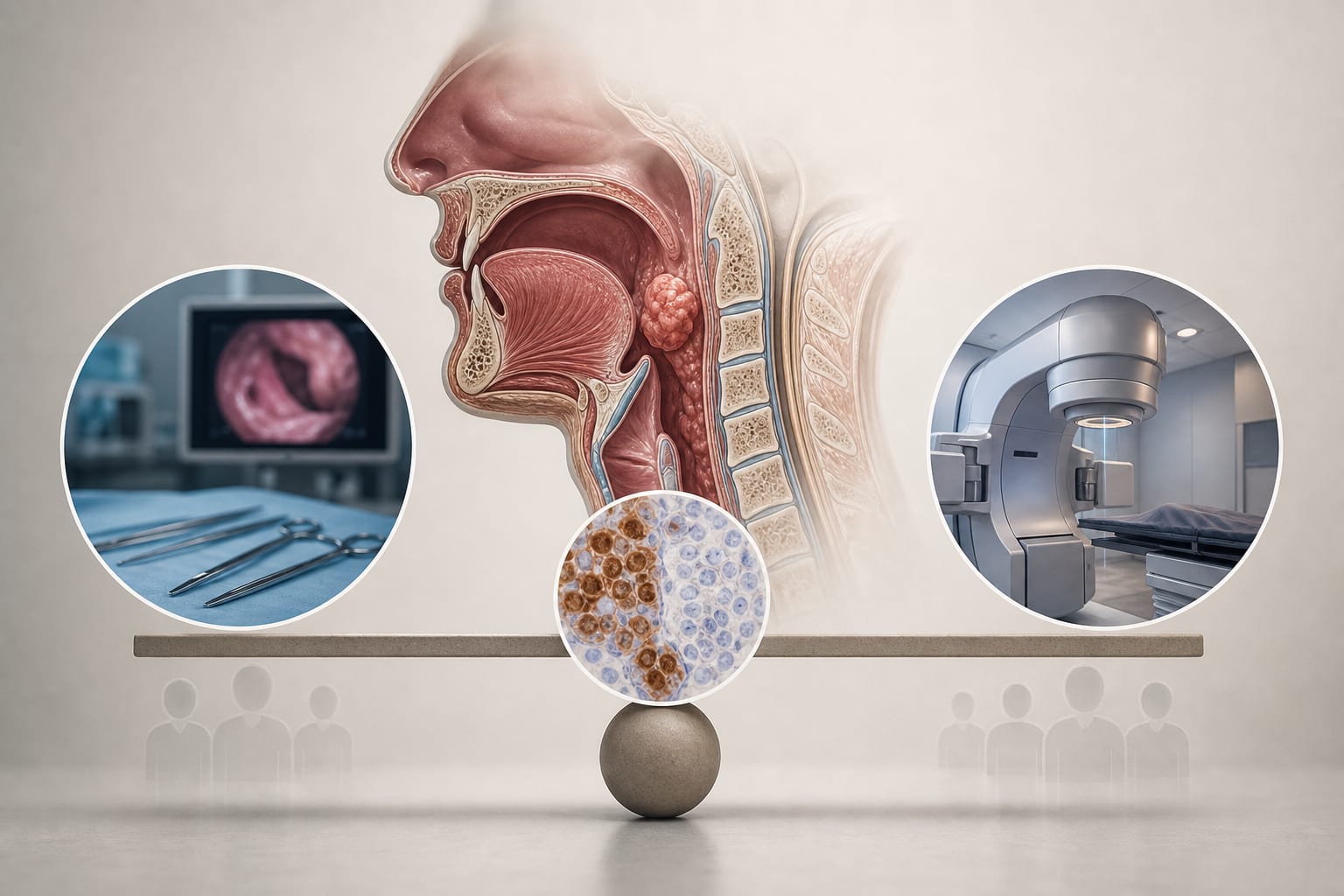
Management Strategies for Non-Metastatic Oropharyngeal Squamous Cell Carcinoma
Background
Oropharyngeal squamous cell carcinoma (OPSCC) poses significant management challenges, particularly due to the increasing incidence of HPV-related cases. Treatment options are influenced by various factors including disease stage, tumor characteristics, and patient-related factors. The integration of p16 protein status into the TNM staging system complicates treatment decision-making.
Data Highlights
No large-scale, prospective, randomized Phase III clinical trials have adequately compared surgical and nonsurgical treatment strategies for OPSCC.
Key Findings
Clinical guidelines recommend both surgical and nonsurgical options for OPSCC without favoring one approach.
The only published randomized comparison for Stage III/IV non-metastatic head and neck cancer was terminated early due to low patient accrual.
No significant differences in survival rates were observed between primary surgery and primary chemoradiation in the limited studies available.
The ORATOR trial indicated similar outcomes for radiotherapy and transoral robotic surgery in early-stage OPSCC.
Multidisciplinary teams should consider patient preferences and institutional practices when deciding on treatment strategies.
Clinical Implications
Individualized treatment plans should be developed based on a comprehensive assessment of patient and disease characteristics.
Conclusion
The management of non-metastatic OPSCC remains complex, with no clear evidence supporting one treatment modality over another.
by Primož Strojan, Avraham Eisbruch, June Corry, Sandra Nuyts, Pim de Graaf, Luiz P. Kowalski, Jonathan J. Beitler, Sweet Ping Ng, William M. Mendenhall, M. P. Sreeram, Karthik N. Rao, Anna Luíza Damaceno Araújo, Alfio Ferlito