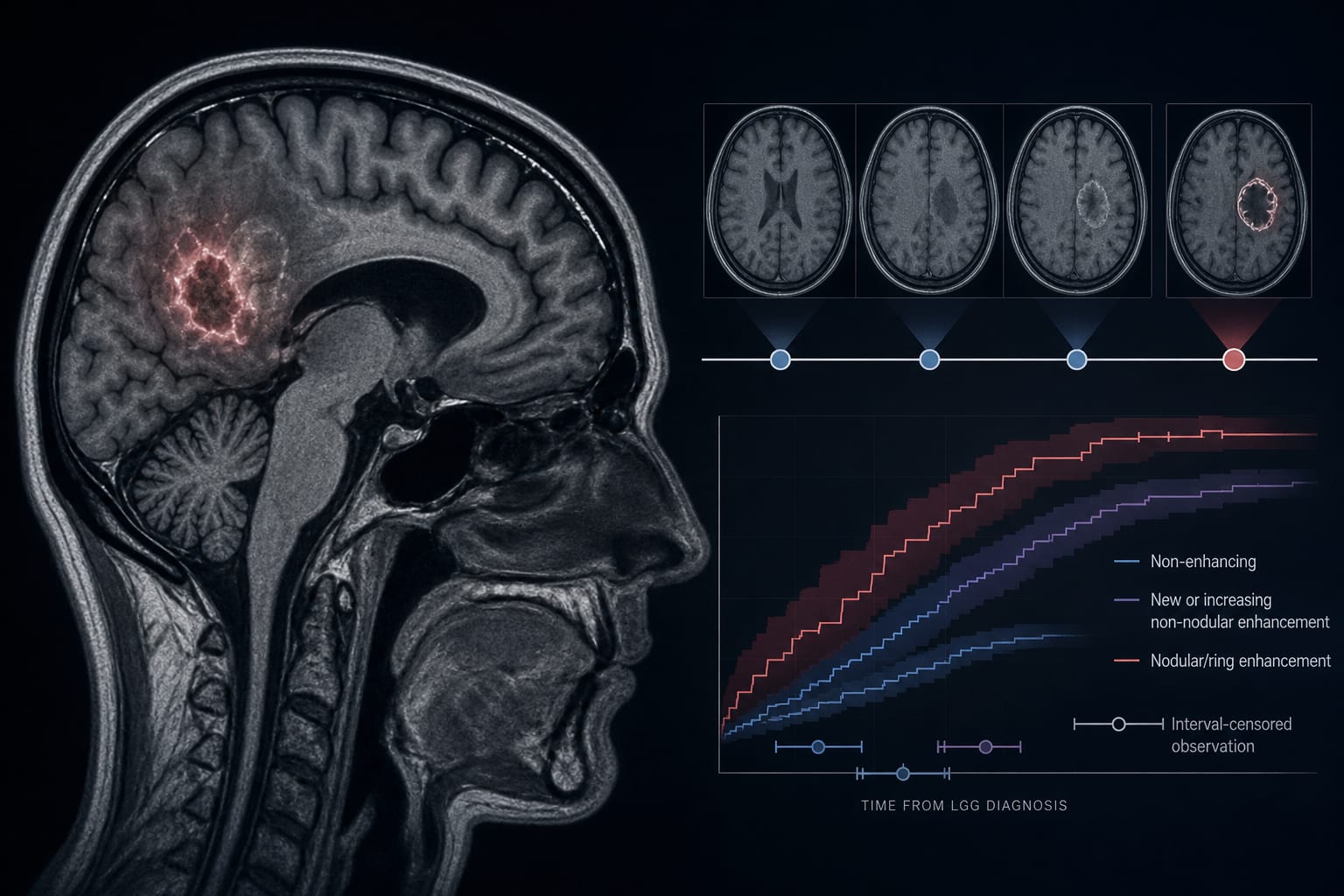
Clinical Features and Prognostic Outcomes of Epilepsy in Individuals with Pleomorphic Xanthoastrocytomas
Overview
This study investigates the clinical, pathologic, and EEG features impacting seizure outcomes in patients with pleomorphic xanthoastrocytomas (PXAs) and tumor-related epilepsy. Findings indicate that younger age at seizure onset, smaller tumor diameter, and BRAF mutations are associated with seizure freedom post-resection.
Background
Pleomorphic xanthoastrocytoma (PXA) is a rare CNS tumor with a moderately aggressive nature, primarily affecting young adults. Seizures are a common presenting symptom, occurring in 30–77% of cases at diagnosis according to various studies. Understanding seizure outcomes in PXA is crucial for patient management.
Data Highlights
No numerical data available in the source material.
Key Findings
Seizures occur in 30–77% of PXA cases at diagnosis.
65% of patients were seizure-free after initial tumor resection in a recent study.
Younger age at seizure onset and smaller tumor diameter correlate with seizure freedom.
BRAF mutations are more common in patients who achieve seizure freedom post-resection.
Seizure outcomes are not significantly impacted by tumor recurrence after initial resection.
Clinical Implications
The identification of clinical features such as age and tumor size can aid in predicting seizure outcomes in PXA patients.
Conclusion
The study highlights important clinical features that influence seizure outcomes in patients with PXAs.