Association between the triglyceride–glucose index and subclinical atherosclerosis in asymptomatic adults: a large cross-sectional study of a health check-up population - Report - MDSpire
Advertisement
Association between the triglyceride–glucose index and subclinical atherosclerosis in asymptomatic adults: a large cross-sectional study of a health check-up population
Clinical Report: Link Between Triglyceride-Glucose Index and Subclinical Atherosclerosis
Overview
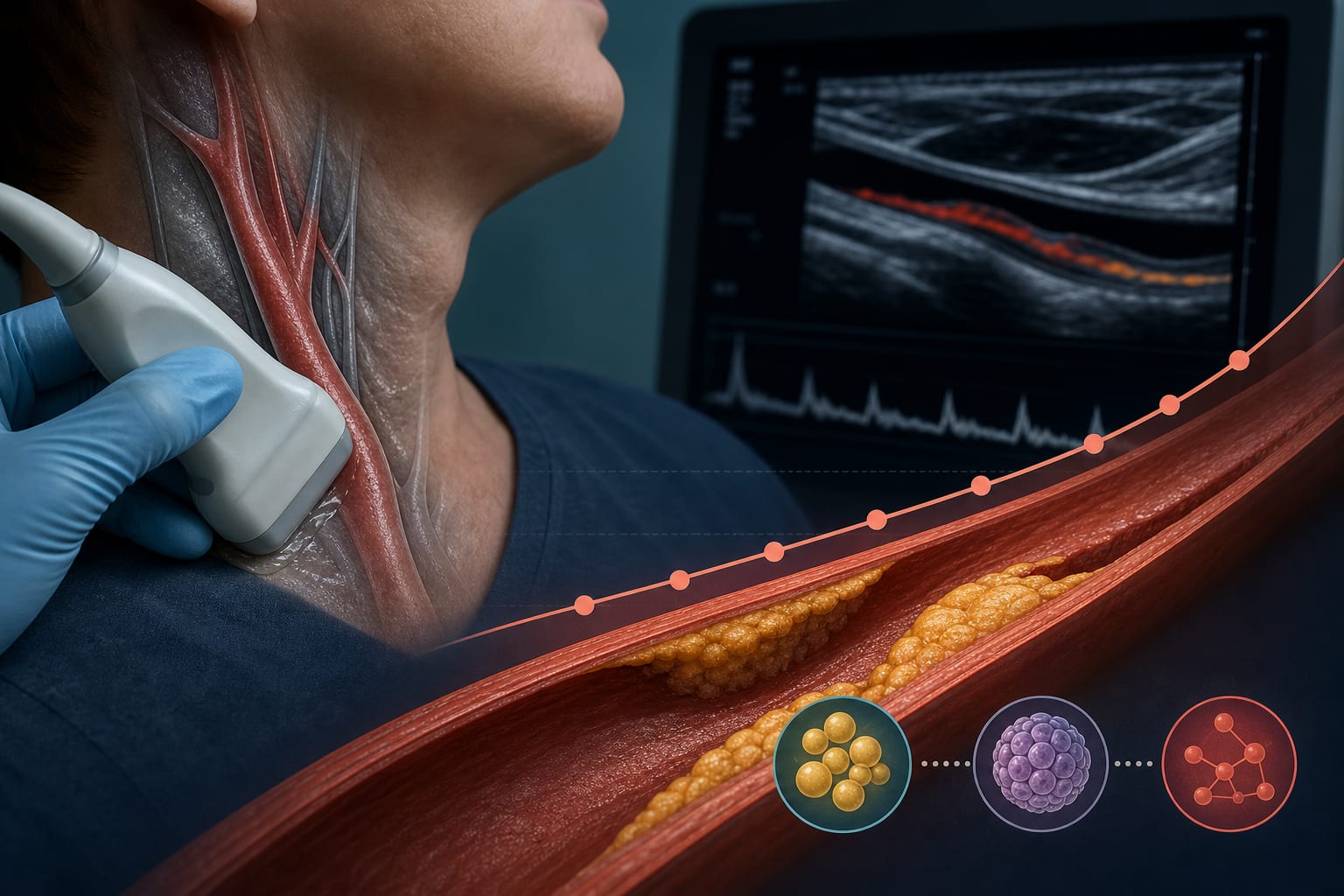
This study investigates the association between the triglyceride–glucose (TyG) index and subclinical atherosclerosis (SA) in asymptomatic adults. Higher TyG levels were linked to increased odds of SA.
Background
Cardiovascular disease (CVD) is a leading cause of mortality globally, with atherosclerosis being a primary contributor. Early detection of subclinical atherosclerosis is crucial for effective cardiovascular prevention strategies. The TyG index serves as a surrogate marker for insulin resistance.
Data Highlights
Measure
Odds Ratio (OR)
Confidence Interval (CI)
Each 1-unit increase in TyG
1.20
1.10–1.30
Highest tertile vs. lowest tertile
1.38
1.22–1.56
Key Findings
Higher TyG levels are associated with increased odds of SA.
Each 1-unit increase in TyG correlates with a 20% increase in odds of SA.
Participants in the highest TyG tertile had higher odds of SA compared to those in the lowest tertile.
A non-linear association was observed, with an inflection point around a TyG value of 8.07.
The association between TyG and SA remained consistent in normoglycemic individuals.
Clinical Implications
The findings indicate that the TyG index may be a tool for identifying asymptomatic individuals at risk for subclinical atherosclerosis.
Conclusion
The study establishes an association between the TyG index and subclinical atherosclerosis in asymptomatic adults.
In this provider-focused case review, cardiothoracic surgeon Dr. Clinton Kemp discusses the evaluation and treatment of an 89-year-old patient with severe aortic stenosis and multiple comorbidities