Clinical Report: Forecasting Same-Day Cancellations in Urologic Surgery
Overview
Day-of-surgery (DOS) cancellations in elective urologic procedures occur at a rate of 17.5% and significantly impact hospital productivity and patient care. A predictive model incorporating electronic health record (EHR) data and social determinants of health (SDOH) was developed, demonstrating improved accuracy in identifying patients at risk for same-day cancellations.
Background
Same-day surgical cancellations are a multifactorial problem worldwide, leading to wasted operating room time, increased healthcare costs, and delays in patient treatment. Prior studies indicate that most elective surgery cancellations are preventable, with hospital-related factors such as operating room availability and patient no-shows being common causes. Incorporating SDOH into predictive models has been underexplored despite their known influence on healthcare access and adherence. This study aimed to develop a logistic regression model using holistic EHR and SDOH data to better predict DOS cancellations in urologic surgery.
Data Highlights
Metric
Value
Study Cohort Size
778 patients
DOS Cancellation Rate
17.5% (131/778)
Data Split
70% training, 30% validation
Candidate Predictors
48 variables including SDOH
Key Findings
The DOS cancellation rate was 17.5% among elective urologic procedures.
A logistic regression model with lasso regularization selected key predictors from 48 candidate variables.
Inclusion of SDOH data improved prediction accuracy compared to prior models lacking these factors.
The model was internally validated using multiple training and test splits, demonstrating robust performance metrics including AUC and kappa statistics.
Random oversampling was used to address class imbalance between performed procedures and cancellations.
Predictive metrics such as sensitivity, specificity, PPV, and NPV were calculated at an optimized threshold to maximize clinical utility.
Clinical Implications
This predictive model enables early identification of patients at high risk for same-day cancellations, allowing targeted interventions to reduce cancellations and improve operating room efficiency. Incorporating SDOH into risk assessment highlights the importance of addressing social factors in surgical planning. Hospitals can leverage such models to optimize resource allocation and reduce financial and operational burdens associated with DOS cancellations.
Conclusion
Integrating comprehensive EHR data with social determinants of health enhances the prediction of same-day cancellations in urologic surgery. This approach supports proactive strategies to improve surgical productivity and patient care outcomes.
References
Day-of-surgery cancellations literature [1-7]
Preventability and causes of elective surgery cancellations [9,10]
Role of SDOH in surgical cancellations [13-16]
Predictive modeling methods and validation [17-21]
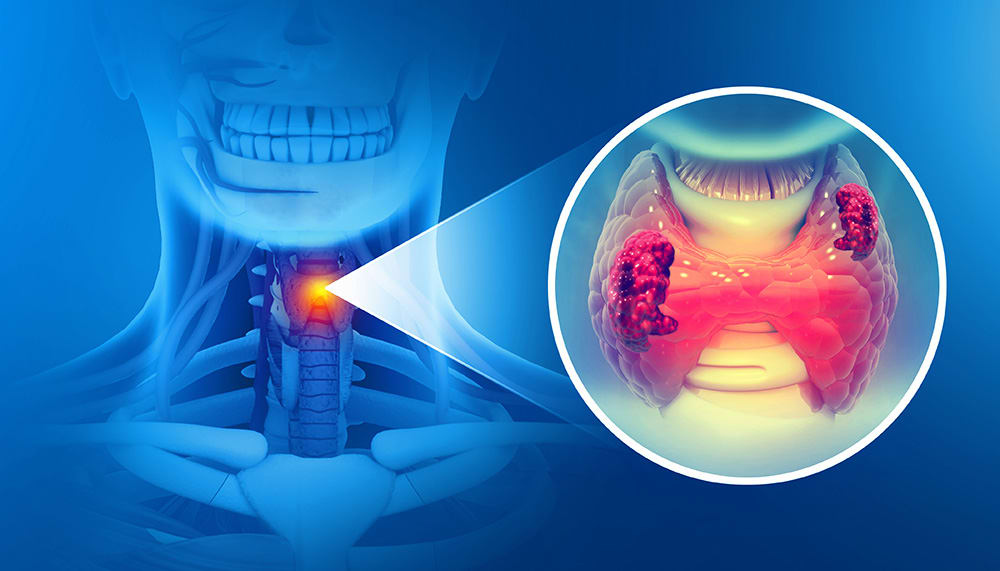
Thyroid cancer is usually a highly treatable malignancy with overall five-year survival rates over 98%. Many patients with thyroid cancer go on to live for several decades after their disease is cured.