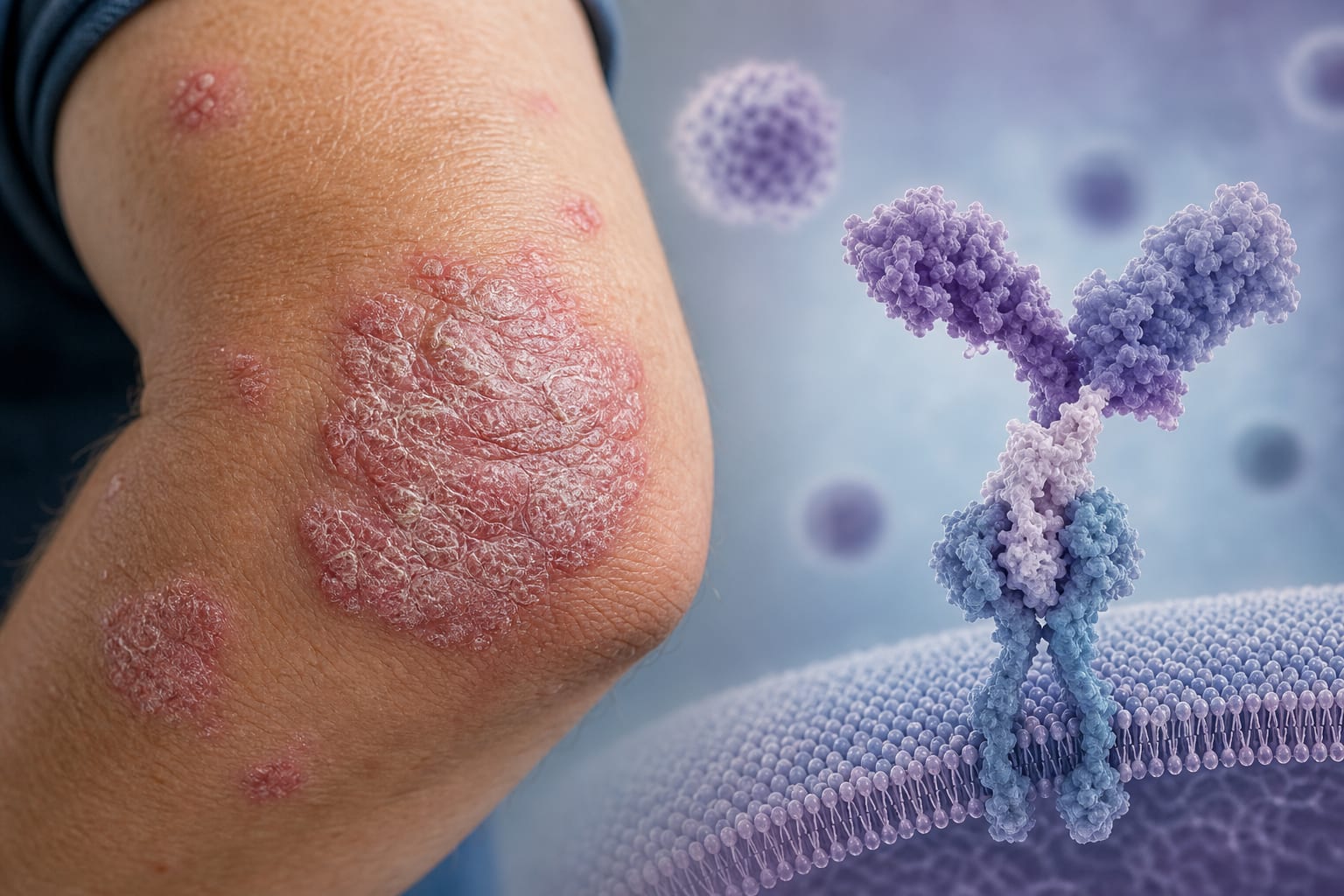
Clinical Report: A Comprehensive Functional Framework for Inflammatory Skin Disorders
Overview
The JAK-STAT signaling pathway plays a crucial role in various inflammatory skin disorders, including atopic dermatitis and psoriasis. Small molecule JAK inhibitors have shown significant efficacy in treating these conditions, prompting a need for a refined classification system that integrates JAK-dependent cytokine modules.
Background
Inflammatory skin disorders represent a significant clinical challenge due to their complex pathogenesis involving multiple cytokines and immune pathways. Traditional classification systems based on T helper cell types are inadequate for guiding targeted therapies. Understanding the JAK-STAT pathway's role in these diseases can enhance treatment strategies and improve patient outcomes.
Data Highlights
No specific numerical data provided in the article.
Key Findings
The JAK-STAT pathway is implicated in the pathogenesis of inflammatory skin diseases such as atopic dermatitis and psoriasis.
Small molecule JAK inhibitors like abrocitinib and upadacitinib have been approved for moderate-to-severe atopic dermatitis.
Baricitinib has been approved for the treatment of severe alopecia areata.
Current classification systems fail to account for the complexity of cytokine interactions in inflammatory skin disorders.
A functional refinement framework is proposed to better integrate JAK-dependent cytokine modules into existing classification systems.
Clinical Implications
Clinicians should consider the JAK-STAT pathway when diagnosing and treating inflammatory skin disorders. The use of JAK inhibitors may provide broader therapeutic options for patients with complex cytokine-mediated conditions.
Conclusion
A deeper understanding of the JAK-STAT signaling pathway can enhance the management of inflammatory skin disorders and inform the development of targeted therapies. Continued research is essential to refine treatment approaches and improve patient care.
Approval expands risankizumab use to pediatric plaque psoriasis and psoriatic arthritis and includes a new 55-mg prefilled syringe for weight-based dosing in patients weighing less than 40 kg.