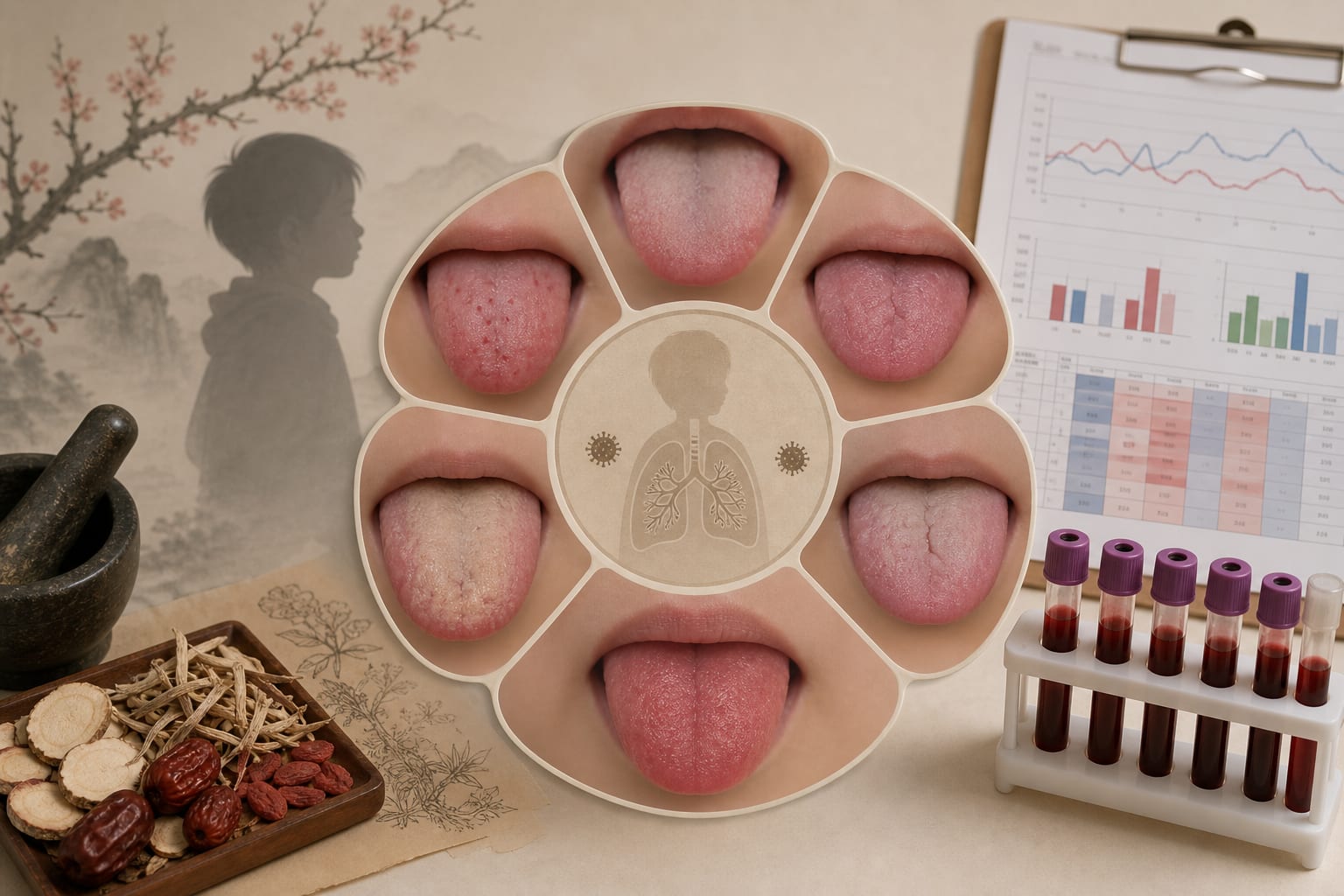
Clinical Features, Tongue Signs, and TCM Syndrome Classifications of Spring Influenza A in Pediatric Patients: A Retrospective Study from a Single Center
-
By
-
Yuan Si
-
Xiang Zhao
-
July 16, 2026
Clinical Features, Tongue Signs, and TCM Syndrome Classifications of Spring Influenza A in Pediatric Patients
Overview
This study analyzed clinical manifestations, hematological changes, tongue characteristics, and syndrome differentiation in 143 pediatric patients with influenza A during spring. Key findings include a predominance of fever, cough, and lymphopenia, alongside dynamic changes in inflammatory markers and tongue signs correlating with disease duration.
Background
Influenza A poses significant health risks, particularly in pediatric populations. Understanding the clinical features and traditional Chinese medicine (TCM) syndrome classifications can enhance integrated treatment approaches. This study provides insights into the specific manifestations of influenza A in children during the spring season.
Data Highlights
| Parameter | Findings |
|---|---|
| Mean Age | 6.48 ± 3.61 years |
| Initial Symptoms | Fever (132 cases, 92.31%) |
| Common Symptom Combination | Fever + Cough (116 cases, 81.12%) |
| Lymphocyte Count | 129 cases (90.21%) below normal |
| Red Tongue Proportion | 134 cases (93.71%) |
Key Findings
- Fever was the most common initial symptom (92.31%).
- Early lymphopenia was observed in 90.21% of cases.
- Red tongue was predominant, increasing with disease duration.
- Heat-toxin attacking the lung syndrome was the most common TCM syndrome (34.97%).
- Procalcitonin (PCT) and C-reactive protein (CRP) levels changed dynamically with disease progression.
Clinical Implications
The findings highlight the importance of recognizing specific clinical features and TCM syndrome classifications in pediatric influenza A cases. This knowledge may assist healthcare providers in tailoring integrated treatment strategies.
Conclusion
The study provides valuable insights into the clinical features and TCM characteristics of influenza A in children during spring, emphasizing the need for further multicenter studies to validate these observations.
Related Resources & Content
- Frontiers in Medicine, 2026 -- A visualization analysis of Traditional Chinese Medicine for influenza prevention and treatment: advances, hotspots, and future trends
- Infection, 2020 -- Clinical Features of 145 Individuals Diagnosed with COVID-19 in Taizhou, Zhejiang Province, China
- Frontiers in Pediatrics, 2026 -- Age-stratified clinical characteristics of hand, foot, and mouth disease in children and its guiding value for diagnosis and treatment
- NCBI Bookshelf -- Introduction - Clinical practice guidelines for influenza
- CDC, 2025 -- Prevention and Control of Seasonal Influenza with Vaccines: Recommendations of the Advisory Committee on Immunization Practices
- CDC, 2024 -- 2024–2025 Recommendations for Influenza Prevention and Treatment in Children: An Update for Pediatric Providers
- Frontiers in Pediatrics — Season-matched comparison of pediatric respiratory pathogen detection patterns before and after the lifting of COVID-19 restrictions in Guangzhou
- Introduction - Clinical practice guidelines for influenza - NCBI Bookshelf
- Prevention and Control of Seasonal Influenza with Vaccines: Recommendations of the Advisory Committee on Immunization Practices — United States, 2025–26 Influenza Season | MMWR
- 2024–2025 Recommendations for Influenza Prevention and Treatment in Children: An Update for Pediatric Providers
- Comparison of Efficacy and Safety of Baloxavir and Oseltamivir in Children With Influenza: A Systematic Review and Meta-Analysis - PubMed
- https://www.nhc.gov.cn/ylyjs/zcwj/202501/f8fcecca59a048bebc4a71847ce57594/files/1741764832851_94226.pdf
- 标题
Based on findings from:
Clinical characteristics, tongue manifestations, and traditional Chinese medicine syndrome patterns of spring influenza A in children: a single-center retrospective study
Yuan Si, Xiang Zhao. Frontiers In Pediatrics, 2026.
https://www.frontiersin.org/journals/pediatrics/articles/10.3389/fped.2026.1879124/full
This content is an AI-generated, fully rewritten summary based on a published scholarly article. It does not reproduce the original text and is not a substitute for the original publication. Readers are encouraged to consult the source for full context, data, and methodology.