Computed tomography findings in 11,504 adult patients with traumatic brain injury: a large real-world cohort study with a S100B subgroup analysis - Report - MDSpire
CT Imaging Results in 11,504 Adults with Traumatic Brain Injury
Overview
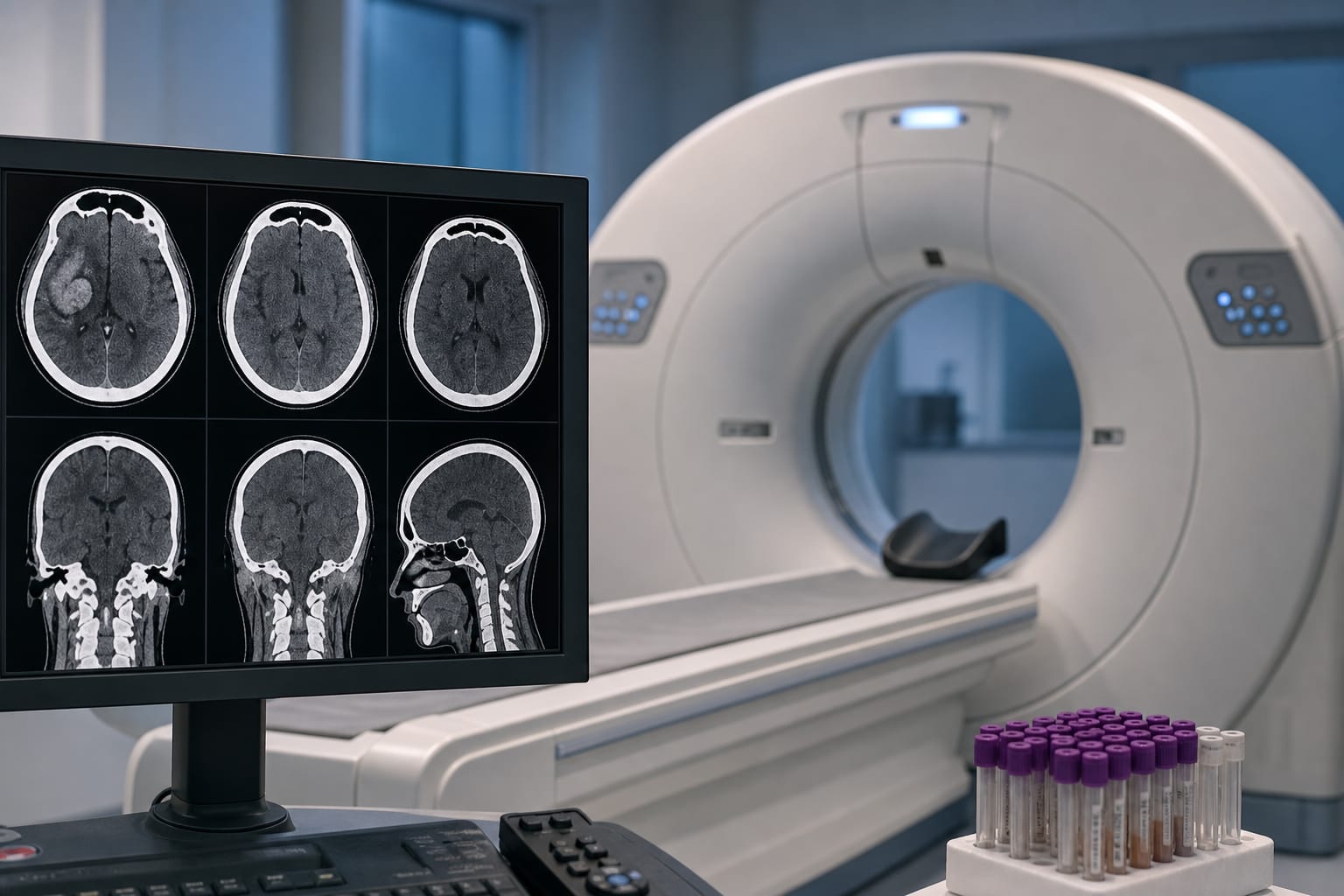
This study evaluates cranial CT findings in a large cohort of adults with traumatic brain injury (TBI) and examines the diagnostic performance of serum S100B levels. The findings indicate that a significant proportion of CT scans may not reveal acute traumatic abnormalities, particularly in older adults.
Background
Traumatic brain injury is a significant global health issue, with over 10 million cases reported annually. The incidence of TBI is notably higher in older adults, who face unique diagnostic challenges due to comorbidities and altered clinical presentations. Understanding imaging utilization patterns and the role of biomarkers like S100B is crucial for optimizing diagnostic approaches in this population.
Data Highlights
Among the 11,504 adults studied, 45% of cranial CT scans were negative for acute traumatic findings. Serum S100B levels were found to be elevated in 30% of patients with significant brain injuries, suggesting a potential role in triaging patients for imaging.
Key Findings
A substantial number of cranial CT scans in adults with TBI do not show acute traumatic abnormalities.
Serum S100B levels may help rule out clinically relevant brain injuries in selected patients.
Older adults with TBI present unique challenges in clinical assessment and imaging utilization.
Clinical decision rules for imaging may have limited applicability in older adults and those with cognitive impairment.
Biomarker-guided triage could potentially reduce unnecessary CT scans in specific populations.
Clinical Implications
The findings highlight the need for careful consideration of imaging strategies in older adults with TBI. Incorporating serum biomarkers like S100B may assist in reducing unnecessary CT scans and optimizing resource utilization in emergency settings.
Conclusion
This study underscores the importance of integrating imaging findings with biomarker assessments to improve diagnostic accuracy and patient management in traumatic brain injury.
Related Resources & Content
Factors Influencing Patient Outcomes After Traumatic Brain Injury: The Role of Contusion Growth, Thrombocytopenia, and Bifrontal Contusions in a Retrospective Single-Center Analysis
Distribution Patterns of Lesions and Prognostic Significance of Brain Contusions in Moderate to Severe Traumatic Brain Injury as Observed on Early MRI
Characteristics of Intracranial Lesions in Moderate to Severe Traumatic Brain Injury: Association with Neurointensive Care Factors and Patient Outcomes
Clinical significance of head CT scan in patients admitted to the emergency department with mild head trauma
Blood Biomarkers as Optimization Tools for Computed Tomography in Mild Traumatic Brain Injury Management in Emergency Departments: A Systematic Review
European Radiology — Enhancing Trauma Population Classification of Traumatic Brain Injury Using the Abbreviated Injury Scale and a Standardized Radiologic Approach
Clinical significance of head CT scan in patients admitted to the emergency department with mild head trauma | Internal and Emergency Medicine | Springer Nature Link
Blood Biomarkers as Optimization Tools for Computed Tomography in Mild Traumatic Brain Injury Management in Emergency Departments: A Systematic Review - PMC