Clinical Report: Development and Initial Evaluation of the CardioCare System
Overview
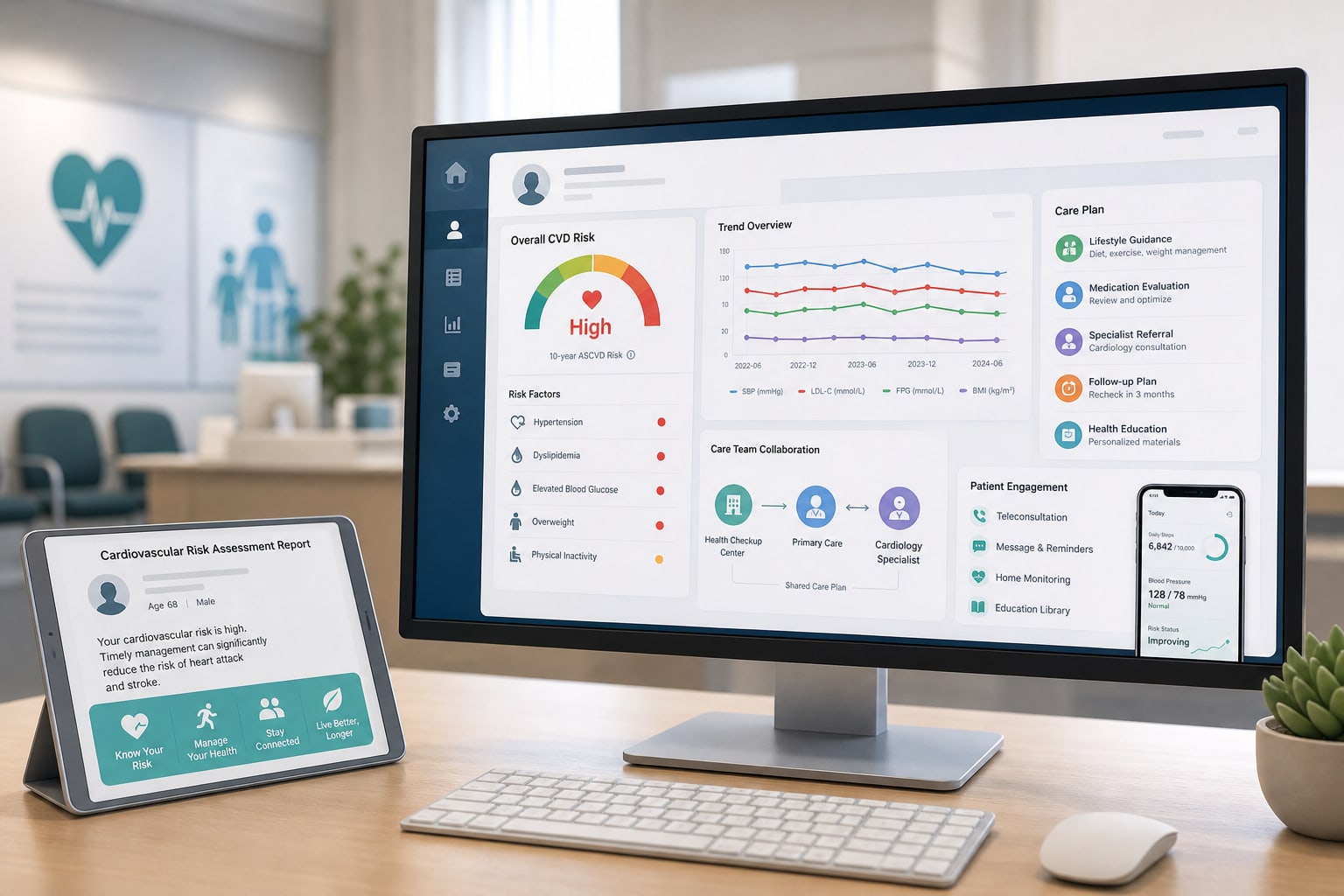
The CardioCare program aims to enhance cardiovascular disease risk management among older adults in China through a digital health system integrated into health checkup facilities. Initial evaluations focused on usability and integration into clinical workflows, with findings indicating user engagement and system functionality.
Background
Cardiovascular disease is a leading cause of mortality among older adults in China, necessitating effective screening and management strategies. Despite large-scale health checkups, many high-risk patients do not receive adequate follow-up care, as evidenced by studies highlighting significant gaps in the healthcare system. Digital health interventions like CardioCare may address these challenges by improving patient engagement and continuity of care.
Data Highlights
No numerical data or trial results were provided in the source material.
Key Findings
The CardioCare system integrates cardiovascular risk screening with personalized management tools.
Phase 1 of the program focused on system design, software development, and pilot implementation.
Preliminary testing assessed usability and integration into clinical workflows.
The program includes features for risk factor control and preventive care actions.
Digital health solutions are relevant in addressing barriers to follow-up care.
Clinical Implications
The CardioCare system facilitates follow-up care through digital means. Its integration into routine health checkups may enhance patient engagement and adherence to recommended interventions.
Conclusion
The initial evaluation of the CardioCare system shows improvements in cardiovascular risk management in older adults. Further studies are needed to assess its long-term impact on patient outcomes.