Conexiant’s news site is now MDSpire News. Learn more
Advertisement
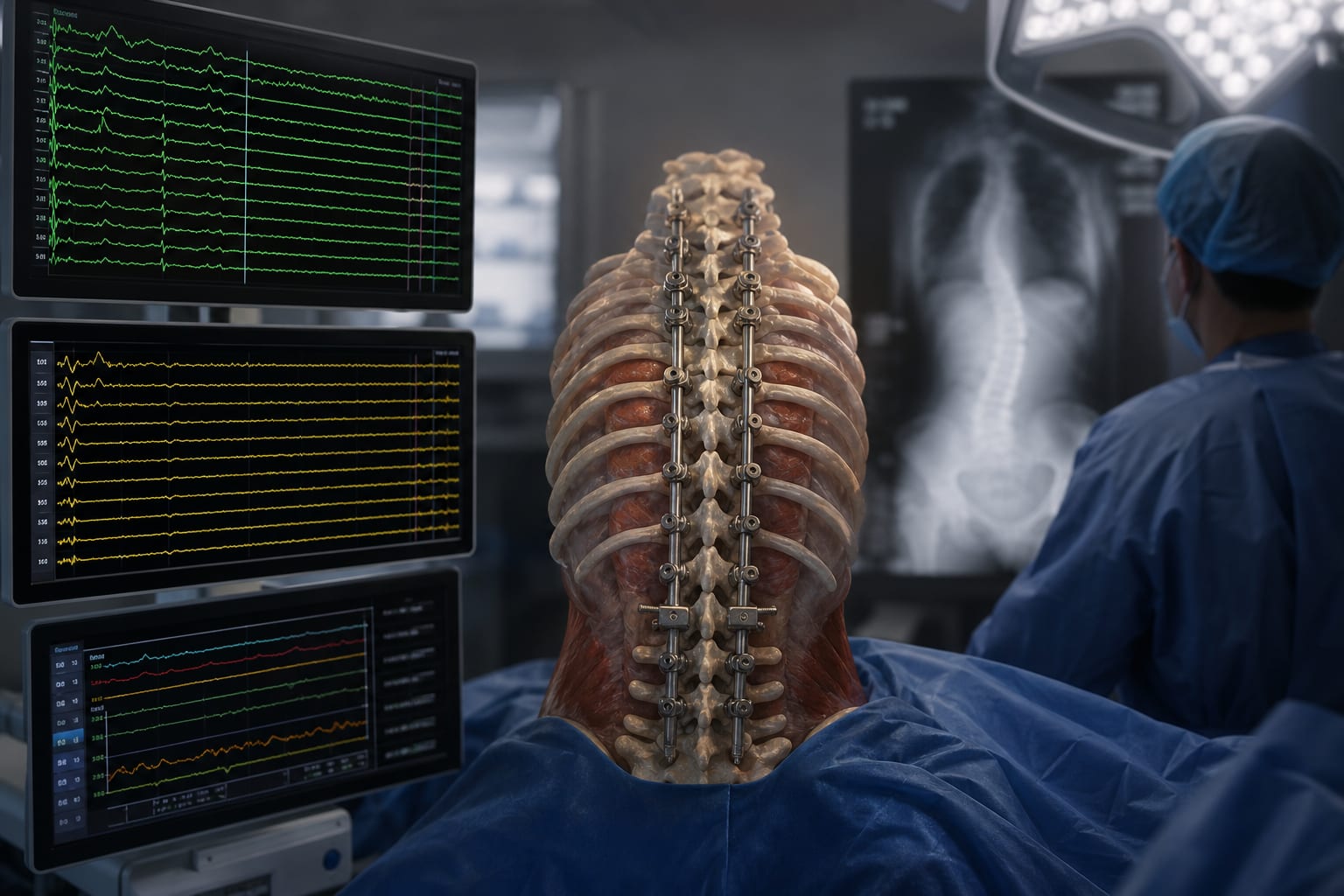
Utilizing Intraoperative Motor Evoked Potentials and Electromyography During the Wake-Up Phase as Complementary Tools to the Wake-Up Test in Complex Spinal Deformity Surgery
Clinical Report: Utilizing Intraoperative Motor Evoked Potentials and Electromyography
Overview
This study evaluates the adjunctive value of intraoperative motor evoked potential (MEP) recovery and electromyographic (EMG) activity during the wake-up phase in predicting postoperative neurological outcomes in high-risk patients undergoing severe spinal deformity surgery.
Background
Spinal cord injury is a serious complication during spinal deformity correction, with risks of permanent paralysis. Intraoperative monitoring, including MEP and EMG, is essential to prevent these complications. The traditional wake-up test has limitations that may affect its reliability in assessing neurological status.
Data Highlights
Group
Recovery Rate
False Positive Rate
No Paralysis
78.0% recovered motor function immediately
20.3% (wake-up test)
Complete Paralysis
34.6% recovered within 1 month
10.2% (MEP recovery)
90.4% recovered within 1 year
33.9% (EMG)
9.6% failed to return to baseline
6.8% (MEP + EMG)
0% (all modalities combined)
Key Findings
78.0% of patients without immediate paralysis recovered motor function immediately after surgery.
34.6% of patients with immediate paralysis recovered within 1 month.
Combining MEP and EMG reduced the false-positive rate to 6.8%.
0% false-positive rate when using wake-up test, MEP, and EMG findings together.
MEP and EMG responses were obtained earlier than wake-up test responses.
Clinical Implications
The study suggests that incorporating MEP and EMG monitoring during the wake-up phase can enhance the assessment of neurological risk in high-risk spinal deformity surgeries. This multimodal approach may lead to more accurate interpretations of neurological status.
Conclusion
Intraoperative MEP recovery and EMG activity can serve as valuable adjuncts to the traditional wake-up test.