Correction: Non-human primate preclinical model revealed the feasibility and short-term safety of iPSC-derived innate-like T cells in autologous transplantation - Report - MDSpire

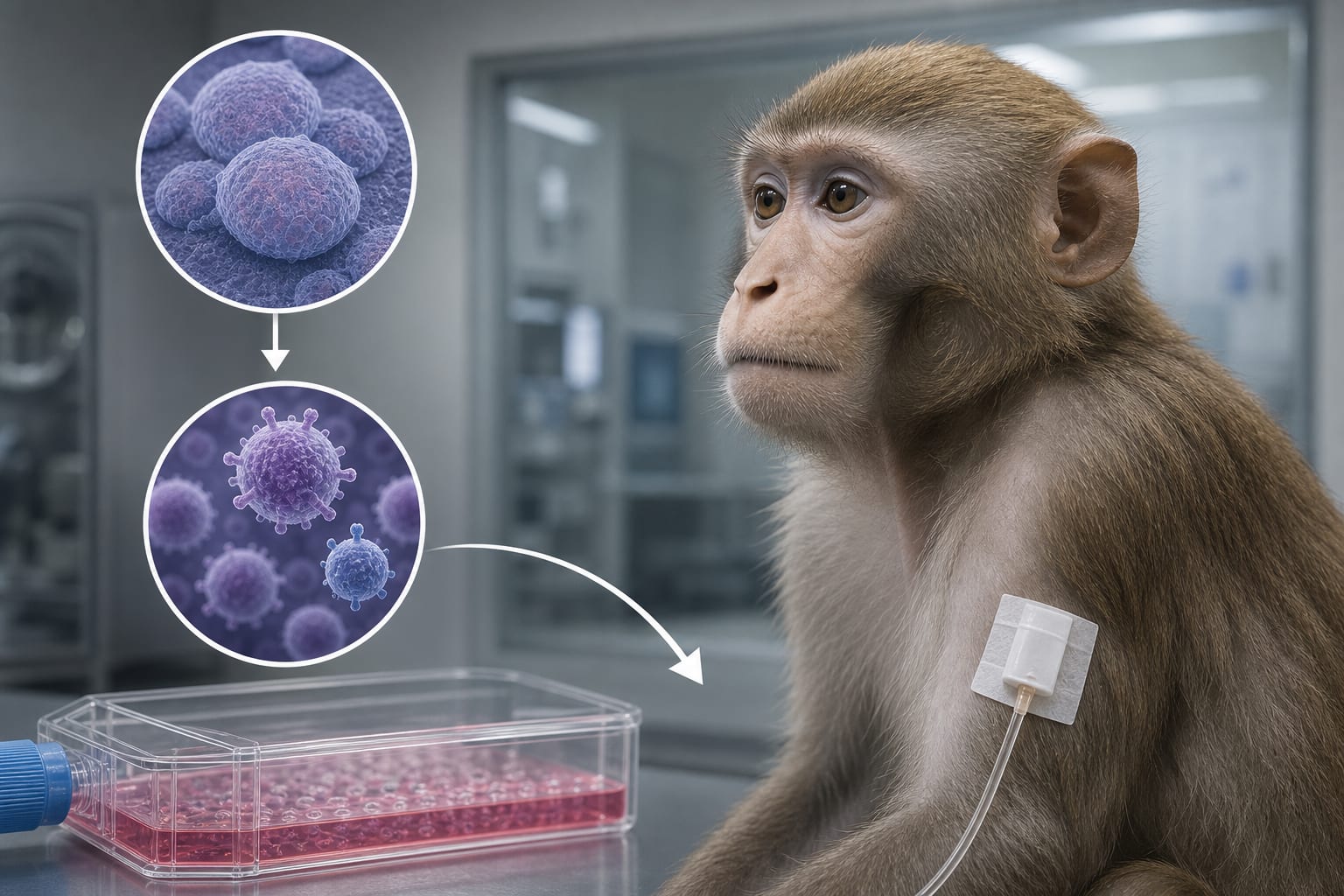
Correction: Non-human primate preclinical model revealed the feasibility and short-term safety of iPSC-derived innate-like T cells in autologous transplantation

  • By

  • Yasuyuki Miyake

  • Shoichi Iriguchi

  • Ai Kawana-Tachikawa

  • Shuichi Kitayama

  • Eri Imai

  • Kahoru Taya

  • Hiroshi Ishii

  • Tomoyuki Miura

  • Hiromi Sakawaki

  • Tetsuro Matano

  • Shin Kaneko

  • May 27, 2026

  • 0 min

Share

Correction: A Non-Human Primate Model Demonstrates the Short-Term Safety and Feasibility of Autologous Transplantation Using iPSC-Derived Innate-Like T Cells

Overview

Revise to include direct attribution to the source regarding the funding statement error.

Background

The use of induced pluripotent stem cells (iPSCs) in transplantation has garnered significant interest due to their potential to generate patient-specific cells. Understanding the safety and feasibility of iPSC-derived therapies is crucial for advancing clinical applications, particularly in the context of autologous transplantation.

Data Highlights

No numerical data or trial results are presented in the correction notice.

Key Findings

  • The original article reported on the feasibility and short-term safety of iPSC-derived innate-like T cells.
  • The correction specifically addresses an error in the funding statement.
  • The correct funding statement includes an additional grant number: JP25fk0410060.
  • This research contributes to the understanding of iPSC applications in immunotherapy.
  • iPSC-derived products require rigorous preclinical evidence before clinical trials.

Clinical Implications

Accurate funding disclosures are essential for transparency in research. The findings related to iPSC-derived therapies may inform future clinical applications and regulatory considerations.

Conclusion

This correction emphasizes the importance of precise reporting in scientific publications, particularly regarding funding sources in research on iPSC-derived therapies.

Related Resources & Content

  1. Miyake Y, Iriguchi S, Kawana-Tachikawa A, et al., Front. Immunol., 2026 -- Correction: A Non-Human Primate Model Demonstrates the Short-Term Safety and Feasibility of Autologous Transplantation Using iPSC-Derived Innate-Like T Cells
  2. The Journal of Clinical Endocrinology & Metabolism — Utilizing Autologous Cells to Reverse Diabetes: Approaching the Ideal Solution
  3. the medicine maker — Human-Relevant Discovery: iPSC Models and the Future of Rare Disease R&D
  4. Brain — Evaluating Early Trials of Dopamine Cell Therapies from Stem Cells in Parkinson's Disease
  5. Brain — Induction of Neural Stem Cells for Remyelination in Chronic Demyelinated Lesions
  6. Clinical Translation of Stem Cell-based Interventions
  7. The emerging promise of induced pluripotent stem cells in clinical studies: a systematic scoping review of the literature and registered clinical trials - ScienceDirect
  8. Non-human primate preclinical model revealed the feasibility and short-term safety of iPSC-derived innate-like T cells in autologous transplantation

Original Source(s)

Related Content