A multi-mineral intervention is associated with improved intestinal permeability in patients with ulcerative colitis: results from a pilot trial - Report - MDSpire

A multi-mineral intervention is associated with improved intestinal permeability in patients with ulcerative colitis: results from a pilot trial

  • By

  • Muhammad N. Aslam

  • Danielle Kim Turgeon

  • Shannon McClintock

  • Ron Allen

  • Ananda Sen

  • James Varani

  • June 22, 2026

  • 0 min

Share

Clinical Report: A pilot study indicates that a multi-mineral supplement may enhance intestinal barrier function in individuals with ulcerative colitis

Overview

This pilot study reports that Aquamin®, a multi-mineral supplement, was associated with significant reductions in urinary mannitol excretion after 90 days of supplementation in patients with ulcerative colitis (UC), indicating changes in gut permeability.

Background

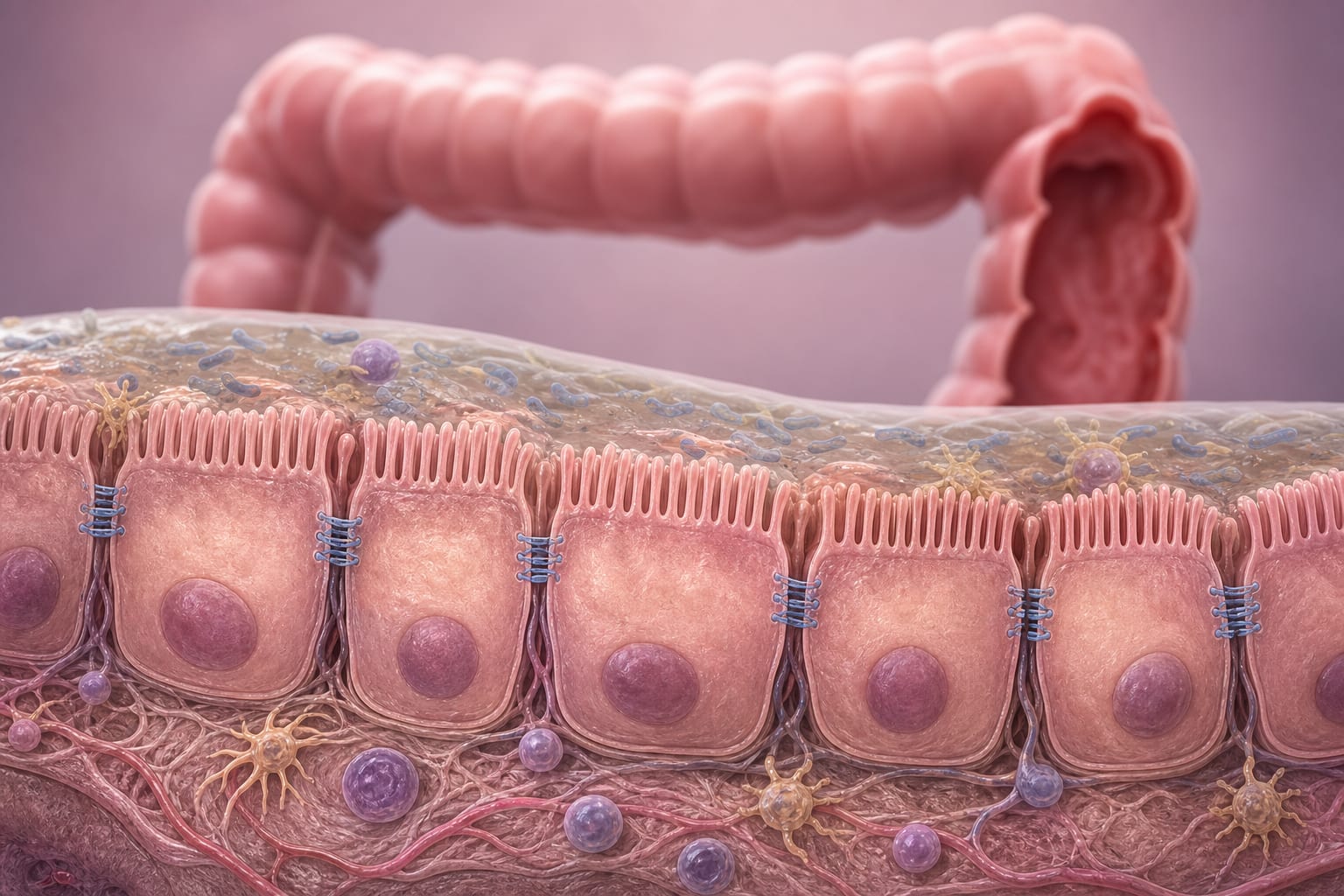
Ulcerative colitis (UC) is a chronic inflammatory bowel disease characterized by mucosal inflammation and increased intestinal permeability. Impaired barrier function in UC can lead to disease exacerbation and persistent symptoms, even during remission. There is growing interest in therapies that can restore epithelial integrity and improve gut barrier health in UC patients.

Data Highlights

ParameterUC Patients (Pre-Intervention)UC Patients (Post-Intervention)Healthy Controls
Urinary Mannitol (0-2 h)54% higher (p = 0.006)Decreased by 28% (p = 0.015)Baseline
Total Mannitol Excretion-Reduced by 29% (p = 0.024)-
Alkaline Phosphatase Levels-Modest reduction-

Key Findings

  • Aquamin® supplementation reduced urinary mannitol levels in UC patients by 28%, 26%, and 41% at different time points.
  • The reduction in mannitol excretion at the 0-2 h interval was statistically significant (p = 0.015).
  • Total post-intervention mannitol excretion decreased by 29% (p = 0.024).
  • Baseline urinary mannitol levels were 54% higher in UC patients compared to healthy controls (p = 0.006).
  • Aquamin® was well tolerated with no serious adverse events reported.
  • Serum metabolic panel showed a modest reduction in alkaline phosphatase levels after 90 days of intervention.

Clinical Implications

The findings indicate that Aquamin® was well tolerated with no serious adverse events reported. Further research is warranted to confirm these results.

Conclusion

This exploratory study provides preliminary evidence that Aquamin® supplementation is associated with changes in gut barrier function in UC patients. Further investigation is needed to establish its efficacy and safety in larger populations.

Related Resources & Content

  1. A Multi-Mineral Intervention Improves Intestinal Permeability in Patients with Ulcerative Colitis: Results from a 90-Day Pilot Trial, medRxiv, 2026
  2. Frontiers in Medicine — Synergistic effects of probiotics and low-FODMAP diet on clinical and inflammatory outcomes in ulcerative colitis: a retrospective cohort study
  3. Journal of Gastroenterology — An In-Depth Review of Small-Bowel Injury Associated with Non-Steroidal Anti-Inflammatory Drugs
  4. Frontiers in Immunology — From nutritional intervention to immune modulation: a multi-database bibliometric and topic modeling study of vitamin D in inflammatory bowel disease
  5. Journal of Crohn's and Colitis — Multi-omics data integration identifies novel biomarkers and patient subgroups in inflammatory bowel disease
  6. American College of Gastroenterology’s 2025 guideline update
  7. Intestinal Permeability In Vivo in Patients With Inflammatory Bowel Disease: Comparison of Active Disease and Remission - PMC
  8. A Multi-Mineral Intervention Improves Intestinal Permeability in Patients with Ulcerative Colitis: Results from a 90-Day Pilot Trial | medRxiv

Original Source(s)

Related Content