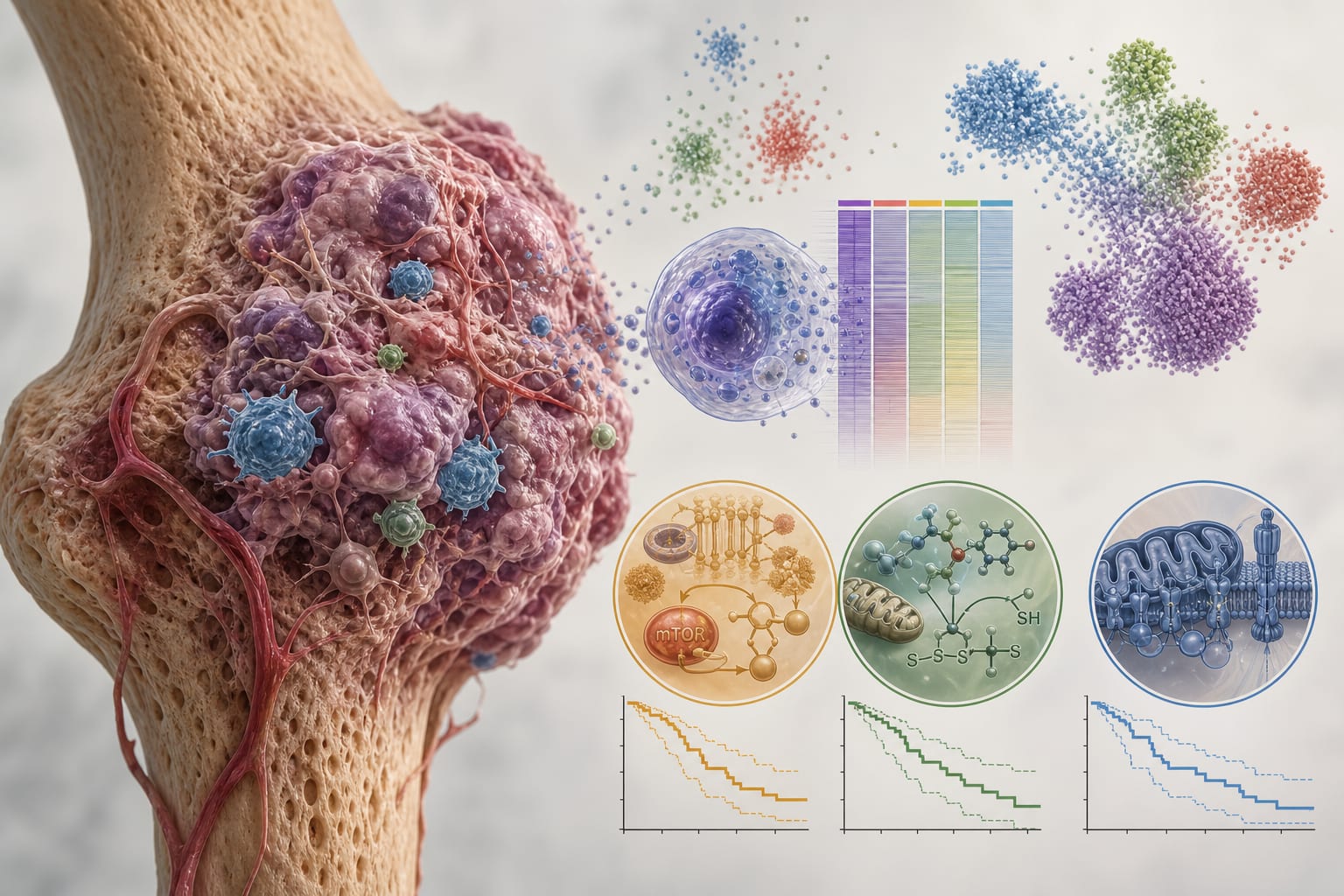
Clinical Report: Metabolic Subtypes Inferred from Transcriptome Analysis Reveal Prognostic and Immune Landscapes in Osteosarcoma at the Single-Cell Level
Overview
This study identifies three distinct metabolic subtypes of osteosarcoma through transcriptome analysis, revealing significant prognostic implications. The Redox-Catabolic subtype showed a favorable survival rate compared to the other subtypes, highlighting the importance of metabolic profiling in risk stratification.
Background
Osteosarcoma is a highly aggressive bone malignancy, particularly in pediatric and adolescent populations, with variable clinical outcomes despite similar presentations. Understanding the metabolic heterogeneity of osteosarcoma can provide insights into tumor behavior and treatment responses, potentially leading to improved prognostic tools and therapeutic strategies.
Data Highlights
Subtype
3-Year Overall Survival
Progression-Free Survival
C1 (Cholesterogenic)
60.0%
Not specified
C2 (Redox-Catabolic)
90.8%
Not specified
C3 (OXPHOS-Active)
61.9%
Not specified
Key Findings
Three metabolic subtypes identified: Cholesterogenic (C1), Redox-Catabolic (C2), and OXPHOS-Active (C3).
C2 subtype exhibited the highest 3-year overall survival rate at 90.8%.
C1 and C3 subtypes had lower survival rates of 60.0% and 61.9%, respectively.
Single-cell RNA sequencing revealed distinct cellular origins for each subtype, aiding in understanding tumor composition.
Metabolic profiling can enhance risk stratification and inform therapeutic hypotheses in osteosarcoma.
Clinical Implications
The identification of metabolic subtypes in osteosarcoma underscores the potential for tailored therapeutic approaches based on metabolic profiles. Clinicians may consider integrating metabolic assessments into routine evaluations to better predict patient outcomes and guide treatment decisions.
Conclusion
This research highlights the critical role of metabolic heterogeneity in osteosarcoma, offering a framework for improved prognostic stratification and potential therapeutic targeting based on metabolic subtype.