Surgical management of tumor-mimicking posteriorly migrated lumbar disc fragment using a quadrant minimally invasive approach: a case report and literature review - Report - MDSpire
Conexiant’s news site is now MDSpire News. Learn more
Advertisement
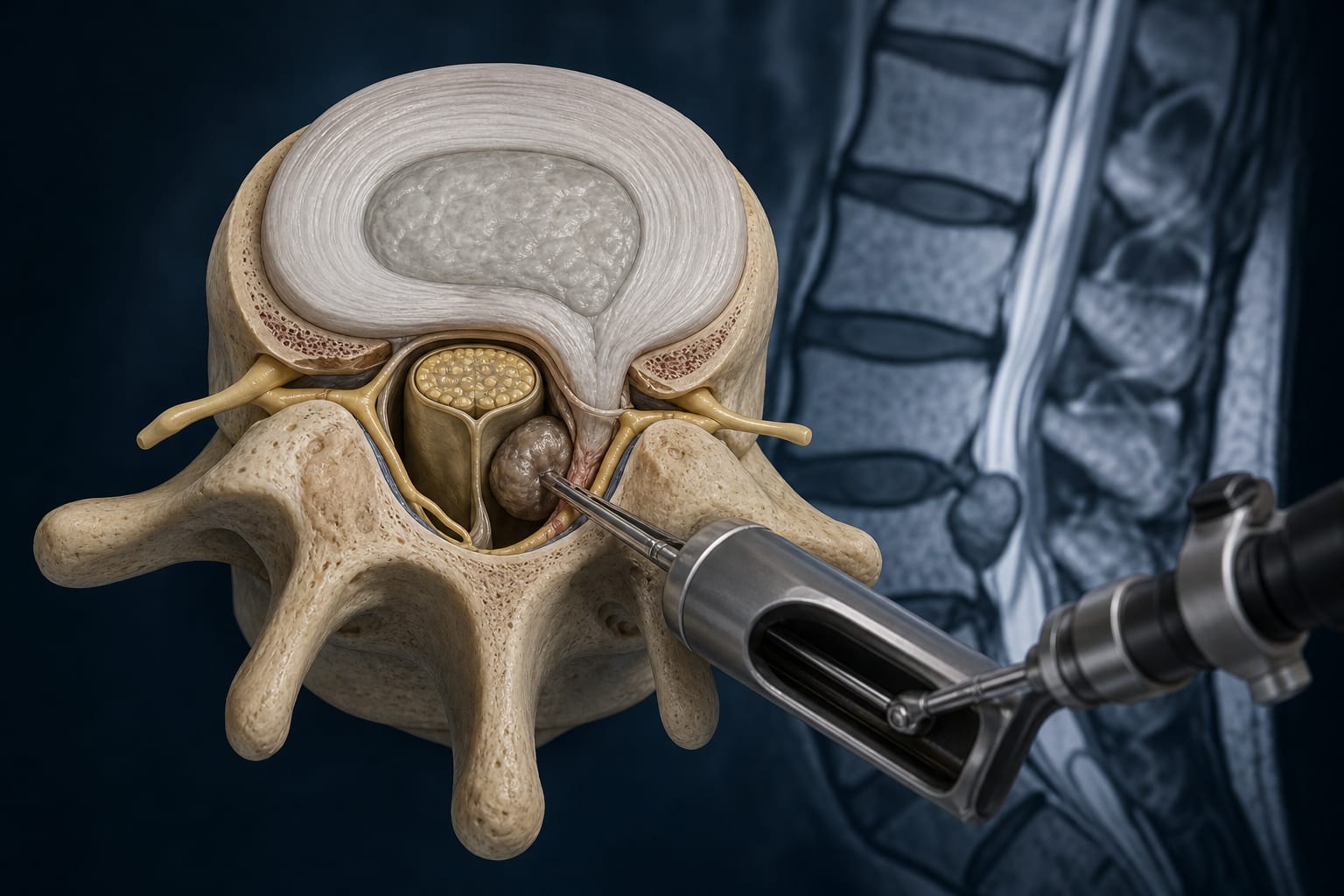
Minimally Invasive Quadrant Technique for Surgical Intervention of Posteriorly Displaced Lumbar Disc Fragment Mimicking a Tumor: A Case Study and Review of Existing Literature
Minimally Invasive Quadrant Technique for Surgical Intervention of PEMDF
Background
PEMDF is a rare condition that can be misdiagnosed as a spinal tumor due to its imaging characteristics, particularly in cases with peripheral rim enhancement. Traditional management has relied on open decompression techniques, which may not be necessary in all cases. The exploration of minimally invasive techniques, such as the Quadrant approach, offers potential benefits in terms of reduced trauma and quicker recovery, although further research is needed to establish its efficacy.
Data Highlights
No numerical data or trial data presented in the article.
Key Findings
PEMDF can closely mimic spinal tumors on MRI, complicating preoperative diagnosis.
The Quadrant approach allowed for complete excision of the lesion in the presented case.
Histopathological examination confirmed the lesion as degenerative intervertebral disc tissue.
The patient experienced marked symptomatic improvement and complete recovery of muscle strength post-surgery.
No neurological deficits or recurrence were observed during the 6-month follow-up.
Clinical Implications
Awareness of PEMDF as a potential diagnosis is crucial to avoid misinterpretation as a neoplastic process.
Conclusion
Minimally invasive surgical techniques like the Quadrant approach can manage PEMDF while minimizing patient trauma.