Electroacupuncture as an eosinophil-targeting treatment in ovalbumin-induced allergic rhinitis involving β2-adrenergic receptor in a mouse model - Report - MDSpire
Advertisement
Electroacupuncture as an eosinophil-targeting treatment in ovalbumin-induced allergic rhinitis involving β2-adrenergic receptor in a mouse model
Electroacupuncture as a Targeted Approach for Eosinophilic Inflammation in Allergic Rhinitis
Overview
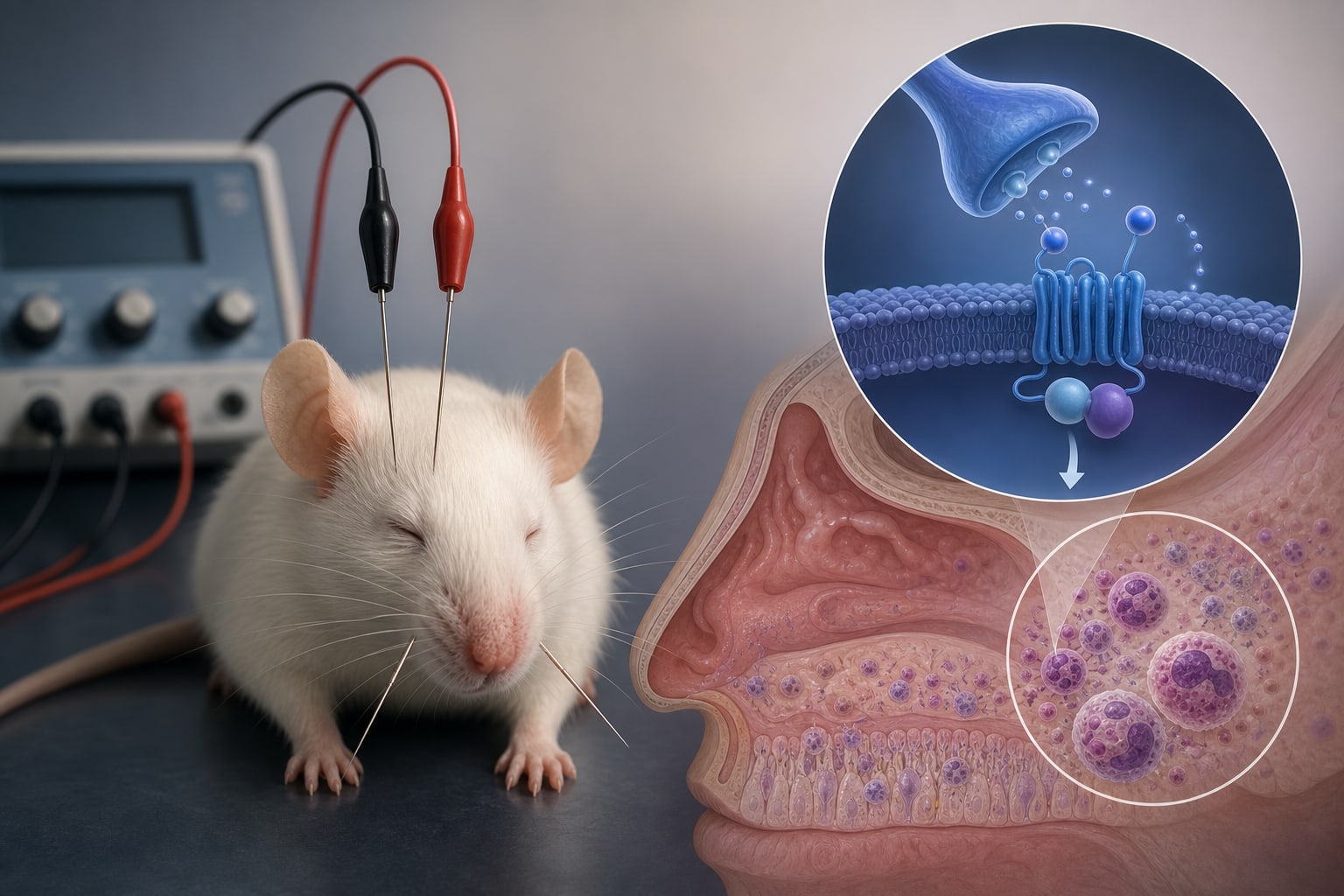
Electroacupuncture (EA) significantly reduces eosinophilic inflammation and allergic rhinitis behaviors in a mouse model, showing comparable efficacy to the antihistamine chlorpheniramine. The mechanism involves β2-adrenergic receptor modulation.
Background
Allergic rhinitis (AR) is a prevalent condition affecting 10-40% of the global population, characterized by Th2 inflammation and eosinophil involvement. Current treatments have limitations, particularly in addressing eosinophilic inflammation, which is linked to disease severity and asthma risk. This study explores electroacupuncture as a non-pharmacologic approach to modulate eosinophilic responses in AR.
Data Highlights
Parameter
EA Treatment
CLP Treatment
Nasal Rubbing
Reduced
Reduced
Nasal Redness
Reduced
Reduced
Olfactory Dysfunction
Reduced
Not Assessed
IL-5 Levels
Reduced
Reduced
IL-13 Levels
Reduced
Reduced
Key Findings
EA alleviated nasal rubbing, redness, and olfactory dysfunction in OVA-challenged mice.
Both EA and CLP reduced IL-5, IL-13, and serum OVA-specific IgE levels.
Only EA reversed OVA-induced nasal eosinophil infiltration and suppressed RNASE2A expression.
Pre-treatment with β2-adrenergic antagonist butoxamine abolished EA's effects on eosinophilic inflammation.
EA was associated with elevated plasma norepinephrine and epinephrine levels.
Clinical Implications
The findings suggest that electroacupuncture may serve as a complementary intervention for managing eosinophilic inflammation in allergic rhinitis. This approach could provide an alternative for patients who do not respond adequately to standard antihistamine therapies.
Conclusion
Electroacupuncture demonstrates potential in reducing eosinophilic inflammation and associated symptoms in allergic rhinitis through β2-adrenergic receptor modulation, warranting further investigation in clinical settings.