Clinical Report: Improving Classification of Skin Lesions Through AI
Overview
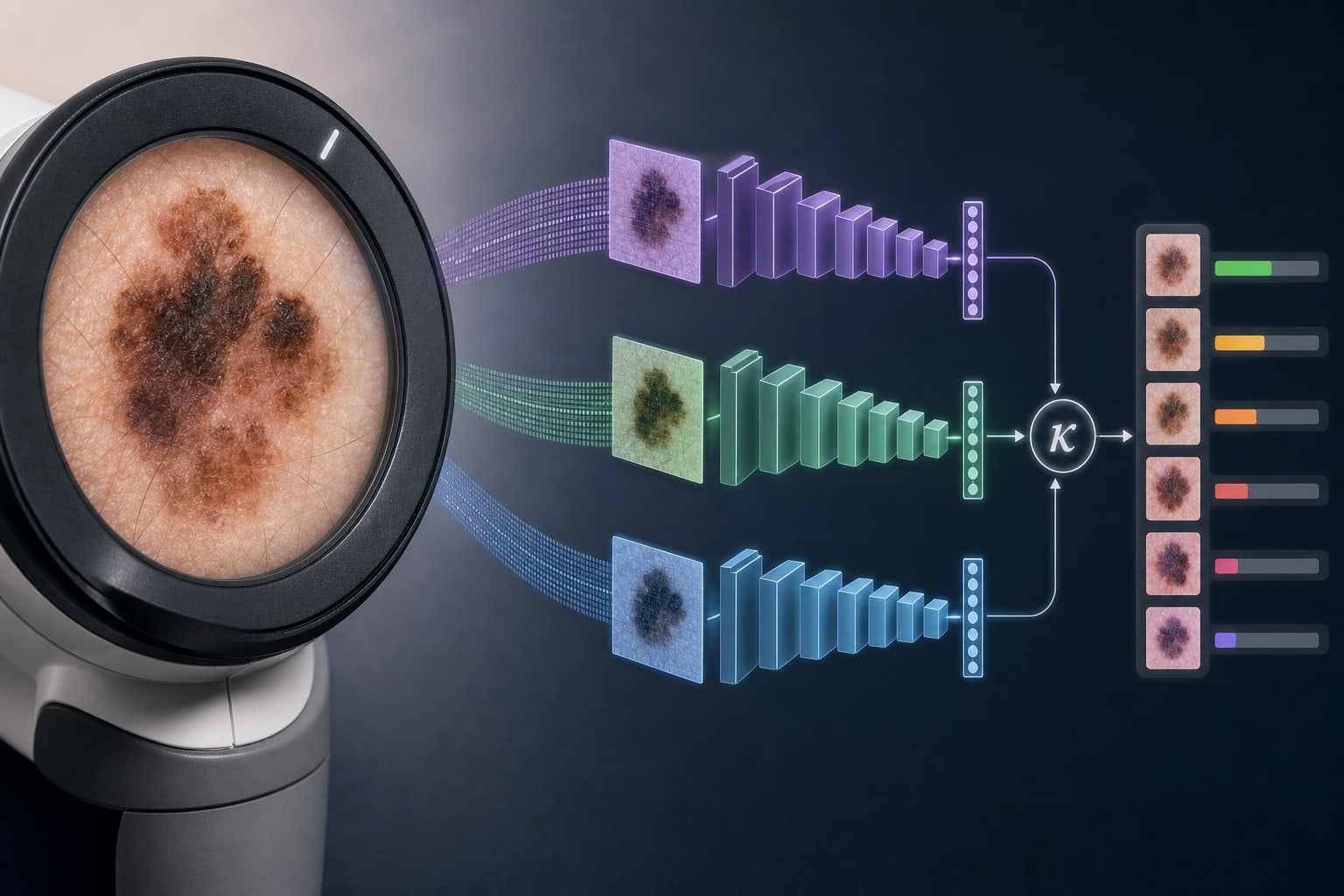
This report discusses a novel tri-path attention stacked ensemble model aimed at enhancing the classification accuracy of skin lesions.
Background
Skin lesions are indicative of various dermatological conditions, ranging from benign to malignant. Accurate detection is crucial, especially for skin cancers like melanoma.
Data Highlights
No numerical data or trial data is provided in the source material.
Key Findings
['The proposed model utilizes a tri-path attention mechanism to improve feature representation in skin lesion classification.', 'Existing machine learning techniques often exhibit biases towards classes with abundant training samples.', 'Traditional ensemble methods may not effectively account for the contributions of individual predictors.', 'Pre-prediction stacking mechanisms are essential for enhancing predictive robustness in skin lesion detection.', 'AI has shown potential in automating the analysis of dermoscopic images.']
Clinical Implications
The development of advanced AI models can potentially reduce human error in skin lesion diagnosis and improve early detection rates. Clinicians may consider integrating such AI tools into their diagnostic workflows to enhance accuracy.
Conclusion
The tri-path attention stacked ensemble model addresses key limitations of current methodologies.