CFTR functions as a tumor suppressor in adenoid cystic carcinoma and its silencing reveals an associated vulnerability involving the Hsp70 chaperone system - Report - MDSpire
Advertisement
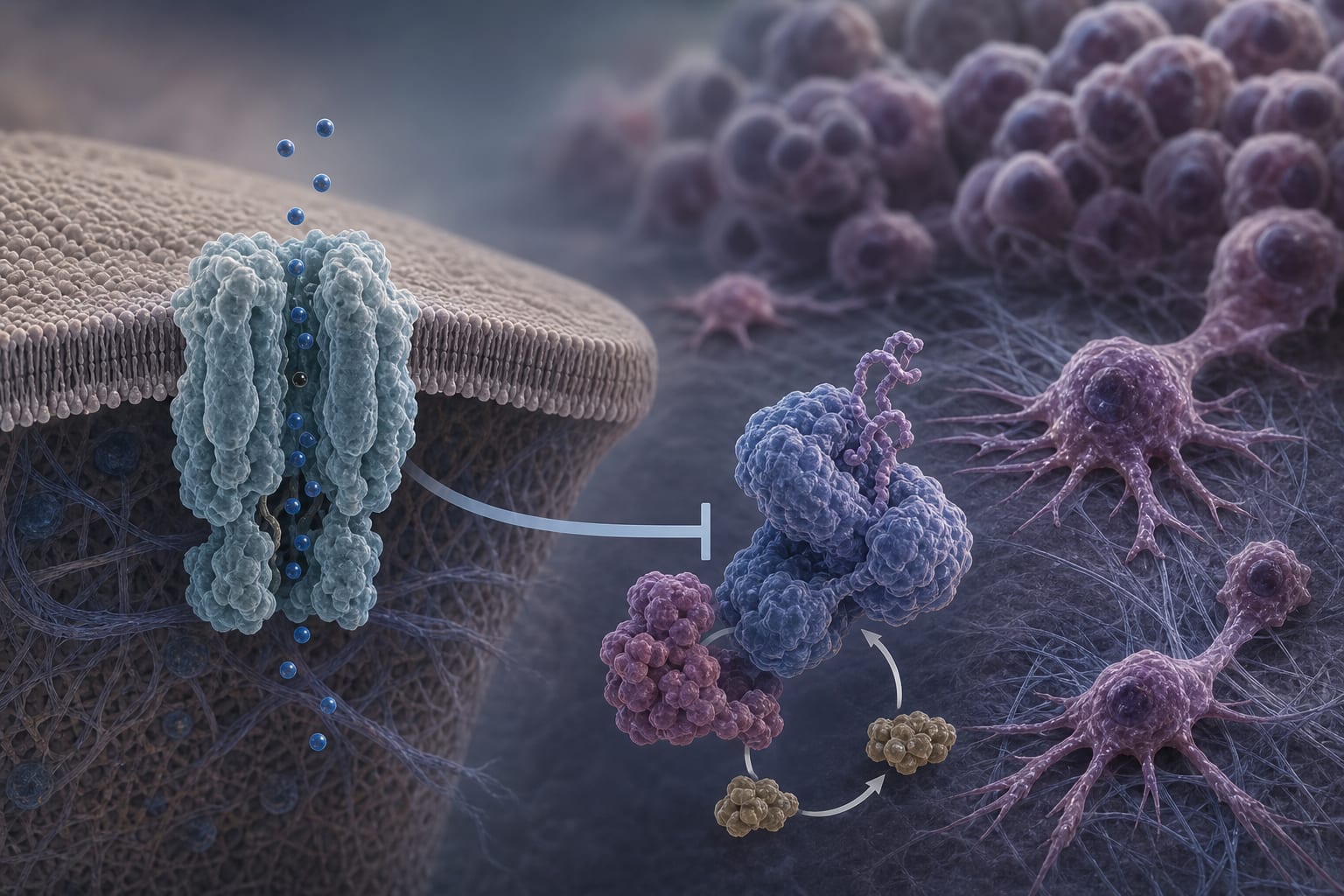
CFTR functions as a tumor suppressor in adenoid cystic carcinoma and its silencing reveals an associated vulnerability involving the Hsp70 chaperone system
CFTR Acts as a Tumor Suppressor in Adenoid Cystic Carcinoma
Overview
This study identifies CFTR as a downregulated gene in adenoid cystic carcinoma (ACC) and demonstrates its role as a tumor suppressor.
Background
Adenoid cystic carcinoma is a rare and aggressive malignancy with poor prognosis due to its intrinsic chemoresistance and limited effective therapies. Understanding the molecular mechanisms driving ACC is crucial for identifying new treatment strategies. The study focuses on the role of CFTR, a gene previously unassociated with ACC, in tumor suppression.
Data Highlights
No numerical data available.
Key Findings
Low CFTR expression correlates with inferior overall survival in ACC patients.
CFTR acts as a tumor suppressor, with its ectopic expression suppressing cell proliferation, migration, and invasion.
Knockdown of CFTR enhances malignant phenotypes in ACC cell lines.
Pharmacological inhibition of Hsp70 mimics the effects of CFTR restoration, reducing cell viability and inducing apoptosis.
Stable CFTR knockdown in xenograft models accelerates tumor growth.
Clinical Implications
Further investigation into CFTR's role is necessary to explore its potential implications in ACC treatment.
Conclusion
The findings highlight CFTR's tumor-suppressive role in ACC. Continued research is warranted to validate these results.