Clinical Report: Identifying Suitable AI Tools for Young Patients
Overview
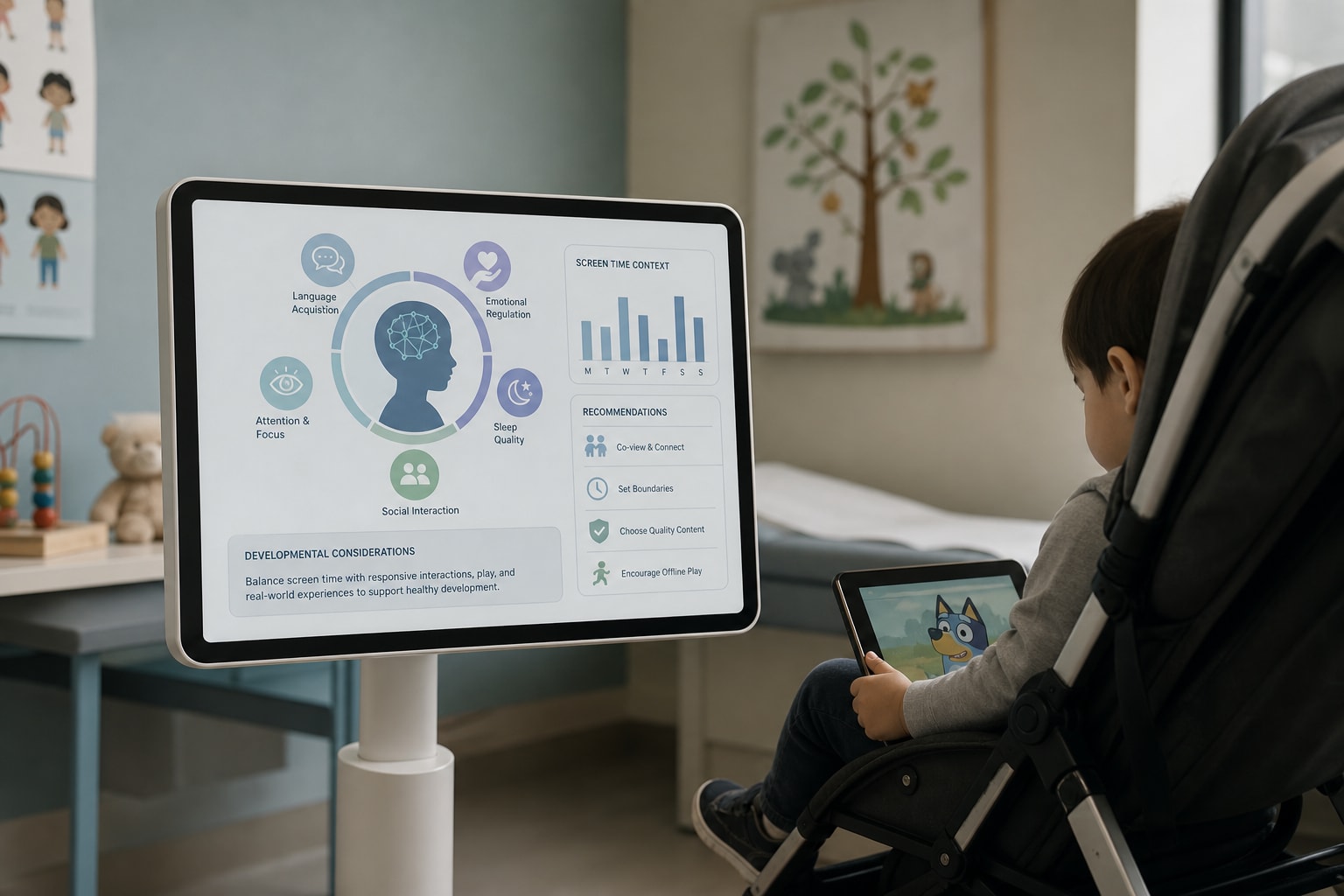
This report discusses the potential of AI tools to enhance child development through interactive screen time. It highlights the importance of active engagement over passive consumption of digital content in pediatric care.
Background
The integration of technology in children's lives is increasing, raising concerns about the effects of screen time on development. Traditional guidance emphasizes limiting screen exposure, but many families struggle to adhere to these recommendations. Understanding how to utilize technology effectively is crucial for pediatricians to support healthy development.
Data Highlights
No numerical data presented in the article.
Key Findings
Passive screen time is linked to language delays, attention problems, and social difficulties in children.
Active engagement during screen time, such as co-viewing, significantly improves developmental outcomes.
AI can simulate interactive engagement, potentially serving as a tool to enhance child development.
Historical precedents, like 'Sesame Street', demonstrate the benefits of using technology with clear developmental goals.
Current AI tools can adapt content based on child responses, promoting active participation.
Clinical Implications
Pediatricians should consider recommending AI tools that encourage interactive engagement during screen time. This approach may help bridge the gap between ideal recommendations and the realities of parenting, ultimately supporting child development.
Conclusion
AI presents a promising opportunity to enhance the developmental benefits of screen time for children. By leveraging technology thoughtfully, pediatricians can better support families in navigating digital content.