Effectiveness of Prophylactic Doses of Tranexamic Acid in Reducing Hemorrhagic Events in Bariatric Surgery: A Systematic Review and Meta-Analysis - Report - MDSpire
Advertisement
Effectiveness of Prophylactic Doses of Tranexamic Acid in Reducing Hemorrhagic Events in Bariatric Surgery: A Systematic Review and Meta-Analysis
Efficacy of Preventive Tranexamic Acid in Reducing Bleeding in Bariatric Surgery
Overview
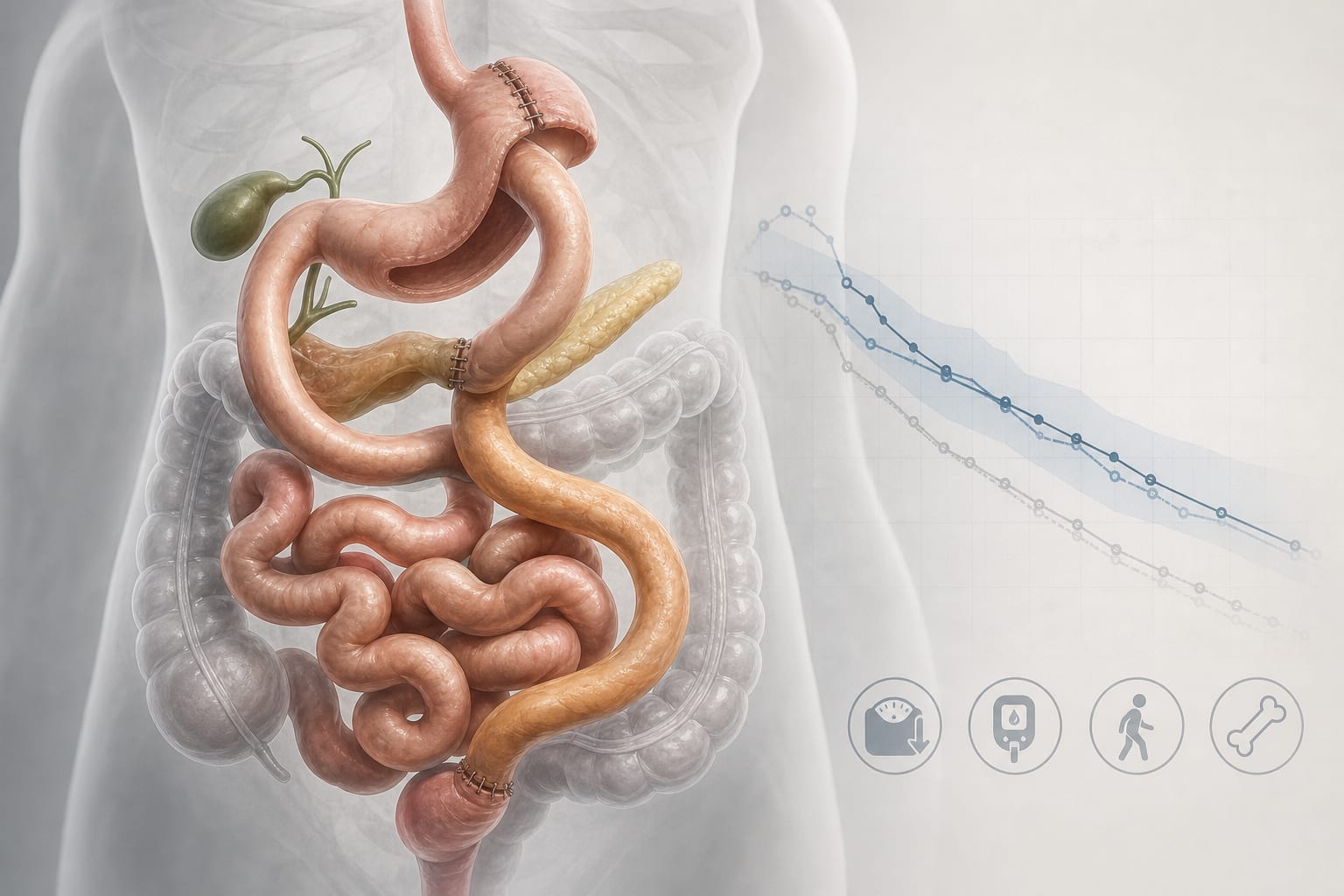
This comprehensive review and meta-analysis evaluated the prophylactic use of tranexamic acid (TXA) in bariatric surgery, demonstrating its effectiveness in reducing postoperative hemoglobin drop and hemorrhagic complications without increasing thrombotic events. The analysis incorporated recent studies, including those on Roux-en-Y gastric bypass, providing updated and robust evidence supporting TXA use.
Background
Obesity is a prevalent chronic disease often managed with bariatric surgery, notably sleeve gastrectomy, which carries risks of postoperative bleeding. Patients undergoing bariatric procedures frequently require anticoagulation, increasing hemorrhagic risk. Various surgical techniques to minimize bleeding have shown inconsistent results. Tranexamic acid, an antifibrinolytic agent, has been increasingly used to reduce bleeding in diverse surgeries but lacks extensive evidence in bariatric contexts. This updated review aims to clarify TXA's efficacy and safety in this setting.
Data Highlights
Outcome
Effect Measure
Result
Confidence Interval
Change in Hemoglobin (g/dL)
Mean Difference (MD)
Reduced drop with TXA
Significant (95% CI)
Thrombotic Events
Incidence
No increase observed
Not significant
Length of Stay
Mean Difference
Not significantly affected
Not significant
Operative Time
Mean Difference
No significant difference
Not significant
Key Findings
Prophylactic tranexamic acid significantly reduces postoperative hemoglobin drop within 24–48 hours after bariatric surgery.
Use of TXA does not increase the risk of thrombotic events such as deep vein thrombosis or pulmonary embolism.
There is no significant impact of TXA on operative time or length of hospital stay.
Recent studies including Roux-en-Y gastric bypass patients strengthen the evidence base beyond sleeve gastrectomy alone.
Heterogeneity among studies was addressed using random-effects models and sensitivity analyses, supporting the robustness of findings.
Clinical Implications
Routine prophylactic administration of tranexamic acid in bariatric surgery can be considered to reduce hemorrhagic complications safely, without increasing thrombotic risk. This may improve perioperative management and patient outcomes, particularly in patients at higher bleeding risk. Clinicians should integrate TXA use within ERAS protocols to optimize recovery.
Conclusion
This updated meta-analysis confirms that tranexamic acid is an effective and safe adjunct to reduce bleeding in bariatric surgery, supporting its broader adoption in clinical practice. Further large-scale randomized trials could consolidate these findings.
References
National Institute for Health Research International Registry of Systematic Reviews (PROSPERO, CRD42024627867)
Previous systematic review on TXA in sleeve gastrectomy, 2022