Addressing the Gap in Critical Care During Conflict and Disasters: The Importance of Stabilization, Referral, and Hospital Pre-Alert in Somalia
-
By
-
Abdishakur Mohamud Hassan Hidigow
-
August 27, 2026
Clinical Report: Addressing the Gap in Critical Care During Conflict and Disasters
Background
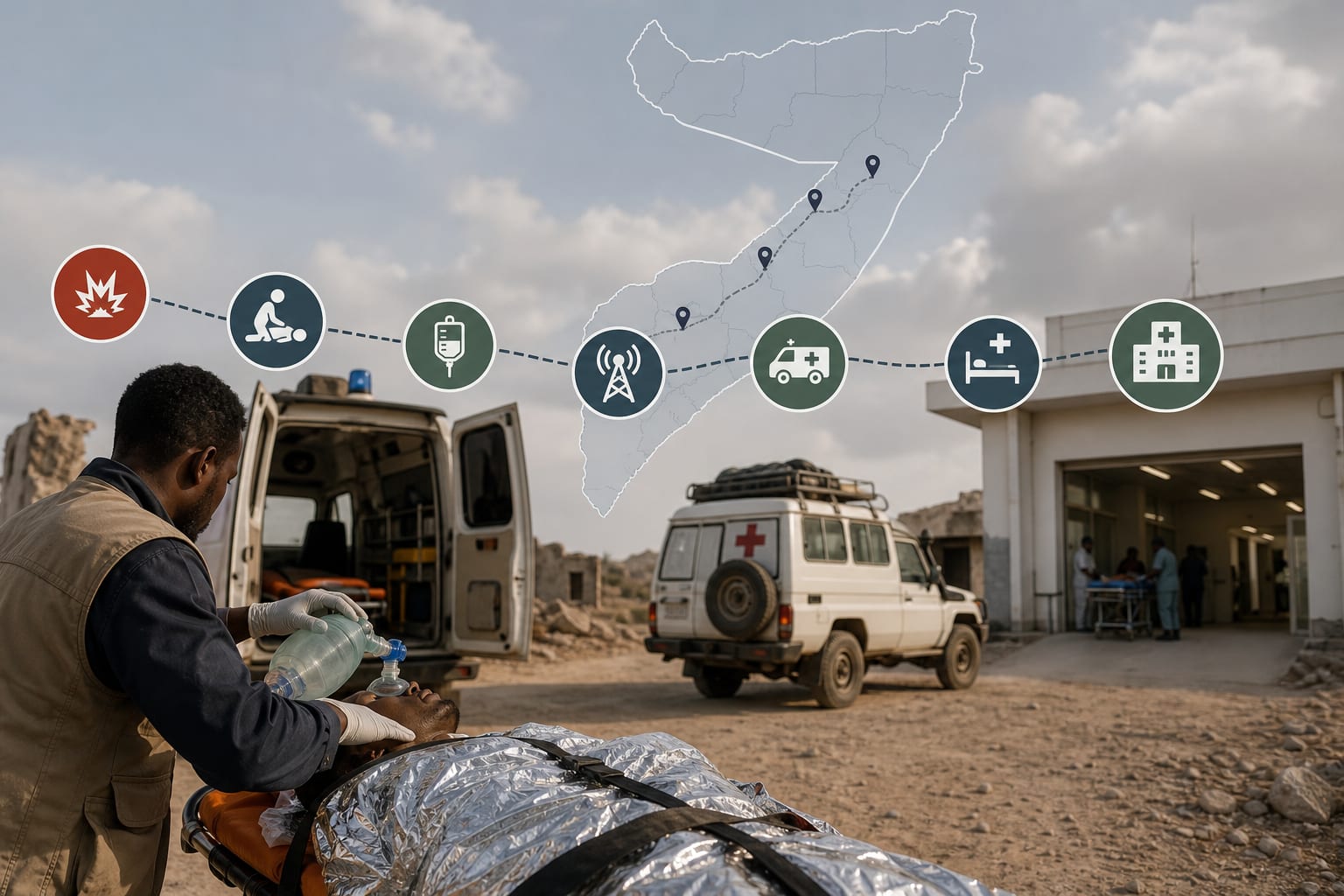
Critical care in conflict zones is essential for survival, as timely interventions can significantly impact patient outcomes. In Somalia, a nationwide evaluation revealed that over 80% of hospitals fell below the readiness threshold for emergency and critical care. Establishing a reliable referral pathway is crucial to ensure that critically ill patients receive the necessary care without unnecessary delays.
Data Highlights
No numerical data available in the source material.
Key Findings
- Somalia's median emergency and critical care readiness score was 0.31, indicating significant deficiencies.
- Over 80% of assessed hospitals did not meet the study-defined readiness threshold.
- Common obstacles include user fees, equipment shortages, and inadequate staff coverage.
- A conflict-adapted referral pathway should include rapid triage, stabilization, and structured handover.
- Pre-alert notifications should communicate the main clinical concern and anticipated resource needs.
- Preparedness indicators should be tracked to assess the effectiveness of critical transfers.
Clinical Implications
Healthcare providers in conflict settings should prioritize establishing a structured referral pathway that includes stabilization and pre-alert systems. This approach can enhance the efficiency of critical care delivery and improve patient outcomes during emergencies.
Conclusion
Implementing a comprehensive referral pathway in Somalia can address critical care gaps and improve patient management during conflicts and disasters. Ongoing assessment and adaptation of these systems are essential for effective healthcare delivery.
Related Resources & Content
- Critical Care — Preparedness for Critical Care in Somalia Amidst Conflict and Disasters: Addressing Mass-Casualty Situations, Emergency Referrals, and Sustaining Life-Saving Treatments in Challenging Environments
- Critical Care — Act now: strengthening critical care readiness in fragile health systems during war and disasters
- Intensive Care Medicine — Enhancing Critical Care Capacity in Low-Income Countries: A Health Systems Perspective Review
- Prehospital emergency care - operational guidance for ambulance systems
- Somalia Harmonised Health Facility
- Addressing Surgical Care Gaps in Low-Resource Settings
- Prehospital emergency care - operational guidance for ambulance systems
- Somalia Harmonised Health Facility
- Critical care readiness in conflict and disaster-affected Somalia: mass-casualty response, emergency referral, and continuity of life-saving care | Critical Care | Springer Nature Link
Based on findings from:
The missing middle in war and disaster critical care: stabilization, referral, and hospital pre-alert in conflict-affected Somalia
Abdishakur Mohamud Hassan Hidigow. Critical Care, 2026.
https://link.springer.com/article/10.1186/s13054-026-06287-0
This content is an AI-generated, fully rewritten summary based on a published scholarly article. It does not reproduce the original text and is not a substitute for the original publication. Readers are encouraged to consult the source for full context, data, and methodology.