Clinical Report: The Role of Complement Activation in Acute Kidney Injury
Overview
This report discusses the role of complement activation in acute kidney injury (AKI), highlighting its potential variability depending on the underlying etiology.
Background
Acute kidney injury is a prevalent condition in hospitalized patients, associated with significant morbidity and mortality. Understanding the pathophysiology of AKI, particularly the role of the complement system, is crucial.
Data Highlights
No specific numerical data or trial results were provided in the source material.
Key Findings
Dysregulated complement activation is a potential convergent mechanism of injury in multiple forms of AKI.
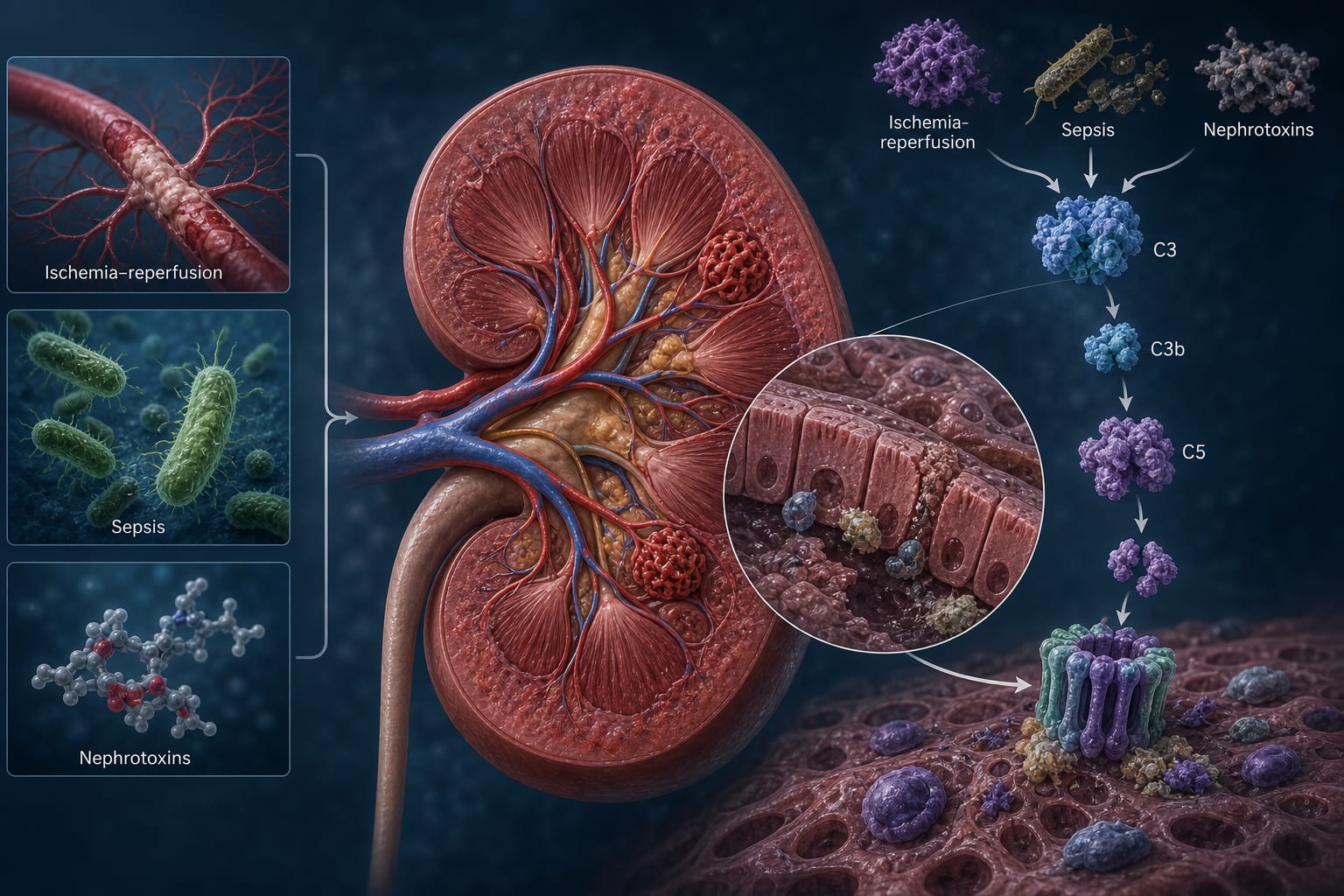
Complement activation can be initiated by various insults, including ischemia-reperfusion injury, nephrotoxins, and sepsis.
Complement activation fuels inflammatory escalation and tissue injury through pathways centered on C3 and C5.
Complement dysregulation exacerbates oxidative stress and microcirculatory dysfunction in AKI.
Clinical evidence regarding complement activation in AKI is largely associative.
Clinical Implications
Healthcare professionals should consider the role of complement activation when evaluating patients with AKI.
Conclusion
Further research is needed to clarify the role of complement activation across different AKI etiologies.