Clinical Report: The Role of SLC38A5 in Promoting α-Cell Growth and Glucagon Release
Overview
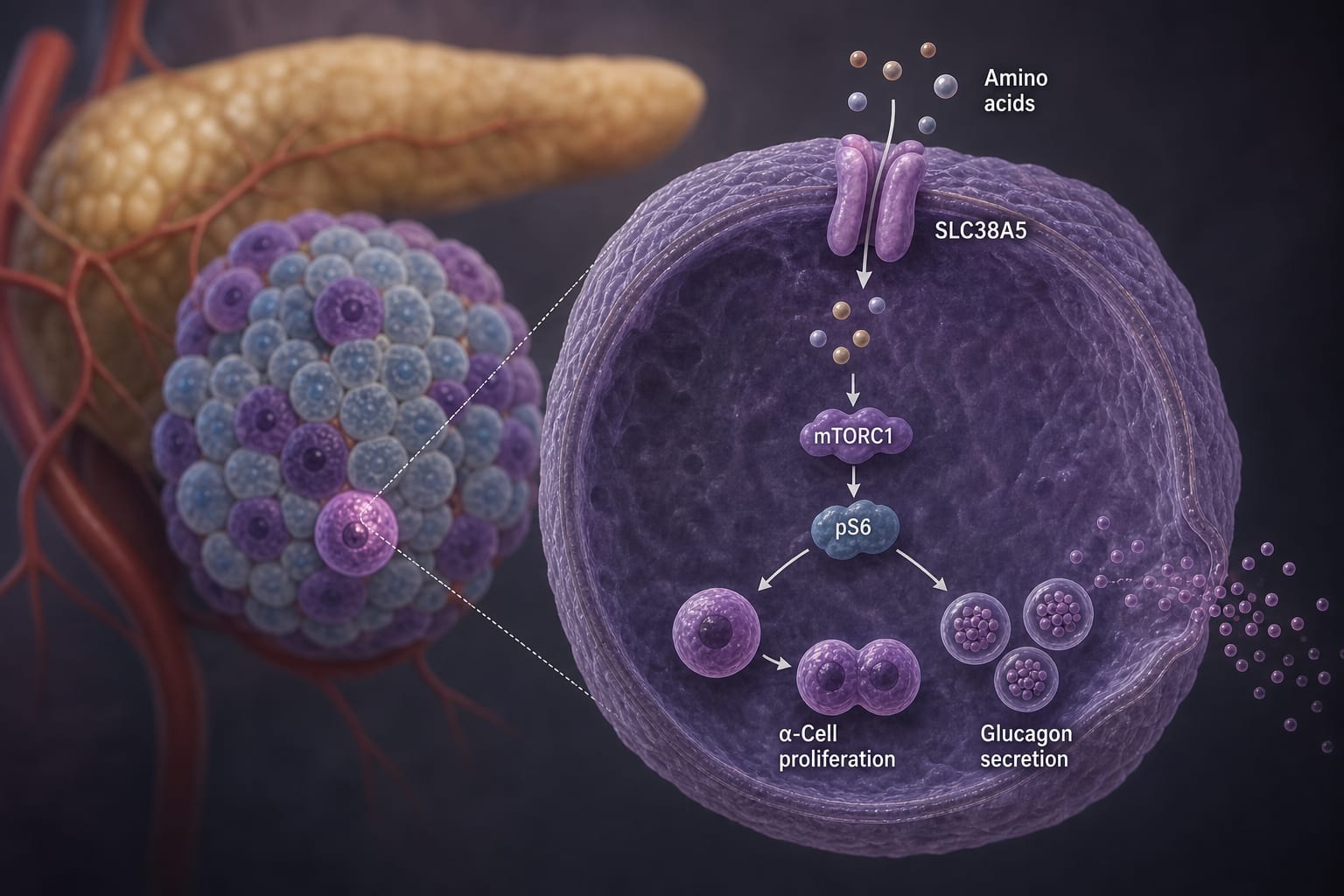
This study identifies SLC38A5 as a crucial mediator in α-cell proliferation and glucagon secretion in response to amino acids. The findings demonstrate that α-cell-specific deletion of SLC38A5 significantly impairs these processes.
Background
Pancreatic α cells are essential for glucose homeostasis, and their dysregulation can lead to hyperglycemia in diabetes. Understanding the mechanisms of glucagon secretion and α-cell proliferation is vital for developing therapeutic strategies against diabetes. Amino acids are potent stimulators of these processes, yet the transport mechanisms involved remain inadequately defined.
Data Highlights
No numerical data or trial data provided in the source material.
Key Findings
SLC38A5 is highly enriched in pancreatic α cells in both mice and humans.
Deletion of Slc38a5 in α cells significantly reduces glucagon secretion and α-cell proliferation in response to elevated amino acids.
Phosphorylation of ribosomal protein S6 remains unaffected by SLC38A5 deletion, indicating SLC38A5-independent nutrient-responsive signaling.
The study utilized an α-cell-specific Slc38a5 knockout mouse model to assess the role of SLC38A5 in nutrient sensing.
Amino acids stimulate α-cell proliferation and glucagon secretion, linking nutrient availability to α-cell function.
Clinical Implications
The findings suggest that targeting SLC38A5 could be a potential strategy for modulating α-cell function and glucagon secretion in diabetes management. Understanding the role of amino acid transporters in α-cell biology may inform future therapeutic approaches.
Conclusion
SLC38A5 plays a critical role in linking amino acid availability to α-cell proliferation and glucagon secretion, emphasizing its importance in metabolic regulation.
by Katelyn Sellick, Anna Marie R. Schornack, Tyler J. Rodgers, Fedora O. Ogodo, Mounika Aramandla, Jade E. Stanley, Walter Siv, Matthew Shou, Nitin C. Shankar, Soham S. Saraf, Diana E. Stanescu, E. Danielle Dean
Oral orforglipron could be more effective in reducing hemoglobin A1c and body weight, with no increased risk of hypoglycemia in patients with inadequately controlled type 2 diabetes.