Lobectomy versus sublobar resection for stage I non-small cell lung cancer: an umbrella review of evidence quality, overlap, surgical-extent heterogeneity, and survival outcomes - Report - MDSpire
Advertisement
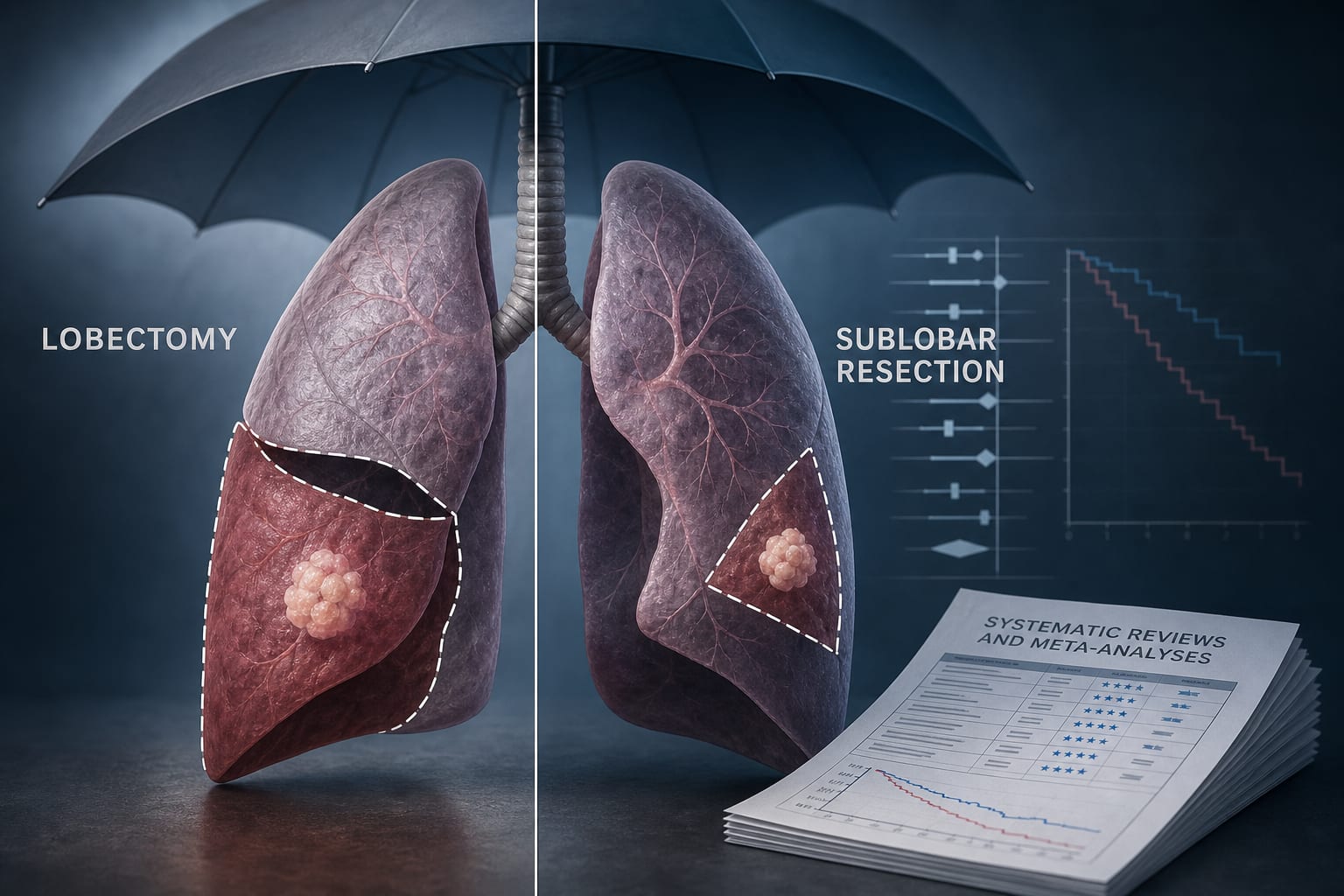
Lobectomy versus sublobar resection for stage I non-small cell lung cancer: an umbrella review of evidence quality, overlap, surgical-extent heterogeneity, and survival outcomes
Clinical Report: Comparison of Lobectomy and Sublobar Resection for Stage I NSCLC
Overview
Revise to clarify that sublobar resection is associated with a higher risk of worse outcomes compared to lobectomy.
Background
Lung cancer remains the leading cause of cancer-related mortality, with non-small cell lung cancer (NSCLC) being the most common subtype. Surgical resection is the cornerstone of treatment for operable early-stage NSCLC, with lobectomy traditionally being the standard of care. The growing interest in sublobar resection raises questions about its oncologic equivalence to lobectomy, particularly in preserving lung function and reducing morbidity.
Data Highlights
Outcome
Pooled HR (95% CI)
I²
Overall Survival (Stage I)
1.09 (1.02–1.16)
71.6%
Overall Survival (Stage IA)
1.10 (0.99–1.22)
77.1%
Disease-Free Survival (Stage I)
1.13 (1.04–1.23)
9.4%
Disease-Free Survival (Stage IA)
1.13 (1.01–1.27)
21.8%
Key Findings
Sublobar resection was associated with a statistically significant higher hazard for overall survival (OS) and disease-free survival (DFS) in Stage I NSCLC.
Overall survival estimates showed substantial heterogeneity, indicating variability in study outcomes.
Evidence quality was predominantly low or very low, raising concerns about the reliability of findings.
Recent bibliometric analysis highlighted research trends focusing on survival outcomes and surgical techniques.
Segmentectomy may provide oncologic outcomes comparable to lobectomy for small lesions, particularly in patients with limited pulmonary reserve.
Clinical Implications
Clinicians should consider the potential benefits of sublobar resection for select patients, particularly those with limited pulmonary function. However, the low quality of evidence necessitates careful patient selection and consideration of individual risk factors when deciding on surgical approaches.
Conclusion
Reiterate the need for high-quality research and specify aspects of sublobar resection needing further investigation.