Clinical Report: Advancements and Obstacles in DNA Damage Response Inhibitors for Pancreatic Cancer
Overview
This report reviews the current landscape of DNA damage response (DDR) inhibitors in treating pancreatic cancer, highlighting their potential and limitations. It emphasizes the shift towards combination therapies to enhance efficacy and overcome resistance.
Background
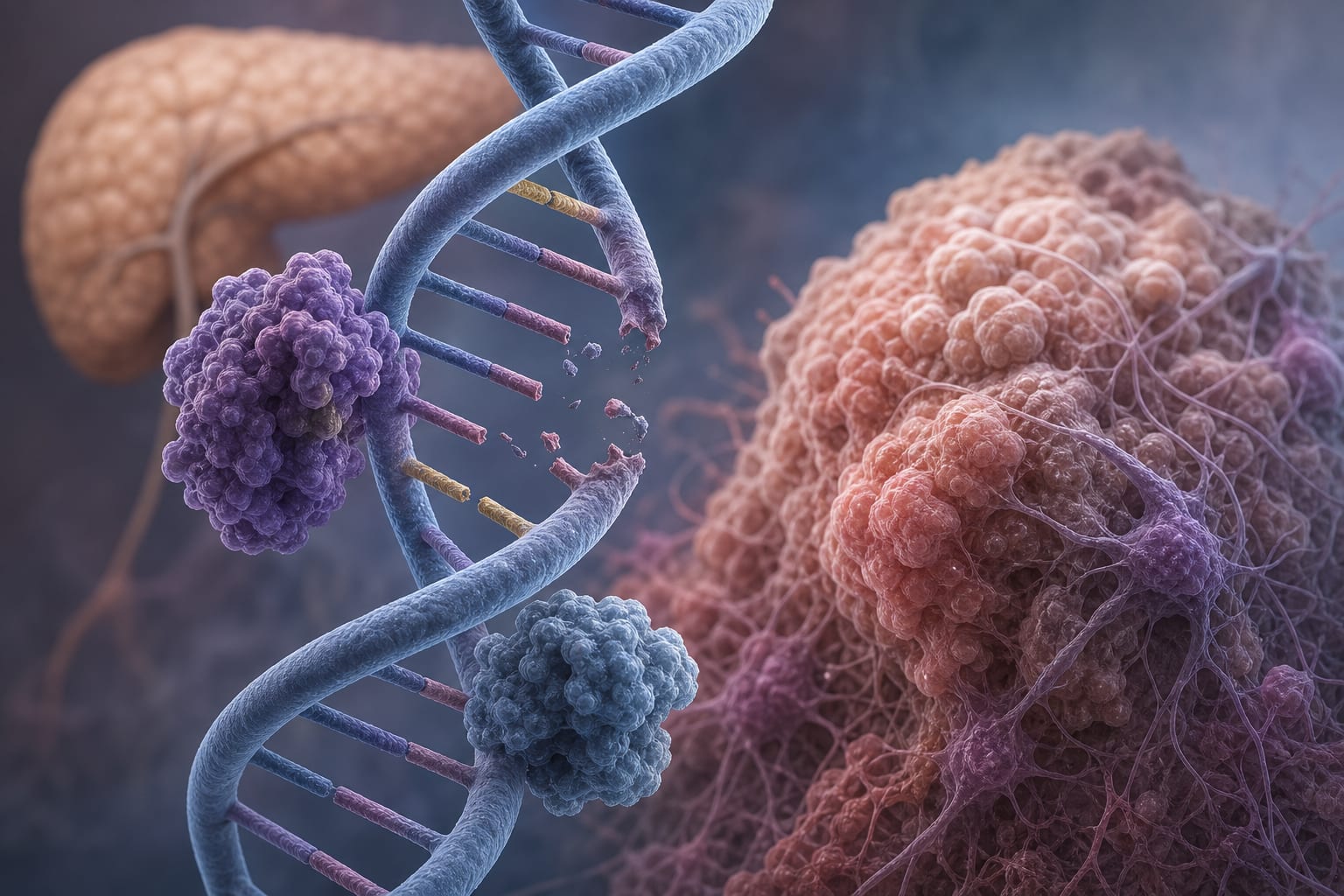
Pancreatic cancer remains one of the most lethal malignancies, with a dismal 5-year survival rate below 10%. The identification of homologous recombination repair deficiencies has opened avenues for targeted therapies, yet challenges such as resistance and limited patient eligibility persist. Understanding the DDR pathway is crucial for developing effective treatment strategies.
Data Highlights
No numerical data available in the source material.
Key Findings
DDR inhibitors have transitioned from research to clinical application for pancreatic cancer.
Single-agent DDR inhibitors face limitations including narrow beneficiary populations and resistance.
Combination strategies, such as PAD/PADtal regimens and dual-target inhibitors, are emerging to enhance treatment efficacy.
Current challenges include accessibility, resistance mechanisms, and dose-limiting toxicities.
Future directions involve identifying novel biomarkers and utilizing adaptive trial designs for better patient outcomes.
Clinical Implications
Clinicians should consider the integration of DDR inhibitors in combination with other therapies to improve treatment outcomes for pancreatic cancer patients. Ongoing monitoring for resistance and exploring novel biomarkers will be essential in personalizing treatment approaches.
Conclusion
The evolution of DDR-targeted therapies in pancreatic cancer highlights the need for innovative combination strategies to address the limitations of current treatments. Continued research is vital for advancing personalized medicine in this challenging disease.