Hepatic metastasis of mucinous adenocarcinoma with neuroendocrine differentiation harboring a rare HER2 R678Q mutation: a case report and literature review - Report - MDSpire
Advertisement
Hepatic metastasis of mucinous adenocarcinoma with neuroendocrine differentiation harboring a rare HER2 R678Q mutation: a case report and literature review
Clinical Report: Hepatic Metastasis of Mucinous Adenocarcinoma with Neuroendocrine Features
Overview
This report details a rare case of mucinous adenocarcinoma (MAC) with neuroendocrine differentiation and a unique HER2 R678Q mutation in a patient with cancer of unknown primary (CUP). Despite treatment with FOLFOX chemotherapy and trastuzumab, the tumor exhibited early resistance and progression, leading to the patient's demise within one year.
Background
Cancer of unknown primary (CUP) poses significant diagnostic and therapeutic challenges, particularly with rare histological subtypes like mucinous adenocarcinoma (MAC). MAC accounts for approximately 1% of cancer diagnoses and is characterized by its unique histological features. Understanding the molecular characteristics of such rare tumors is crucial for developing effective treatment strategies.
Data Highlights
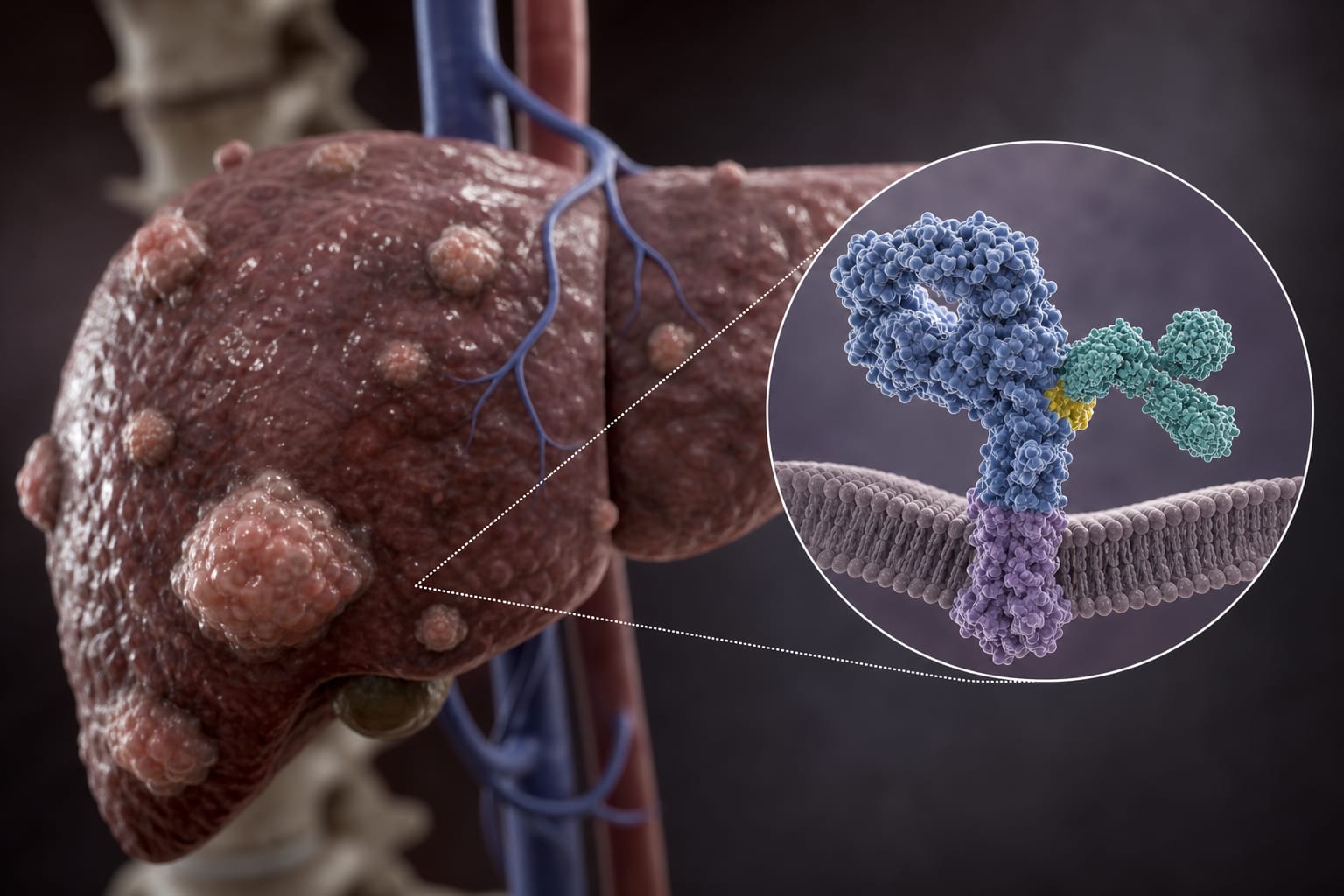
Genomic analysis revealed a HER2 (ERBB2) R678Q mutation in the reported case.
Key Findings
This is the first reported case of MAC with neuroendocrine features harboring a HER2 R678Q mutation.
The patient presented with multiple liver and bone metastases.
Histopathological analysis confirmed MAC with neuroendocrine differentiation.
The patient received FOLFOX chemotherapy and trastuzumab but showed early resistance.
The patient succumbed to disease progression within one year of diagnosis.
Current HER2-targeted therapies may have limited efficacy in rare mutations.
Clinical Implications
The case highlights the necessity of comprehensive molecular profiling in CUP to identify actionable mutations. It also emphasizes the need for tailored treatment approaches for rare mutations, as standard HER2-targeted therapies may not be effective.
Conclusion
This case underscores the importance of integrating broad molecular testing into the diagnostic process for CUP. Further research is needed to explore effective treatment strategies for rare HER2 mutations.