Clinical Report: N-Myc and STAT Interactor in Innate Antiviral Defense
Overview
N-Myc and STAT interactor (NMI) serves as a regulator in innate antiviral immunity, influencing antiviral and proviral responses based on various factors. Its interactions with different viral systems demonstrate its role in either suppressing or promoting viral replication.
Background
Understanding the role of NMI in antiviral immunity is crucial as it highlights the complexity of host-pathogen interactions. NMI's ability to modulate immune responses is significant in viral infections where immune evasion is a concern.
Data Highlights
No numerical data or trial data available in the source material.
Key Findings
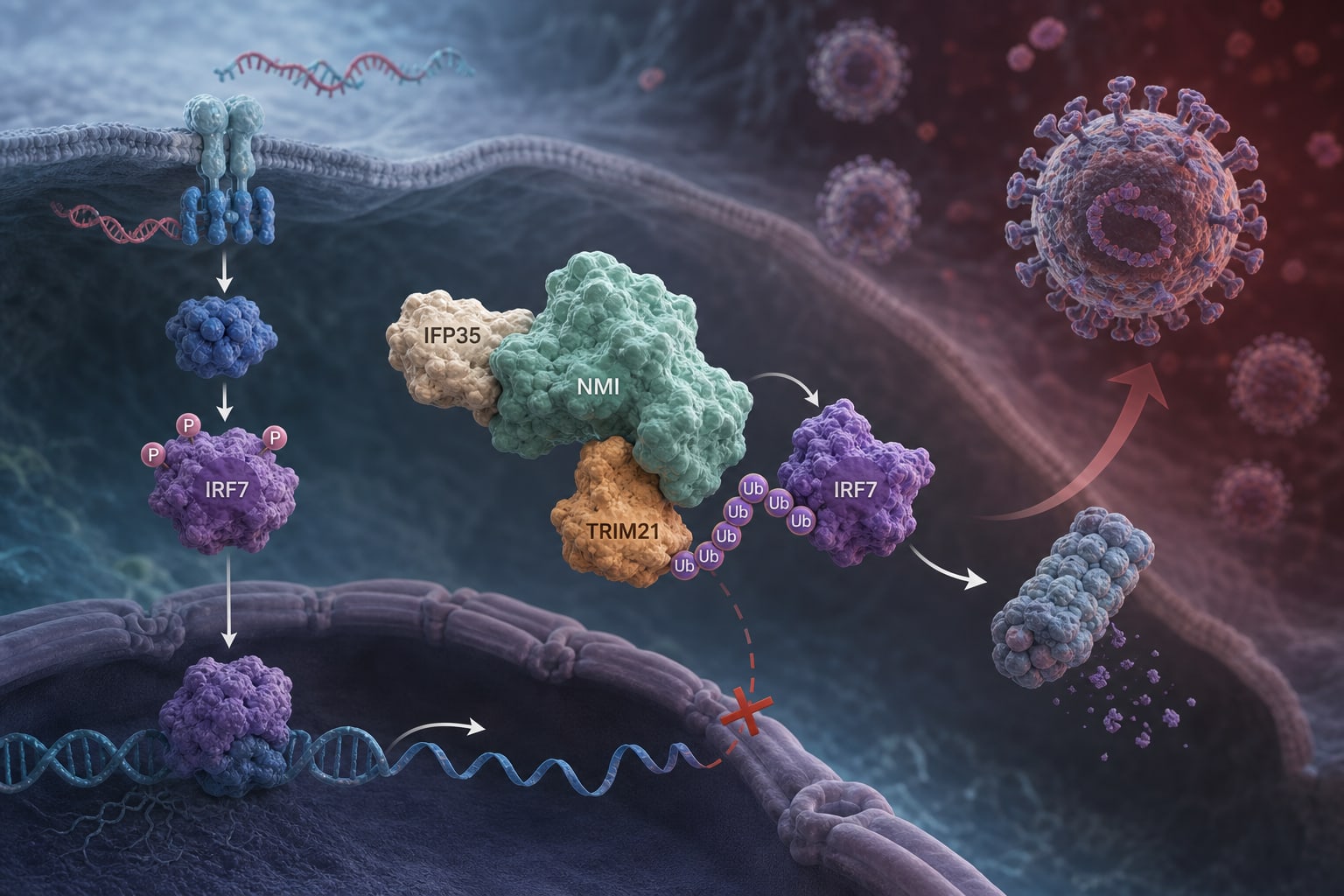
NMI suppresses IRF7-dependent type I interferon (IFN-I) signaling in selected acute RNA virus models.
In influenza A virus (IAV) infection, NMI forms a complex with IFP35 that promotes IRF7 degradation, facilitating viral replication.
NMI acts as a host restriction factor in foamy virus infection by binding the viral transactivator Tas and suppressing viral transcription.
In human cytomegalovirus (HCMV) infection, NMI is targeted by the viral protein UL23, which interferes with the NMI–STAT1/IFN-γ axis.
Extracellular NMI and IFP35 can amplify inflammation as damage-associated molecular patterns (DAMPs).
Clinical Implications
The role of NMI in antiviral immunity suggests that understanding its interactions may inform future research directions.
Conclusion
NMI's role as a regulator in antiviral defense emphasizes the complexity of immune responses to viral infections.