Factors Influencing False-Negative Serum Thyroglobulin Levels in PTC
Overview
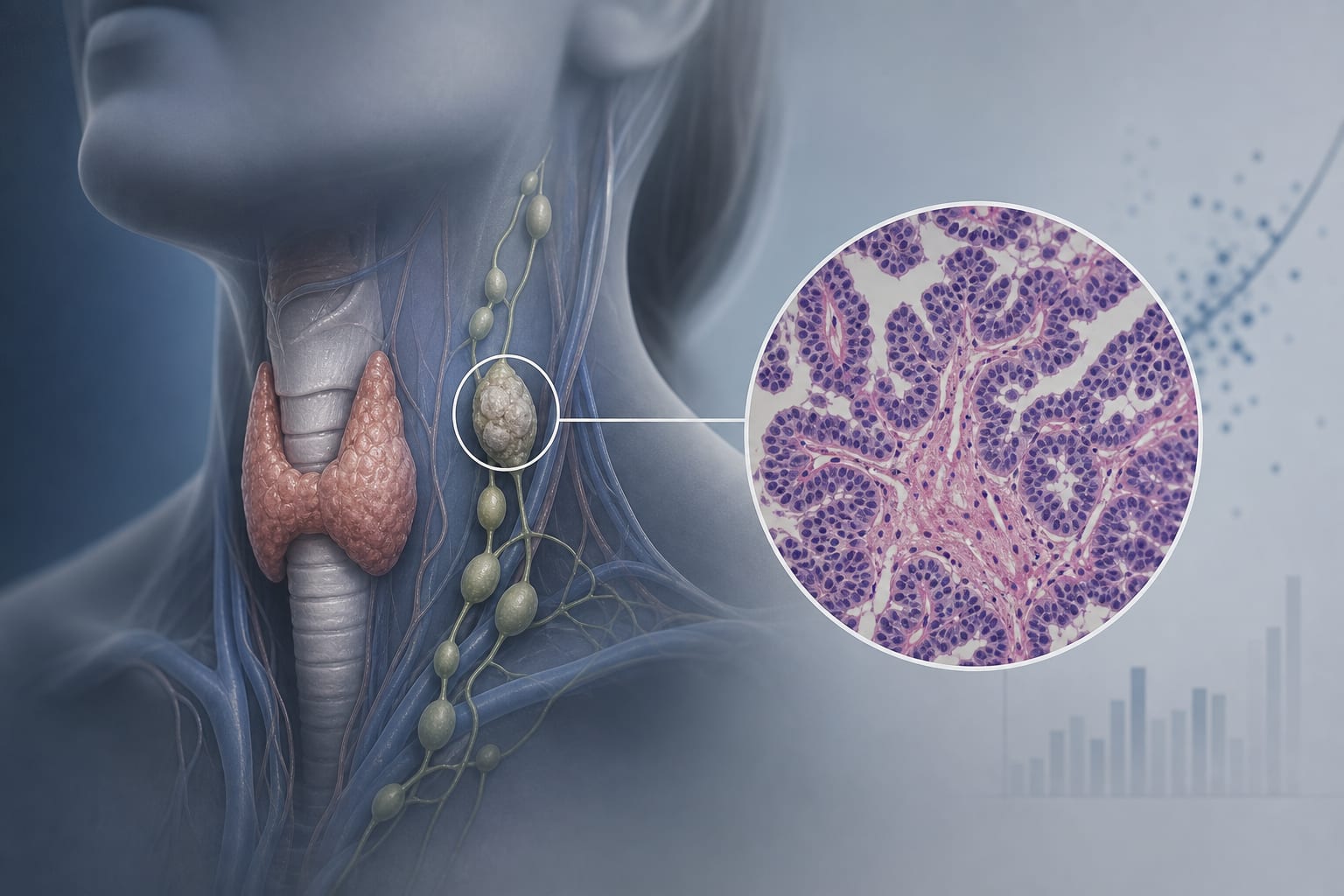
This study identifies predictors of false-negative serum thyroglobulin (Tg) levels in patients with persistent or recurrent cervical lymph nodes (LNs) of papillary thyroid carcinoma (PTC). Key predictors include central LN location, smaller LN size, and higher Tg-Ab levels.
Background
Serum thyroglobulin is the primary biomarker for monitoring disease persistence and recurrence in PTC. False-negative Tg results can lead to delayed intervention in patients with confirmed persistent or recurrent disease.
Data Highlights
Parameter
Value
Patients Enrolled
215
False-Negative Tg (<0.2 ng/mL)
48 (22.3%)
AUC of Nomogram
0.87
Key Findings
22.3% of patients had unstimulated serum Tg <0.2 ng/mL.
Central LN compartment was an independent predictor (p = 0.039).
Smaller LN size was associated with false-negative Tg (p = 0.019).
In Tg-Ab negative patients, higher Tg-Ab remained significant (p < 0.001).
The nomogram demonstrated good discrimination (AUC = 0.87).
Clinical Implications
Clinicians should consider central LN location, LN size, and Tg-Ab levels when interpreting serum Tg results in PTC patients. The developed nomogram may assist in identifying high-risk individuals who require additional imaging or biopsy.
Conclusion
The study identifies important predictors of false-negative serum Tg levels in PTC.