Smart thyroid-regulated drug delivery systems: a review of intelligent biosensor-integrated therapeutics for precision thyroxine replacement - Report - MDSpire
Advertisement
Smart thyroid-regulated drug delivery systems: a review of intelligent biosensor-integrated therapeutics for precision thyroxine replacement
Clinical Report: Innovative Thyroid-Controlled Drug Delivery Mechanisms
Background
Levothyroxine (L-T4) is the standard treatment for hypothyroidism following total thyroidectomy, yet many patients fail to achieve stable hormone levels. Approximately 34% of patients reach target euthyroidism post-operatively, leading to significant health risks, including cardiac arrhythmias and cognitive impairment. The need for a more responsive drug delivery system is critical to improve patient outcomes.
Data Highlights
No numerical data available in the source material.
Key Findings
Levothyroxine replacement therapy often results in oscillations between over- and under-replacement in patients.
Only about 34% of patients achieve target euthyroidism at their first follow-up after total thyroidectomy.
Advances in nanomaterial-based biosensors allow for the detection of thyroid hormones at picomolar levels.
Machine learning models can predict individual L-T4 requirements with high accuracy (R-squared values > 0.85).
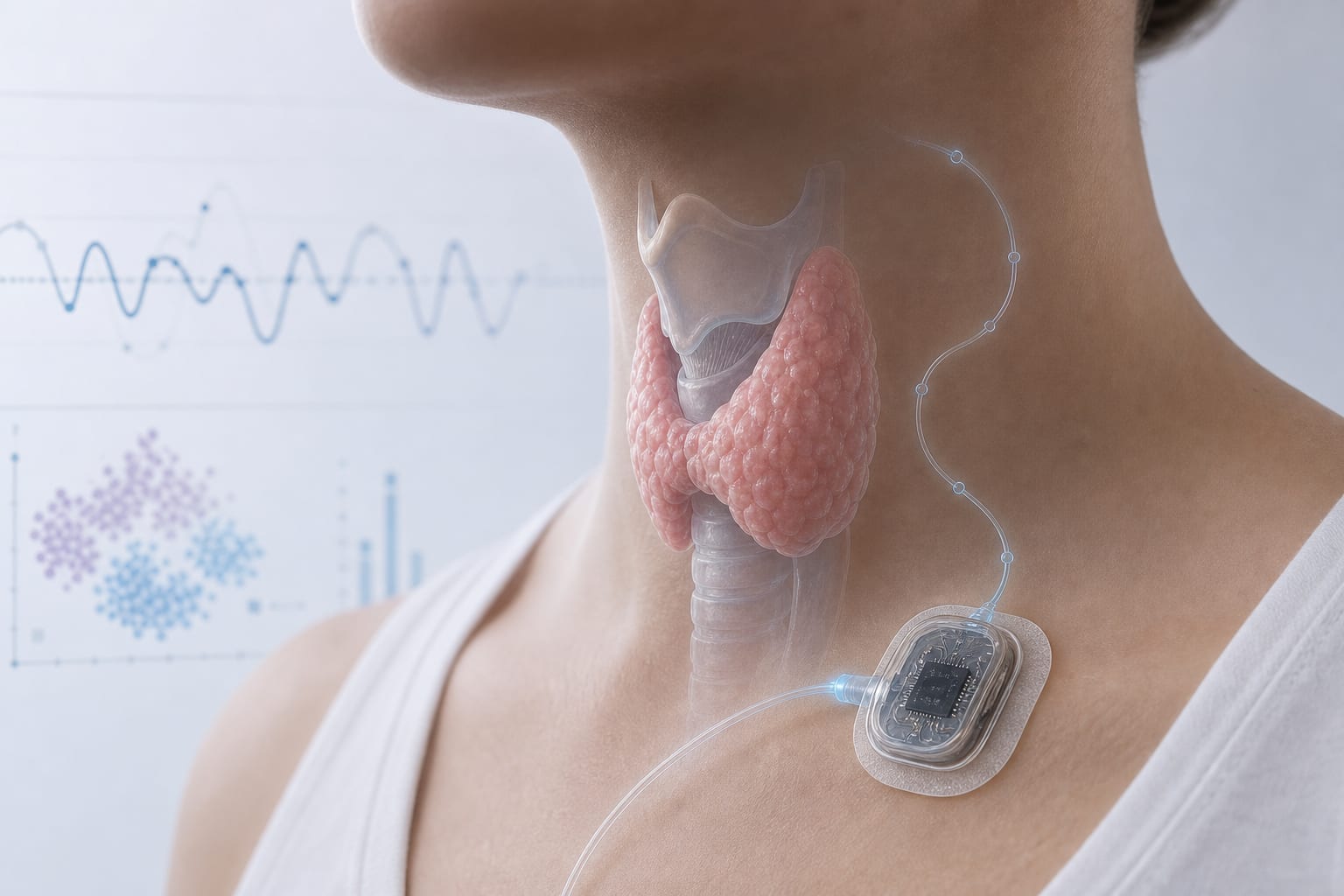
The proposed Intelligent Medicine Bot (IMB) would utilize adaptive AI algorithms for precise hormone delivery.
Clinical Implications
The development of the IMB could significantly enhance the management of hypothyroidism by providing personalized and timely adjustments to levothyroxine therapy. This approach may reduce the risk of complications associated with hormone imbalances.
Conclusion
The integration of advanced biosensor technology and AI in thyroid hormone management presents a promising avenue for improving patient care in hypothyroidism.