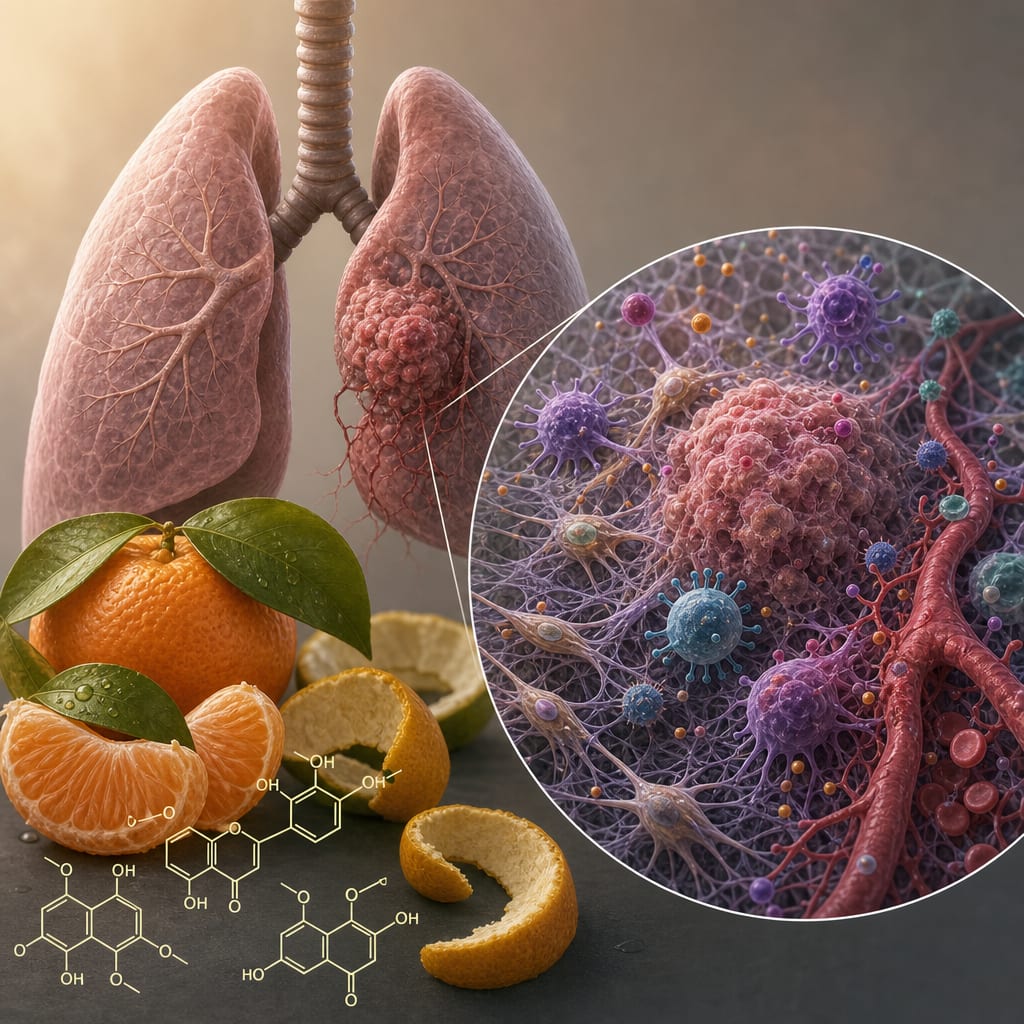
Clinical Report: Modulation of the Tumor Microenvironment in Lung Cancer by Citrus Flavonoids
Overview
This review discusses the potential of citrus flavonoids, particularly from Citri Reticulatae Pericarpium, in modulating the tumor microenvironment (TME) in lung cancer. It highlights their mechanisms of action and translational prospects in enhancing anti-cancer therapies.
Background
Lung cancer remains the leading cause of cancer-related mortality globally, necessitating innovative strategies to overcome treatment resistance. The tumor microenvironment plays a crucial role in cancer progression and therapy response, making it a significant target for therapeutic interventions. Citrus flavonoids have emerged as promising agents due to their immunomodulatory properties and potential to reshape the TME.
Data Highlights
No numerical data available in the article.
Key Findings
Citrus flavonoids, such as nobiletin and hesperidin, can modulate oxidative stress and inflammation in the lung cancer TME.
These flavonoids induce pyroptosis and inhibit epithelial-mesenchymal transition, which are critical for tumor progression.
Emerging targets like ferroptosis and the cGAS-STING pathway are highlighted as important areas for future research.
CRP flavonoids have shown potential in enhancing the efficacy of immune checkpoint inhibitors.
Current clinical guidelines do not recommend CRP-derived flavonoids as anticancer therapies, indicating a gap between preclinical findings and clinical application.
Clinical Implications
Healthcare professionals should be aware of the potential roles of citrus flavonoids in modulating the TME, which may enhance the effectiveness of existing therapies. However, the lack of clinical trials necessitates caution in their application until further evidence is available.
Conclusion
Citrus flavonoids represent a promising area of research for lung cancer treatment, but significant gaps remain in translating these findings into clinical practice. Continued investigation is essential to establish their efficacy and safety in patients.