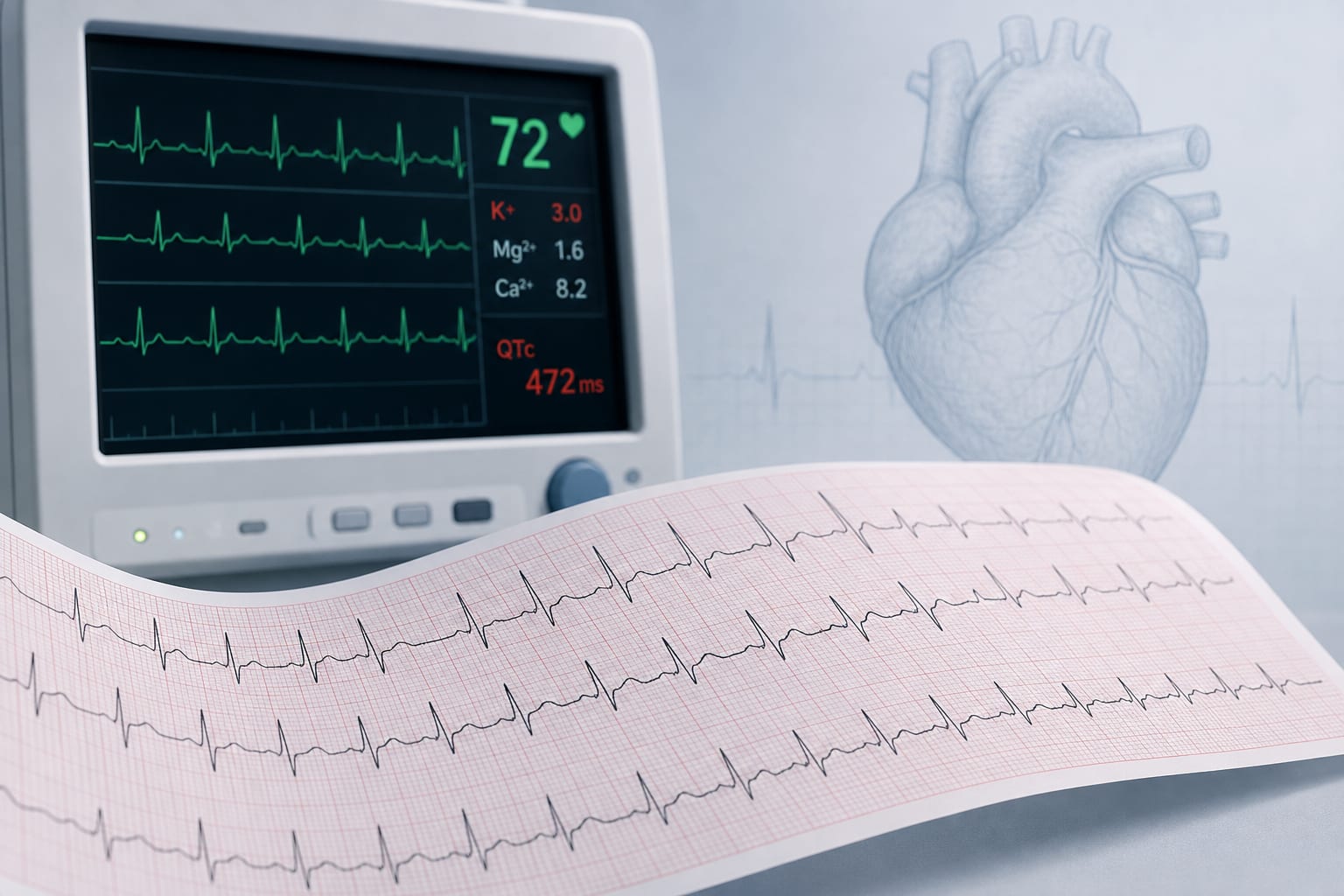
Impact of Dapagliflozin on Cardiac Motion Metrics and Electrophysiological Function in Individuals with Type 2 Diabetes Mellitus and Coronary Artery Disease
-
By
-
Fang Liu
-
Rui Jin
-
June 4, 2026
Clinical Report: Impact of Dapagliflozin on Cardiac Metrics in T2DM and CAD
Overview
This study evaluates the effects of dapagliflozin on cardiac function and electrophysiology in patients with type 2 diabetes mellitus (T2DM) and coronary artery disease (CAD). Results indicate significant improvements in cardiac function and electrophysiological parameters without an increase in adverse events.
Background
The coexistence of T2DM and CAD significantly heightens the risk of cardiovascular complications, necessitating effective management strategies. Conventional treatments focus on glycemic control, yet residual cardiovascular risks persist, highlighting the need for adjunctive therapies. Dapagliflozin, an SGLT2 inhibitor, has shown promise in improving cardiovascular outcomes in this high-risk population.
Data Highlights
| Parameter | Dapagliflozin Group | Conventional Group | P-value |
|---|---|---|---|
| Clinical Efficacy | 93.60% | 76.64% | < 0.001 |
| Left Ventricular Ejection Fraction | Improved | Not specified | < 0.01 |
| Myocardial Strain and Work Indices | Improved | Not specified | < 0.01 |
| Exercise Tolerance | Improved | Not specified | < 0.01 |
| QT Interval | Longer | Not specified | < 0.01 |
| ST Depression | Reduced | Not specified | < 0.01 |
Key Findings
- Dapagliflozin improved clinical efficacy compared to conventional treatment (93.60% vs. 76.64%, P < 0.001).
- Significant improvements in left ventricular ejection fraction were observed in the dapagliflozin group.
- Myocardial strain and work indices showed greater enhancements with dapagliflozin (P < 0.01).
- Exercise tolerance was significantly improved in patients receiving dapagliflozin.
- Dapagliflozin was associated with enhanced electrophysiological activity, including longer QT and Tp-Te intervals.
- No significant difference in adverse event rates between the two groups.
Clinical Implications
The addition of dapagliflozin to standard therapy in patients with T2DM and CAD may enhance cardiac function and reduce the risk of adverse cardiovascular events. Clinicians should consider incorporating SGLT2 inhibitors into treatment plans for this high-risk population to improve overall cardiovascular outcomes.
Conclusion
Dapagliflozin demonstrates significant benefits in cardiac function and electrophysiological parameters in patients with T2DM and CAD, supporting its role as an adjunctive therapy without increasing adverse events.
Related Resources & Content
- New England Journal of Medicine, 2020 -- Dapagliflozin Reduces Cardiovascular Death in Patients with Heart Failure and Preserved Ejection Fraction
- conexiant, 2021 -- Empagliflozin Tested in Real-World Data
- Clinical Research in Cardiology, 2021 -- Impact of SGLT2 Inhibitors on Pulmonary Artery Pressure in Chronic Heart Failure Patients
- Diabetes Care, 2026 -- Cardiovascular Disease and Risk Management: Standards of Care in Diabetes
- American Heart Association, 2026 -- Guideline on the Management of Dyslipidemia
- Basic Research in Cardiology — Immediate Antiarrhythmic Impact of SGLT2 Inhibitors: Dapagliflozin Reduces Atrial Cardiomyocyte Excitability
- Dapagliflozin and Prevention of Kidney Disease Among Patients With Type 2 Diabetes
- Dapagliflozin in Patients with Heart Failure and Reduced Ejection Fraction
- 10. Cardiovascular Disease and Risk Management: Standards of Care in Diabetes—2026 | Diabetes Care | American Diabetes Association
- 2026 Guideline on the Management of Dyslipidemia - Professional Heart Daily | American Heart Association
- Dapagliflozin Evaluation to Improve the Lives of Patients With Preserved Ejection Fraction Heart Failure - American College of Cardiology
- Frontiers | Effect of dapagliflozin, a sodium-glucose co-transporter 2 inhibitor, on ventricular repolarization electrocardiographic parameters in type 2 diabetes patients: DAPA - ECG study
- Efficacy and safety of SGLT-2 inhibitors in patients with comorbid type 2 diabetes and atrial fibrillation: A meta-analysis - ScienceDirect
- Frontiers | Long-term effects of SGLT2 inhibitors on arrhythmias: a systematic review and meta-analysis
- Dapagliflozin on Recurrence After Catheter Ablation For Atrial Fibrillation - American College of Cardiology
- Effect of SGLT2 inhibitors on cardiac structure and function assessed by cardiac magnetic resonance: a systematic review and meta-analysis | | Full Text
- Effects of dapagliflozin on the progression of left ventricular dysfunction in type 2 diabetes mellitus: a randomized controlled trial | | Full Text
Based on findings from:
Effects of dapagliflozin on myocardial motion parameters and cardiac electrophysiology in patients with type 2 diabetes Mellitus and coronary heart disease
Fang Liu, Rui Jin. Frontiers In Cardiovascular Medicine, 2026.
https://www.frontiersin.org/journals/cardiovascular-medicine/articles/10.3389/fcvm.2026.1745362/full
This content is an AI-generated, fully rewritten summary based on a published scholarly article. It does not reproduce the original text and is not a substitute for the original publication. Readers are encouraged to consult the source for full context, data, and methodology.