Synovial Fluid Cell Profiling Identifies Distinct Inflammatory Phenotypes in Late-Onset Rheumatoid Arthritis and Polymyalgia Rheumatica - Report - MDSpire

Cellular Analysis of Synovial Fluid Reveals Unique Inflammatory Profiles in Late-Onset Rheumatoid Arthritis and Polymyalgia Rheumatica

  • By

  • Shigeru Tanaka

  • Takahiro Sugiyama

  • Shuhei Kameda

  • Tatsuro Takahashi

  • Masahiro Yasui

  • Yuki Hayashi

  • Tomoaki Ida

  • Yuhi Yoshida

  • Soichiro Kubota

  • Takashi Ito

  • Takahiro Kageyama

  • Daiki Nakagomi

  • Kei Ikeda

  • Shin-Ichiro Kagami

  • Hiroshi Nakajima

  • July 1, 2026

Share

Clinical Report: Cellular Analysis of Synovial Fluid in LORA and PMR

Overview

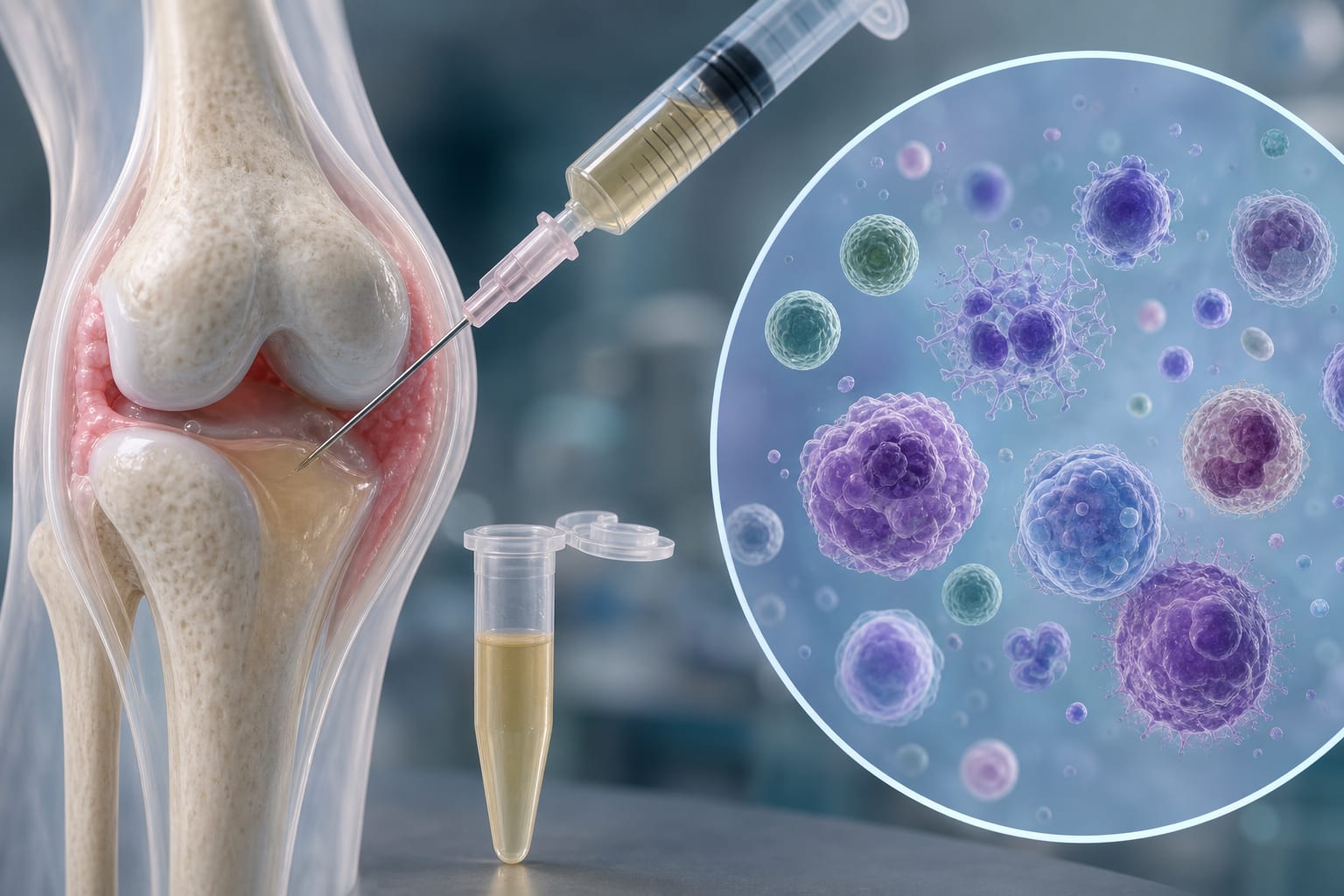
This study investigates the synovial fluid cellular profiles in late-onset rheumatoid arthritis (LORA) and polymyalgia rheumatica (PMR).

Background

Late-onset rheumatoid arthritis (LORA) is increasingly prevalent among older adults, presenting unique challenges in diagnosis and management due to its distinct phenotype and the presence of comorbidities. Polymyalgia rheumatica (PMR) shares similar symptoms with LORA, complicating differential diagnosis.

Data Highlights

No numerical data or trial results were provided in the source material.

Key Findings

  • Late-onset rheumatoid arthritis (LORA) is defined as RA with onset at age 60 or older.
  • ACPA-negative LORA and PMR can present with similar symptoms, complicating diagnosis.
  • Synovial fluid analysis may provide more relevant inflammatory profiles compared to systemic biomarkers.
  • The study included 21 East Asian patients, categorized into ACPA-positive LORA, ACPA-negative LORA, and PMR.
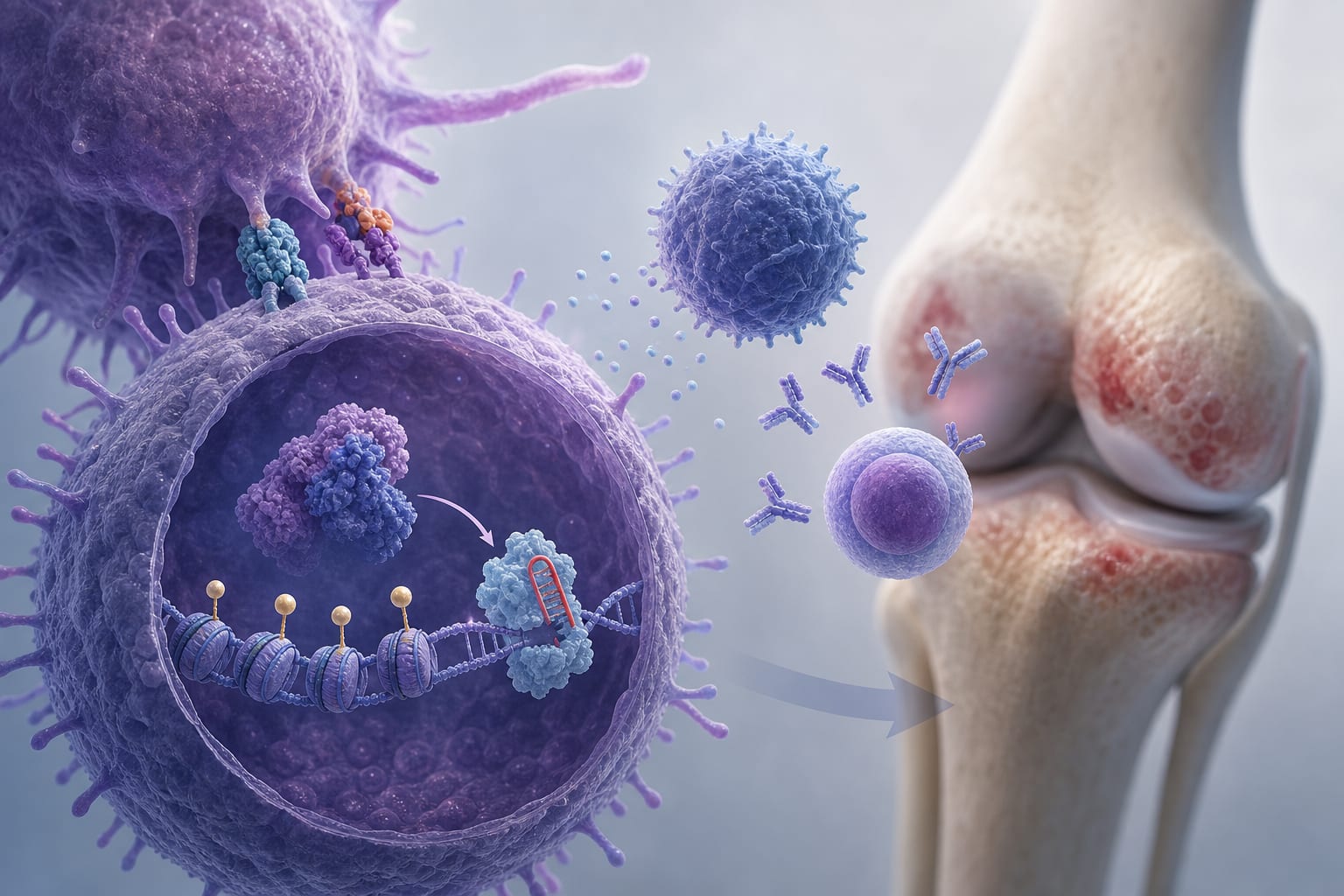
  • High-dimensional cytometry was utilized to analyze immune cell profiles in synovial fluid.

Clinical Implications

Clinicians should consider synovial fluid analysis in the diagnostic process for older patients with inflammatory arthritis.

Conclusion

This study focuses on synovial fluid analysis in distinguishing between late-onset rheumatoid arthritis and polymyalgia rheumatica.
Related Resources & Content

  1. Clinical Rheumatology, 2008 -- Investigation of the Differential Proteome in Human Synovial Fibroblasts from Arthritis Patients
  2. Frontiers in Immunology, 2026 -- Soluble IL-2 receptor and memory Treg profiles differentiate early rheumatoid arthritis from undifferentiated arthritis at initial presentation
  3. Clinical Rheumatology, 2022 -- Alterations in Th17, Treg, and helper innate lymphoid cell populations in the peripheral blood of individuals with rheumatoid arthritis
  4. Late-onset rheumatoid arthritis: clinical features, diagnostic challenges, and treatment approaches - PMC, 2025
  5. EULAR recommendations for the management of rheumatoid arthritis with synthetic and biologic disease-modifying antirheumatic drugs: 2025 update - PubMed
  6. Clinical Rheumatology — Detection of herpes viruses in synovial fluid and blood samples from individuals with rheumatoid arthritis and axial spondyloarthritis
  7. Polymyalgia Rheumatica - PubMed
  8. Late-onset rheumatoid arthritis: clinical features, diagnostic challenges, and treatment approaches - PMC
  9. EULAR recommendations for the management of rheumatoid arthritis with synthetic and biologic disease-modifying antirheumatic drugs: 2025 update - PubMed
  10. Comparative Safety of JAK Inhibitors vs TNF Antagonists in Immune-Mediated Inflammatory Diseases: A Systematic Review and Meta-Analysis - PubMed
  11. The 2025 British Society for Rheumatology guideline for the prescription and monitoring of conventional synthetic disease-modifying anti-rheumatic drugs - PubMed
  12. [S2e guidelines on the treatment of polymyalgia rheumatica: update 2024 : Evidence-based guidelines of the German Society for Rheumatology and Clinical Immunology (DGRh), the Austrian Society for Rheumatology and Rehabilitation (ÖGR) and the Swiss Society for Rheumatology (SGR) and the participating medical scientific specialist societies and other organizations] - PubMed
  13. Phase 3 Trial of Secukinumab in Polymyalgia Rheumatica | New England Journal of Medicine
  14. Review Articles | Nature Reviews Rheumatology
  15. Recommendations Classification Response Criteria Diagnostic | EULAR

Original Source(s)

Related Content