Clinical Report: Mechanisms and Therapeutic Approaches for Epithelial–Mesenchymal Transition in Skin Fibrosis
Overview
This report reviews the role of epithelial–mesenchymal transition (EMT) in cutaneous fibrosis, highlighting its contribution to fibrogenesis and potential therapeutic targets. Understanding EMT mechanisms may enhance treatment strategies for fibrotic disorders.
Background
Cutaneous fibrosis results from chronic inflammation, tissue trauma, or autoimmune reactions, leading to abnormal tissue remodeling characterized by increased myofibroblasts and extracellular matrix accumulation. This condition significantly impairs skin function and quality of life. Despite advancements in treatment, the underlying molecular processes remain incompletely understood, necessitating further exploration of EMT's role in fibrogenesis.
Data Highlights
No numerical data or trial data presented in the article.
Key Findings
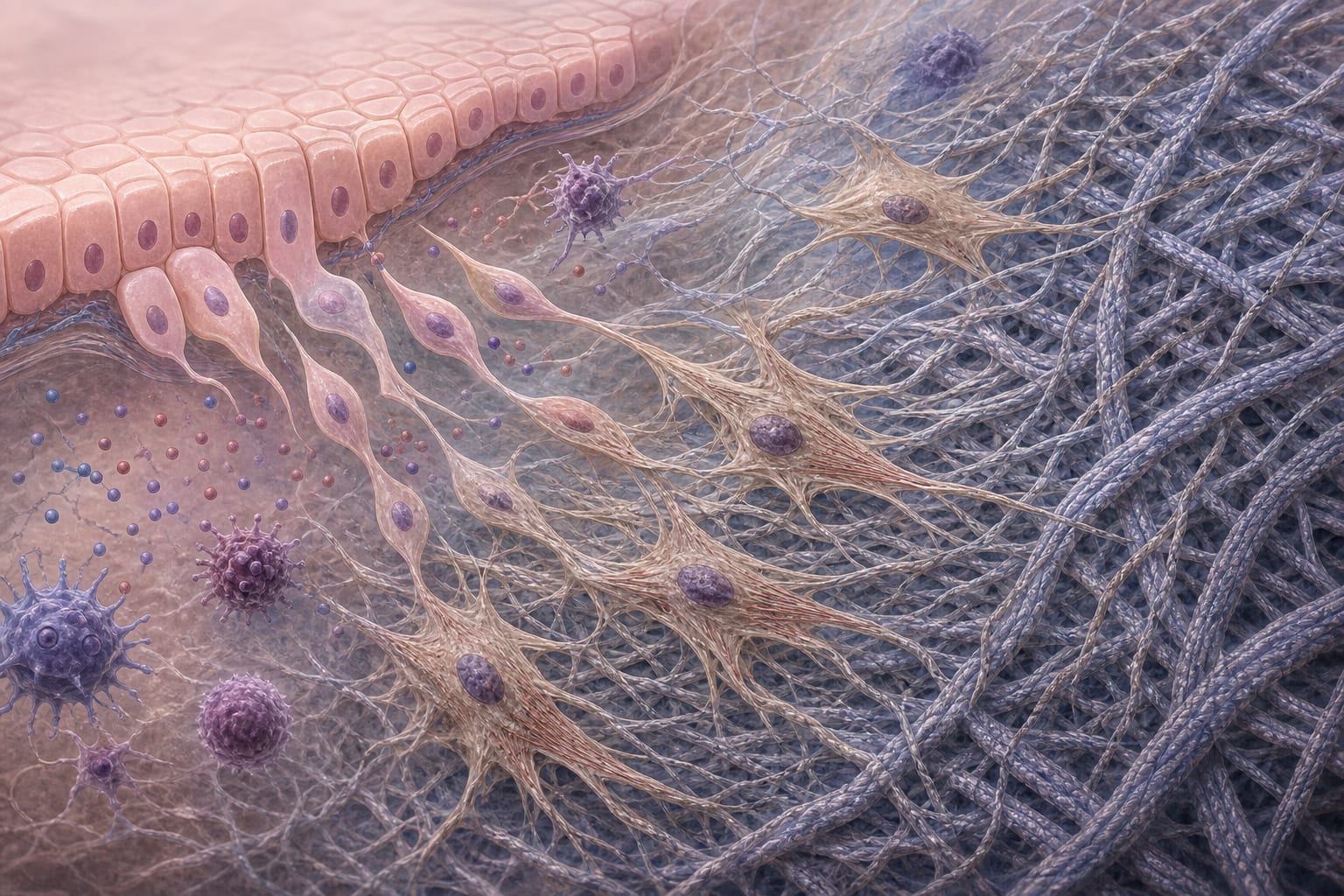
EMT contributes to the development of fibrotic disorders by enabling epithelial cells to acquire mesenchymal properties.
Type II EMT is primarily associated with tissue repair and organ fibrosis, driven by chronic inflammation or tissue damage.
Myofibroblasts, derived from EMT, are a significant source of ECM deposition in fibrotic tissue.
Current therapeutic strategies for cutaneous fibrosis are inadequate, highlighting the need for new molecular targets.
Understanding EMT mechanisms can provide insights into potential therapeutic approaches for cutaneous fibrosis.
Clinical Implications
Clinicians should consider the role of EMT in the pathophysiology of cutaneous fibrosis when evaluating treatment options. Targeting EMT-related pathways may offer new avenues for therapeutic intervention in fibrotic disorders.
Conclusion
The review emphasizes the importance of understanding EMT in cutaneous fibrosis, which may lead to the identification of novel therapeutic targets and improved management strategies for affected patients.