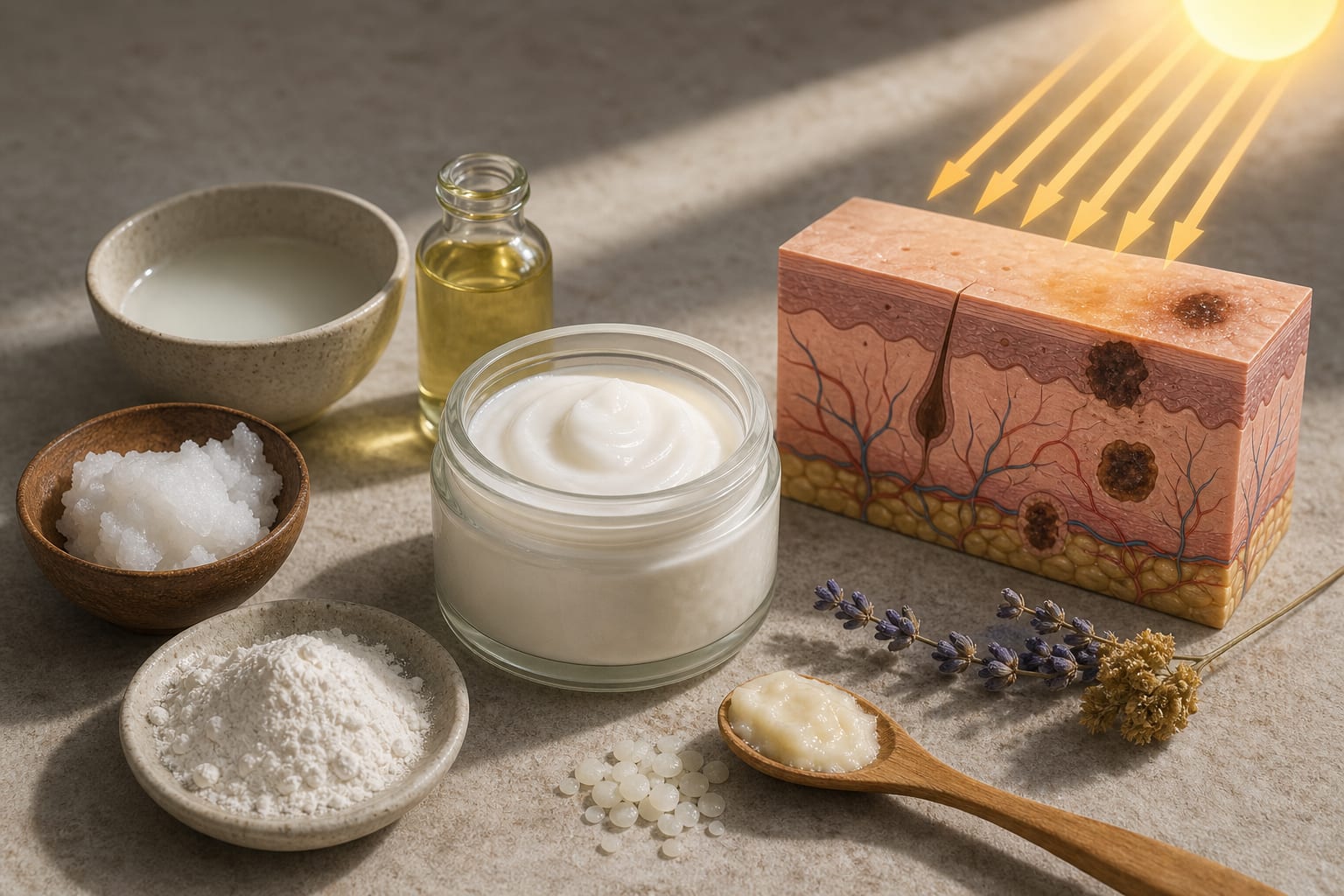
Emergence of DIY Sunscreen Practices and Their Potential Effects on Skin Cancer Incidence
Overview
This systematic review examines the rise of DIY sunscreen practices and their potential implications for skin cancer incidence, highlighting the lack of regulation and scientific validation of homemade sunscreens compared to commercially available products.
Background
Skin cancer is the most commonly diagnosed cancer in the United States, with approximately 5.4 million cases of basal cell carcinoma (BCC) and squamous cell carcinoma (SCC) diagnosed annually in about 3.3 million individuals. The popularity of DIY sunscreens, driven by concerns over synthetic ingredients, raises questions about their safety and effectiveness. Understanding the implications of these practices is crucial for public health and skin cancer prevention.
Data Highlights
The review notes the absence of numerical data or trial data, which limits the ability to draw definitive conclusions about the effectiveness of DIY sunscreens.
Key Findings
Skin cancer incidence continues to rise, with BCC and SCC accounting for the majority of cases in the U.S.
DIY sunscreens are perceived as safer alternatives, but their effectiveness against UV radiation is largely unverified.
The FDA does not regulate the term 'organic' in skincare, allowing misleading claims about DIY products.
Commercial sunscreens undergo rigorous testing and are classified as over-the-counter drugs, unlike homemade formulations.
Only zinc oxide and titanium dioxide are categorized as generally recognized as safe and effective (GRASE) by the FDA.
Homemade sunscreen recipes often lack scientific backing and can pose safety risks.
Clinical Implications
Healthcare professionals should be aware of the growing trend of DIY sunscreens and the potential risks associated with their use.
Conclusion
The rise of DIY sunscreen practices presents significant concerns due to their unregulated nature and lack of scientific validation.