Respiratory safety and resource utilization in ERCP: a comparative study of high-flow nasal oxygen, conventional mask, and general anesthesia in high-risk populations - Report - MDSpire
Advertisement
Respiratory safety and resource utilization in ERCP: a comparative study of high-flow nasal oxygen, conventional mask, and general anesthesia in high-risk populations
Clinical Report: Evaluating Respiratory Protection and Resource Use During ERCP
Overview
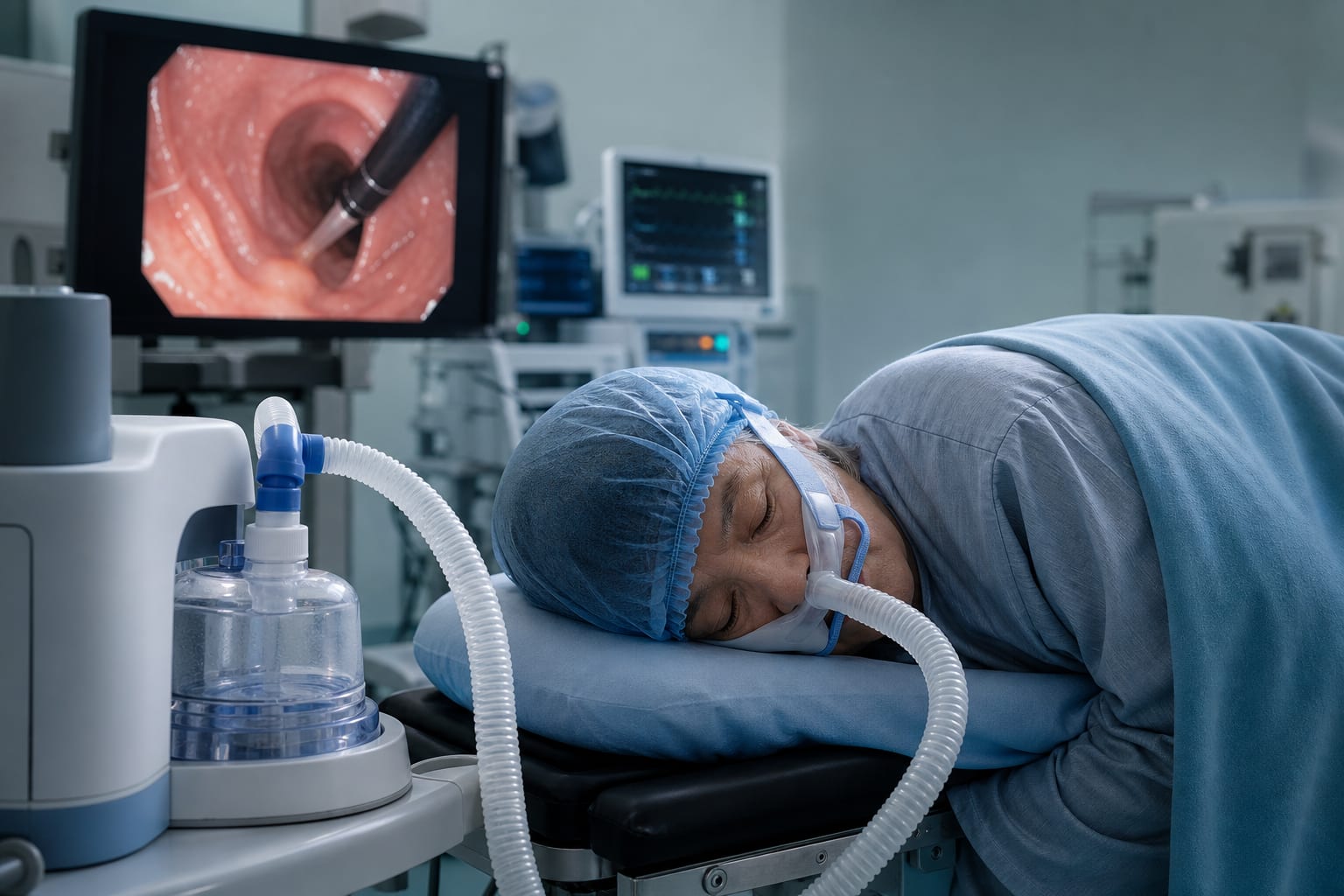
This study compares high-flow nasal oxygen (HFNO) with standard mask (SM) oxygenation and general anesthesia (GA) in ERCP procedures. HFNO demonstrated a 0% desaturation rate in high-risk patients, significantly outperforming SM, which had a desaturation incidence of 59.7%. Additionally, HFNO exhibited higher volumetric oxygen consumption compared to SM and GA.
Background
Endoscopic retrograde cholangiopancreatography (ERCP) is a complex procedure that poses significant respiratory challenges, particularly in high-risk patients. Traditional oxygen delivery methods often fail to maintain adequate oxygenation during sedation, leading to increased reliance on general anesthesia. The introduction of high-flow nasal oxygen (HFNO) offers a promising non-invasive alternative that may improve patient outcomes while minimizing the risks associated with invasive procedures.
Data Highlights
Group
Desaturation Incidence
Minimum SpO₂
Airway Interventions
Oxygen Consumption (L)
Standard Mask
59.7%
90%
31.4%
175
High-Flow Nasal Oxygen
0%
99%
5.4%
500
General Anesthesia
0%
99%
N/A
34.5
Key Findings
Desaturation occurred in 59.7% of patients using standard mask oxygenation.
Both HFNO and GA groups had a desaturation rate of 0%.
Minimum SpO₂ was significantly lower in the SM group (90%) compared to HFNO and GA (99%).
Airway interventions were required in 31.4% of SM patients versus 5.4% in HFNO patients.
Oxygen consumption was highest in the HFNO group (500 L) compared to SM (175 L) and GA (34.5 L).
Clinical Implications
The findings suggest that HFNO can provide comparable respiratory stability to general anesthesia in high-risk ERCP patients, potentially reducing the need for invasive airway management. Clinicians should consider HFNO as a viable oxygenation strategy, particularly in patients with marginal physiological reserves.
Conclusion
HFNO demonstrates a high level of efficacy in maintaining oxygenation during ERCP, matching the safety profile of general anesthesia while offering a non-invasive alternative. This study supports the use of HFNO in high-risk populations undergoing complex procedures.