Magnetic Resonance Imaging–Based Artificial Intelligence in Predicting Prostate Cancer Biochemical Recurrence: Systematic Review and Meta-Analysis - Report - MDSpire
Advertisement
Magnetic Resonance Imaging–Based Artificial Intelligence in Predicting Prostate Cancer Biochemical Recurrence: Systematic Review and Meta-Analysis
Clinical Report: Utilizing Artificial Intelligence in MRI to Forecast BCR of Prostate Cancer
Overview
This comprehensive review and meta-analysis evaluates the role of artificial intelligence (AI) in predicting biochemical recurrence (BCR) of prostate cancer post-treatment.
Background
Prostate cancer is a significant public health concern, with rising incidence rates and associated mortality. Biochemical recurrence following treatment poses a serious risk to patient outcomes.
Data Highlights
No specific numerical data or trial data provided in the source material.
Key Findings
Prostate cancer is the sixth leading cause of cancer-related mortality in men globally.
Current detection methods for prostate cancer have limitations in specificity and reliability.
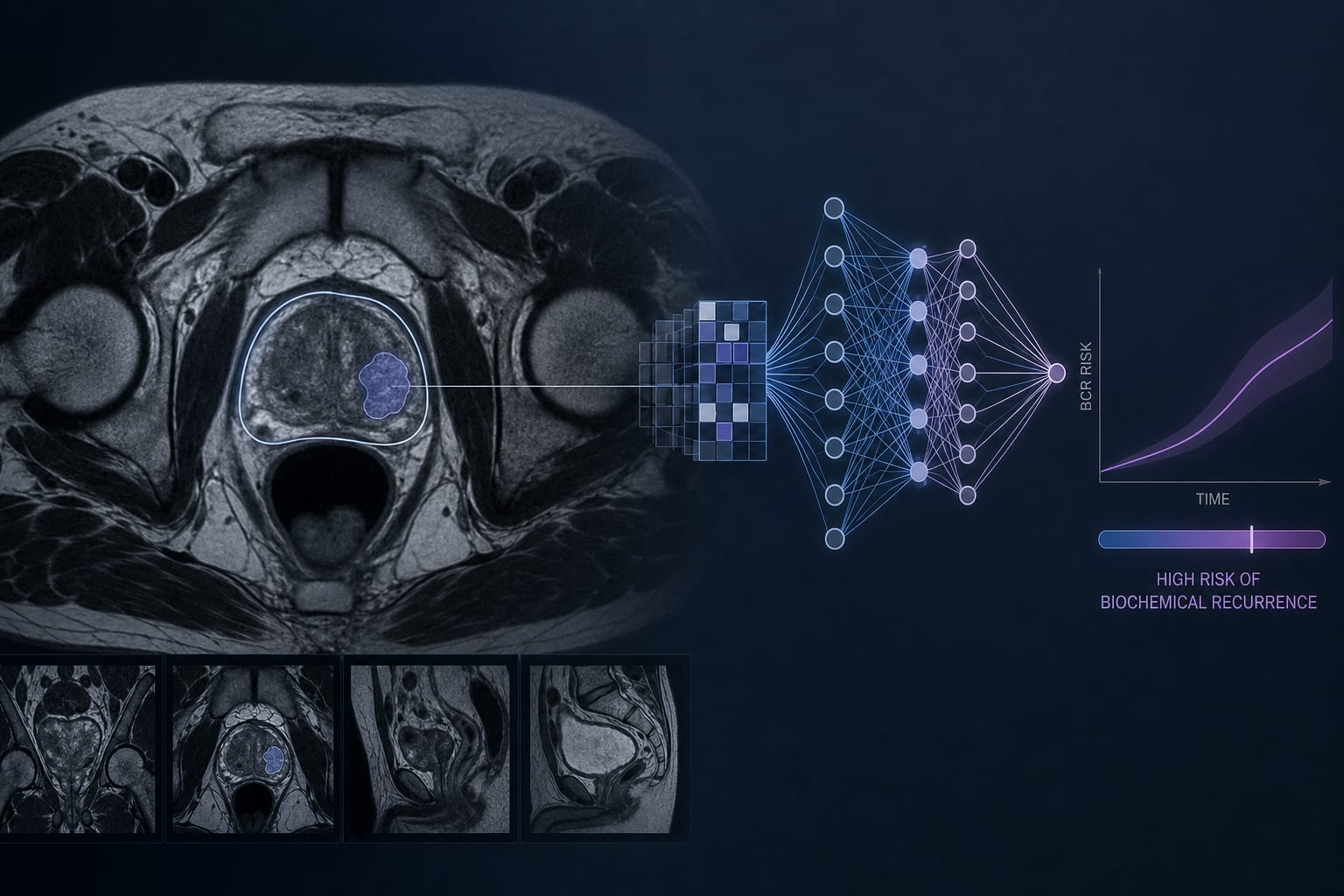
AI frameworks are increasingly utilized to improve the prediction of BCR after prostate cancer treatments.
Studies show that incorporating radiologic features, particularly from MRI, enhances predictive models' accuracy.
Recent multicenter studies have demonstrated high accuracy in BCR prediction using AI and MRI-based models.
Clinical Implications
The adoption of AI in MRI for predicting BCR may facilitate more personalized patient management strategies. Clinicians should consider integrating these advanced predictive models into routine practice to improve patient outcomes.
Conclusion
AI-enhanced MRI represents a significant advancement in the prediction of biochemical recurrence in prostate cancer, potentially leading to better clinical decision-making and patient care.