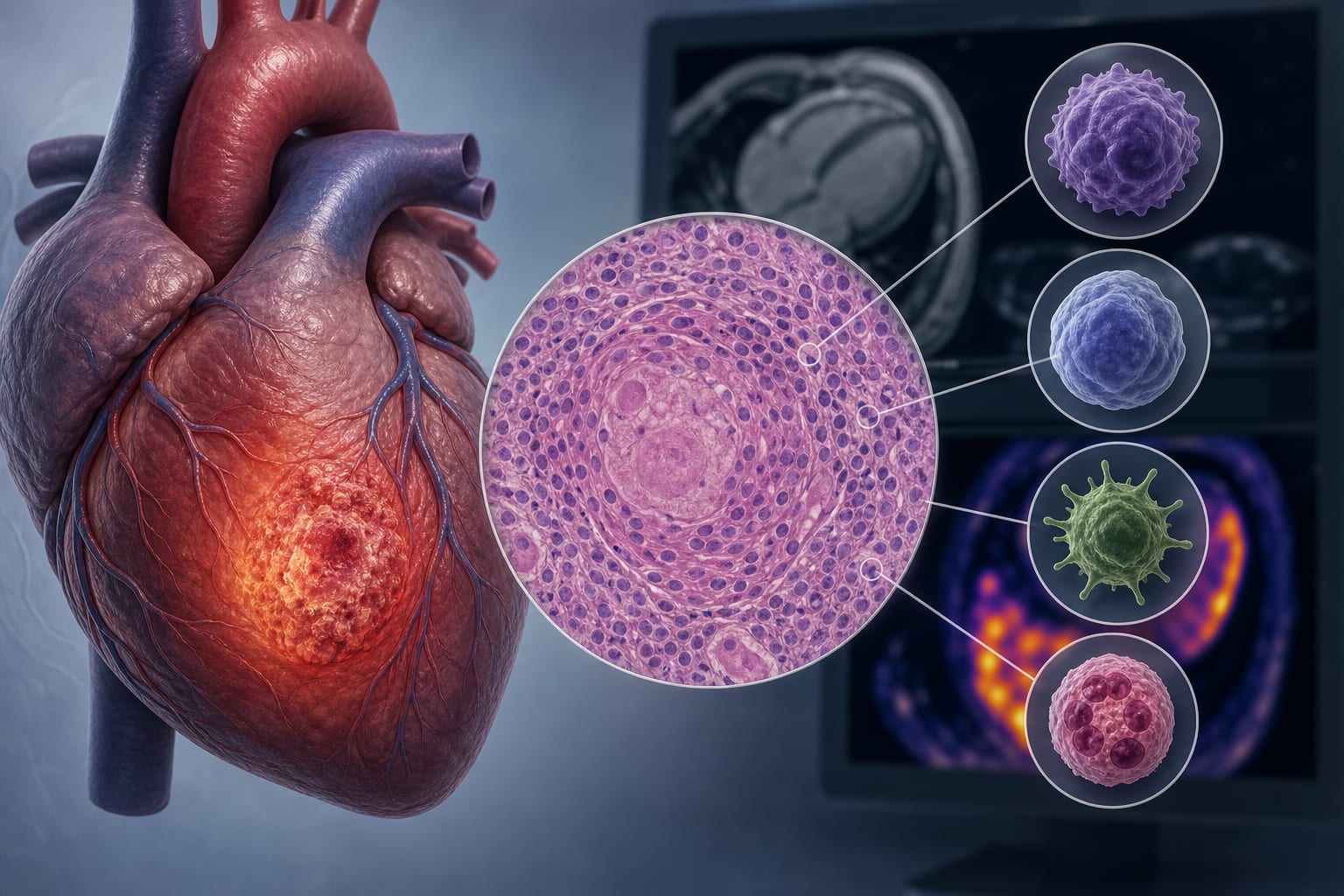
Clinical Report: Identifying Immune Cell Populations Linked to Disease Activity in Cardiac Sarcoidosis
Overview
This study identifies distinct immune cell populations associated with disease activity in cardiac sarcoidosis (CS). The findings emphasize the importance of inflammatory signatures in differentiating between active and chronic forms of the disease, which may guide therapeutic strategies.
Background
Cardiac sarcoidosis is a serious condition that can lead to heart failure and arrhythmias due to granuloma formation and inflammation. Accurate stratification of disease activity is crucial for timely intervention and management. Current imaging techniques, such as hybrid CMR/FDG-PET, enhance diagnostic capabilities but understanding the inflammatory profiles of immune cells could further improve patient outcomes.
Data Highlights
No numerical data or trial data was provided in the source material.
Key Findings
Twenty-six patients with biopsy-proven extracardiac sarcoidosis were studied.
Hybrid CMR/FDG-PET imaging was utilized to classify patients into active, chronic, and no cardiac sarcoidosis groups.
Inflammatory biomarkers like interleukin-2 receptor and angiotensin-converting enzyme were noted but only partially reflected disease activity.
CD4+ and CD8+ lymphocytes, along with monocytes, play significant roles in the pathophysiology of sarcoidosis.
Understanding immune cell signatures may provide diagnostic and prognostic insights for managing cardiac sarcoidosis.
Clinical Implications
The identification of specific immune cell populations linked to disease activity in cardiac sarcoidosis can inform treatment decisions and improve patient management. Clinicians should consider integrating immune profiling into routine assessments to better stratify disease severity and tailor therapies.
Conclusion
This study highlights the potential of immune cell profiling in enhancing the understanding and management of cardiac sarcoidosis. Further research is warranted to validate these findings and their applicability in clinical practice.
by Tobias Harm, Stella E. Autenrieth, Katharina Mezger, Anne-Katrin Rohlfing, Helmut Dittman, Christian la Fougère, Konstantin Nikolaou, Patrick Krumm, Meinrad Gawaz, Karin Anne Lydia Müller, Simon Greulich